ONCOPLASTIC BREAST SURGERY: BALANCING CANCER TREATMENT AND AESTHETIC OUTCOMES
Professor Elisabeth Elder discusses how oncoplastic techniques are used, the role of shared decision-making, where gaps in the evidence still exist, and how research and clinical trials could help shape the future of breast cancer surgery.
Oncoplastic Breast Surgery: Balancing Cancer Treatment and Aesthetic Outcomes
How can breast cancer surgery achieve the best patient outcomes while also considering the appearance and shape of the breast? In this episode, we sit down with Professor Elisabeth Elder to explore oncoplastic breast surgery and some of the important questions that remain unanswered.
Professor Elder discusses how oncoplastic techniques are used, the role of shared decision-making, where gaps in the evidence still exist, and how research and clinical trials could help shape the future of breast cancer surgery.
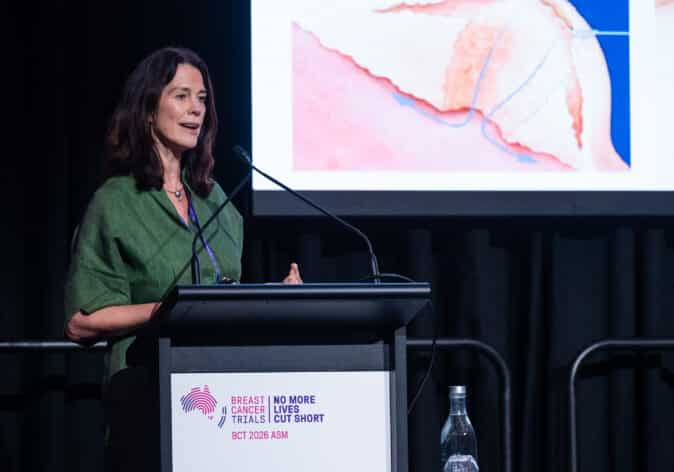
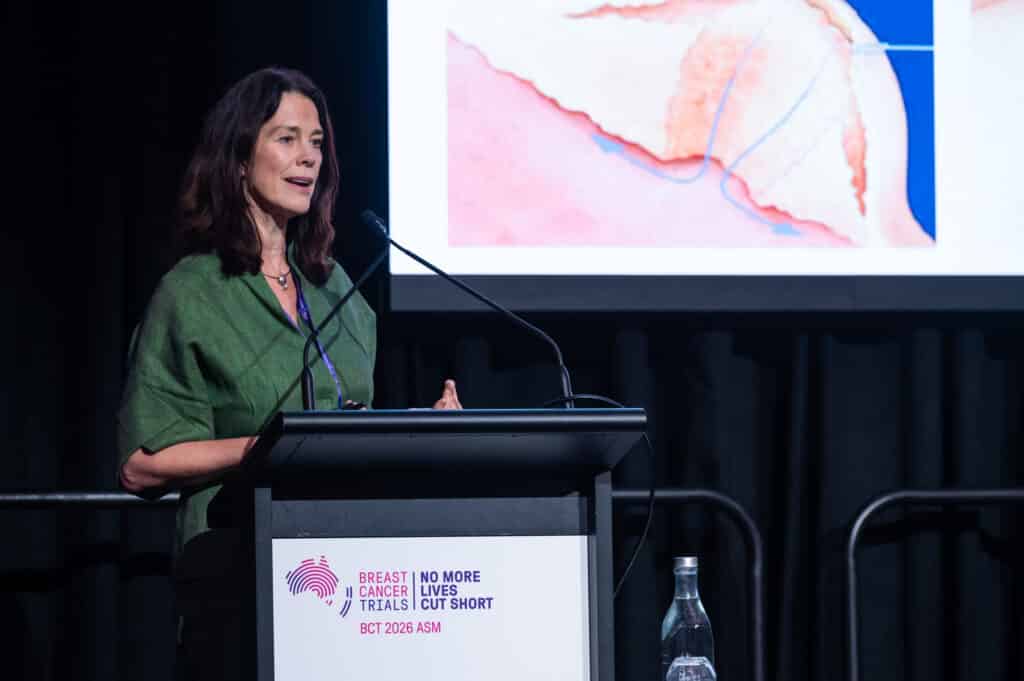
“In my presentation today, I’m going to challenge the concept of oncoplastic surgery because in my view it’s just modern breast surgery. But I suppose it has been defined that using methods that traditionally have been used by plastic surgeons and applying that to people with breast cancer.”
“But really, it’s a way of thinking where we are not just taking the cancer out, but we want to make sure that we are also getting as good aesthetic outcome as possible and as good functional outcome as possible. So that’s what I will be discussing in a nutshell.”
“And then I think it’s more relevant to talk about different types of techniques that you can use to achieve this. So of course, there is a normal wide local excision, and that is applicable if you have a small cancer in a not too small breast, then you can just take it out and close the tissue around.”
“But when you have a bigger proportion of the breast that needs to be dissected, then you need to have other sort of techniques to be able to reshape the breast. And that can involve some variation of a breast reduction or breast lift, or it can involve taking tissue from somewhere else around the breast, which we call the chest wall perforator flap.”
“Or you can do liposuction from somewhere else and then you put some of the lipospheres into the breast. And the term also includes doing mastectomies where you save the skin to enable or facilitate an immediate breast reconstruction, with as good of a result as possible.”
Listen to the podcast
Professor Elder discusses how oncoplastic techniques are used, the role of shared decision-making, where gaps in the evidence still exist, and how research and clinical trials could help shape the future of breast cancer surgery.

Key takeaways
- Oncoplastic breast surgery is about more than removing cancer: Professor Elisabeth Elder challenges the idea that oncoplastic surgery is a separate type of surgery, describing it instead as “modern breast surgery.” The goal is not only to successfully remove the cancer, but also to achieve the best possible aesthetic and functional outcome for the patient. Breast surgeons are increasingly combining cancer treatment with techniques traditionally used in plastic surgery to preserve or restore breast shape.
- There is no one-size-fits-all approach: One of the key themes of the discussion is that breast cancer surgery is highly individualised. Decisions depend on numerous factors, including tumour size and location, breast size and shape, genetics, overall health, risk of complications, and most importantly, the patient’s personal preferences. What may be the best option for one person may not be appropriate for another.
- Shared decision-making is critical: Professor Elder emphasises that patients should play an active role in choosing their treatment. Every surgical option involves trade-offs, whether that’s balancing cosmetic outcomes against recovery time, surgical risks, sensation changes, or other factors. Understanding what matters most to the individual patient is essential to achieving the best overall outcome.
- Better evidence and decision-support tools are needed: Despite significant advances in oncoplastic techniques, major evidence gaps remain. Professor Elder envisions a future where clinicians can use sophisticated decision-support tools that combine tumour characteristics, breast features, patient preferences and predicted outcomes to help determine the most suitable surgical approach for each individual. AI and large data platforms may play an important role in making this possible.
- Research is increasingly focused on personalised care: Future research is not just about developing new surgical techniques, but understanding how surgery integrates with treatments such as radiotherapy and how different approaches affect long-term outcomes. As techniques evolve, the traditional distinction between breast-conserving surgery and mastectomy is becoming less clear, creating new opportunities and new research questions. The ultimate aim is more personalised, evidence-based treatment for every patient.
While we’ve seen significant advances in this field, where do you think the biggest uncertainties or gaps still exist?
“So, I think the biggest gaps are about knowing who should have what treatment. And inherently surgery is such an individualised process. It’s all individualised because of the patient, what they would like, and what the tumour looks like.”
“All of that is also individualised because you have the surgeon with various skill sets and it ends up being quite complex. And what I would really love to see in the future is to have some sort of decision aid tool being delivered where you take into consideration these various factors.”
“This would help to work out which techniques should be used for each particular person in each particular situation. And that would then consider the breast factors, and the tumour factors, but would also describe the patient’s wishes and be able to have a prediction tool to say what the breast would look like from an aesthetic point of view.”
“It would also be useful to crystallise the trade-offs, because its always a matter of trade-offs, and what is most important for that person in that situation. So that I think would be a really wonderful thing. Maybe it’s wishful thinking, but it’s something to work towards.”
“So it is a very complex decision-making process, and in doing so I think it’s really important to listen to women, and to see how it fits in with their desires. But it’s a combination broadly speaking of various tumour factors such as how big the tumours is, where it’s located, what’s the type of infiltration has occurred, and the individual breast factors.”
“This includes how big the breasts are, how they are shaped, what the density is, and then the patient’s genetics, so we want to know, is it advisable for the patient to have a bilateral mastectomy to reduce the risk of future malignancies? And then we also look at complication risks, including various comorbidities such as smoking and BMI and all of those things.”
“Then we also want to know what the woman would like to have done. And many people have pre-existing issues with their breasts, either because they’re too big and cause problems with shoulder or neck pain, or maybe they’ve done lots of breastfeeding and they get a bit more deflated if you like.”
“And for many women, having surgery through that, that can then restore some of these areas, can actually end up being a bit of a bonus, paradoxically, with having breast cancer, where you get an opportunity to maybe improve some aspects of your appearance.”
“It’s a very complex decision-making exercise. But you have to also put that into context with having realistic expectations of what you can achieve. Also, you need to take into consideration, to some extent, what the cost is for the healthcare system.”
“So, there are trade-offs, and for the patient this means that we need to ask questions like, will the lift that I really like lead to more problems with pain or sensory loss etc.”
“I think there’s a lot that we can all offer, particularly if we work together. And for patients I want them to know that there’s always hope, there’s always things we can do. And if plan A doesn’t work, there’s always a plan B and a plan C and a D and an E too. So yes, working together is really important.”
What research is currently underway and how can it help to answer some of the questions that you’re highlighting in your presentation?
“I think there are a few things in there; firstly, this more individualised decision-making aid would be good. But we also need to look at the outcomes of various types of trials, and surgical techniques, to evaluate the long-term outcomes.”
“And then we also need to see how it integrates with other treatment modalities. For example, certain types of oncoplastic surgery may change how you can deliver radiotherapy because it changes the tumour bed and where the tumour bed is.”
“And that may have implications for how the radiation oncologist would do their partial breast radiation. I think that’s an area that we really should be looking more into, and specifically how you can have an optimal integration of various things.”
“Then I think the other thing is that we have traditionally thought about mastectomy being one thing, breast-conserving surgery being another thing, and both being quite distinct entities. As we’re doing more rearrangement, more surgery for larger tumours with the sort of extreme oncoplastic surgery, that goes towards a bigger operation, often mastectomy.”
“And on the other hand, with mastectomy if you’re saving some of the skin and saving the nipples and saving more tissue, that’s sort of going more towards breast-conserving surgery.”
“It’s sort of blurring the boundaries between what is what. So that may also have consequences for sort of measuring oncological outcomes and again, how you integrate with other local therapies.”
Where do you see the next 5 or 10 years in this space?
“I hope that we would have access to more platforms that will collect lots of various data in this area. And maybe with help of AI, for example, we might be able to have more individualised predictions of the patient outcomes and maybe a decision tool. I think we can harness them and hopefully get more help to get to the point where we do want to have more personalised treatment that is evidence-based.”
If you had one key message to give to clinicians about this topic, what would it be?
“I think the main thing is that we need to think about how you interpret results from different studies. They’re already there because a lot of it is quite low-level evidence and its bunching people together in a way that may not be so accurate.”
“I think you need to really think through what the evidence is and how that applies to an individual. And it’s probably more complex than what it may look at first. Yes, surgical trials are more difficult to design than other trials, but at the end of the day, we want to have as a good of an outcome as possible for patients.”
QUICK ACCESS
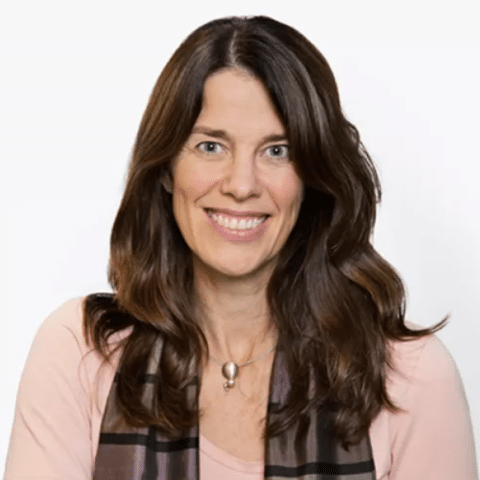
Professor Elisabeth Elder
Oncoplastic Breast Surgery: Balancing Cancer Treatments and Aesthetic Outcomes
Professor Elder discusses how oncoplastic techniques are used, the role of shared decision-making, where gaps in the evidence still exist, and how research and clinical trials could help shape the future of breast cancer surgery.
 Listen On Spotify
Podcast Transcript
-
Oncoplastic Breast Surgery: Balancing Cancer Treatment and Aesthetic Outcomes
How can breast cancer surgery achieve the best patient outcomes while also considering the appearance and shape of the breast? In this episode, we sit down with Professor Elisabeth Elder to explore oncoplastic breast surgery and some of the important questions that remain unanswered.
Professor Elder discusses how oncoplastic techniques are used, the role of shared decision making, where gaps in the evidence still exist, and how research and clinical trials could help shape the future of breast cancer surgery.
“In my presentation today, I’m going to challenge the concept of oncoplastic surgery because in my view it’s just modern breast surgery. But I suppose it has been defined that using methods that traditionally have been used by plastic surgeons and applying that to people with breast cancer.”
“But really, it’s a way of thinking where we are not just taking the cancer out, but we want to make sure that we are also getting as good aesthetic outcome as possible and as good functional outcome as possible. So that’s what I will be discussing in a nutshell.”
“And then I think it’s more relevant to talk about different types of techniques that you can use to achieve this. So of course, there is a normal wide local excision, and that is applicable if you have a small cancer in a not too small breast, then you can just take it out and close the tissue around.”
“But when you have a bigger proportion of the breast that needs to be dissected, then you need to have other sort of techniques to be able to reshape the breast. And that can involve some variation of a breast reduction or breast lift, or it can involve taking tissue from somewhere else around the breast, which we call the chest wall perforator flap.”
“Or you can do liposuction from somewhere else and then you put some of the lipospheres into the breast. And the term also includes doing mastectomies where you save the skin to enable or facilitate an immediate breast reconstruction, with as good of a result as possible.”
While we’ve seen significant advances in this field, where do you think the biggest uncertainties or gaps still exist?
“So, I think the biggest gaps are about knowing who should have what treatment. And inherently surgery is such an individualised process. It’s all individualised because of the patient, what they would like, and what the tumour looks like.”
“All of that is also individualised because you have the surgeon with various skill sets and it ends up being quite complex. And what I would really love to see in the future is to have some sort of decision aid tool being delivered where you take into consideration these various factors.”
“This would help to work out which techniques should be used for each particular person in each particular situation. And that would then consider the breast factors, and the tumour factors, but would also describe the patient’s wishes and be able to have a prediction tool to say what the breast would look like from an aesthetic point of view.”
“It would also be useful to crystallise the trade-offs, because its always a matter of trade-offs, and what is most important for that person in that situation. So that I think would be a really wonderful thing. Maybe it’s wishful thinking, but it’s something to work towards.”
“So it is a very complex decision-making process, and in doing so I think it’s really important to listen to women, and to see how it fits in with their desires. But it’s a combination broadly speaking of various tumour factors such as how big the tumours is, where it’s located, what’s the type of infiltration has occurred, and the individual breast factors.”
“This includes how big the breasts are, how they are shaped, what the density is and then the patients’ genetics, so we want to know, is it advisable for the patient to have a bilateral mastectomy to reduce the risk of future malignancies? And then we also look at complication risks, including various comorbidities such as smoking and BMI and all of those things.”
“Then we also want to know what the woman would like to have done. And many people have pre-existing issues with their breasts, either because they’re too big and cause problems with shoulder or neck pain, or maybe they’ve done lots of breastfeeding and they get a bit more deflated if you like.”
“And for many women, having surgery through that, that can then restore some of these areas, can actually end up being a bit of a bonus, paradoxically, with having breast cancer, where you get an opportunity to maybe improve some aspects of your appearance.”
“It’s a very complex decision-making exercise. But you have to also put that into context with having realistic expectations of what you can achieve. Also, you need to take into consideration, to some extent, what the cost is for the healthcare system.”
“So, there are trade-offs, and for the patient this means that we need to ask questions like, will the lift that I really like lead to more problems with pain or sensory loss etc.”
What research is currently underway and how can it help to answer some of the questions that you’re highlighting in your presentation?
“I think there are a few things in there, firstly, this more individualised decision-making aid would be good. But we also need to look at the outcomes of various types of trials, and surgical techniques, to evaluate the long-term outcomes.”
“And then we also need to see how it integrates with other treatment modalities. For example, certain types of oncoplastic surgery may change how you can deliver radiotherapy because it changes the tumour bed and where the tumour bed is.”
“And that may have implications for how the radiation oncologist would do their partial breast radiation. I think that’s an area that we really should be looking more into, and specifically how you can have an optimal integration of various things.”
“Then I think the other thing is that we have traditionally thought about mastectomy being one thing, breast-conserving surgery being another thing, and both being quite distinct entities. As we’re doing more rearrangement, more surgery for larger tumours with the sort of extreme oncoplastic surgery, that goes towards a bigger operation, often mastectomy.”
“And on the other hand, with mastectomy if you’re saving some of the skin and saving the nipples and saving more tissue, that’s sort of going more towards breast-conserving surgery.”
“It’s sort of blurring the boundaries between what is what. So that may also have consequences for sort of measuring oncological outcomes and again, how you integrate with other local therapies.”
Where do you see the next 5 or 10 years in this space?
“I hope that we would have access to more platforms that will collect lots of various data in this area. And maybe with help of AI, for example, we might be able to have more individualised predictions of the patient outcomes and maybe a decision tool. I think we can harness them and hopefully get more help to get to the point where we do want to have more personalised treatment that is evidence-based.”
If you had one key message to give to clinicians about this topic, what would it be?
“I think the main thing is that we need to think about how you interpret results from different studies. They’re already there because a lot of it is quite low-level evidence and its bunching people together in a way that may not be so accurate.”
“I think you need to really think through what the evidence is and how that applies to an individual. And it’s probably more complex than what it may look at first. Yes, surgical trials are more difficult to design than other trials, but at the end of the day, we want to have as a good of an outcome as possible for patients.”
“And I think there’s a lot that we can all offer, particularly if we work together. And for patients I want them to know that there’s always hope, there’s always things we can do. And if plan A doesn’t work, there’s always a plan B and a plan C and a D and an E too. So yes, working together is really important.”