Leave a gift in your will. Your life-saving legacy.
Today, the five-year survival rate for women diagnosed with breast cancer is 93%. In the early 1990s, it was around 75%. This improvement has been made possible by breast cancer clinical trials research and caring people like you who’ve helped fund it.
By supporting more breast cancer clinical trials, you can help push that survival rate even higher and give more families hope for the future.
With a gift in your Will, you can help people with breast cancers that are currently hard to treat, or quick to spread. You’ll help find kinder, gentler treatments, discover ways to prevent breast cancer, treat it earlier, and stop it coming back.
Your beautiful gift can change – and save
– lives like Natalie’s.
Natalie was diagnosed with breast cancer when she was just 23, and again nearly 20 years later.
The treatments made possible by breast cancer clinical trials helped save her life, twice.
Natalie hopes that if her cancer returns again, there will be new treatments to help her – and that her children won’t have to live in fear of breast cancer cutting their lives short.
“It’s only through research that we can hope for better treatments”
Selma was 48 when she was diagnosed with breast cancer, balancing a career teaching deaf children with raising four kids of her own. Research meant treatments were available to give her the best possible chance of survival, including tamoxifen — proven effective through the IBIS-I and ATLAS clinical trials.
Selma lived. Six years after her diagnosis she stood on top of a mountain and shouted, “I have beaten breast cancer!” She watched her four children grow up, start families of their own, and went on to compete in dragon boat racing regattas around the world with other survivors.
In 2022, her cancer returned and had spread to her bones. She now has eight grandchildren and remains determined to stay healthy for her family. Her story is a testament to what 24 years of research-extended life can look like – and why the work must continue.
The difference your gift makes
Gifts in Wills to Breast Cancer Trials have made extraordinary things happen already.
Many of today’s most widely used treatments were made possible by Breast Cancer Trials’ work—and the generosity of supporters like you. Here are just some of them.
Reduced risk of breast cancer returning
Showed that trastuzumab (Herceptin) can significantly reduce recurrence risk. Now standard for HER2-positive breast cancer, affecting 20–30% of patients.
Help for young women to have a family after breast cancer
Proved that premenopausal women with breast cancer who need chemotherapy can go on to have healthy babies after treatment.
A faster return to ‘normal’ life after treatment
For the most common breast cancer type, found that hormone therapy alone can be as effective as chemotherapy + hormone therapy — sparing thousands from unnecessary treatment.
More hope for families affected by genetic mutations
Proved that olaparib reduces breast cancer deaths by 32% for some people with BRCA1 or BRCA2 mutations. May also improve outcomes for ovarian, pancreatic and prostate cancers.
Despite the progress, the outcomes for too many women with breast cancer remain poor. A gift in your Will can help unlock new treatments, so that every person diagnosed with breast cancer will be able to move forward again in life with confidence.
“The outcome for women diagnosed with breast cancer today is far better
than it was 20, 30, or 40 years ago, but the job isn’t done. There’s still a lot we don’t understand. We need to keep working, keep doing clinical trials to get survival as close to100% as possible.”
Professor Bruce Mann – Specialist breast surgeon and Director of Research at Breast Cancer Trials.
It is a charitable gift included in your will to a registered charity. It is a meaningful way to support Breast Cancer Trials by helping fund clinical trials and programs that improve treatment options and care for people affected by breast cancer, now and into the future. Many people choose to include a gift in their will because breast cancer has touched their lives – personally or through someone they love.
A bequest is a way to create a lasting impact while supporting a cause that reflects their values and the future they hope to help create.
Legacy giving (also known as planned giving) is a way to support a charity through a future gift, such as a bequest in your will.It allows your values to live on and create a future where no more lives are cut short by breast cancer.
Yes. Most people who include a gift in their Will do so after providing for their family and loved ones first. We understand that family comes first, and even a small gift can help make a meaningful difference to the future of breast cancer trials.
It’s also normal for a Will to evolve as life changes. If your circumstances shift or you want to adjust any details, a solicitor can help you make updates quickly, so your wishes remain current.
Including a gift in your Will for Breast Cancer Trials is simple. Most people do this by adding a short codicil, which a solicitor can prepare quickly — you don’t need to rewrite your entire Will.
A solicitor can help you choose the type of gift that best reflects your wishes – whether that’s a percentage of your estate, a fixed amount, or a specific asset – and ensure Breast Cancer Trials is included clearly and correctly.
Including a gift in your will is usually straightforward when creating or updating your will. Breast Cancer Trials recommends using a solicitor because they make the process clearer, easier, and legally secure. Many people feel relieved after getting advice, knowing their wishes are properly documented and protected.
A ‘residuary’ or ‘residual bequest’ – leaving a percentage of what remains after providing for your loved ones – is often the simplest and most flexible option. It offers three important benefits:
It keeps the impact you intend, because including a percentage or share means your gift won’t lose value over time the way a fixed dollar amount can.
It places your loved ones first, as they are looked after first before your gift to Breast Cancer Trials is distributed.
It makes the decision easier, because you don’t need to calculate exact amounts – you simply choose the percentage that feels right for you.
You can also choose to include a specific amount or a particular item, such as shares or property. Your solicitor can guide you through the options that best reflect your wishes.
In many cases, gifts in wills to charities can be tax effective for your estate. We recommend speaking with your solicitor or financial adviser for guidance tailored to your individual circumstances.
Yes. Many people choose to honour someone special by including a gift in their memory. If you wish, Breast Cancer Trials can acknowledge your gift in a meaningful way.
We recommend that you consult with a solicitor when making your Will. If you wish to include Breast Cancer Trials in your Will, the following wording should be used:
I (your name) give to Breast Cancer Trials (ABN 64051369496):
the residue of my estate, or
____________% of my estate, or
the lump sum of $____________, or
my property known as ____________________________ [eg, real estate, art works, shares, units or other securities in listed companies].
to be applied for general purposes by Breast Cancer Trials as determined by its directors. I declare that the receipt of an authorised officer of Breast Cancer Trials will be a sufficient discharge to my executors who will not be bound to see the application of this gift.
People share why they’ve chosen to make a gift in their will
“When I was diagnosed with breast cancer 22 years ago at age 48 I was shocked. I was as health conscious then as I am today and always mindful to have regular health checks. I remember the day a lump was found on an ultrasound test – it was April 1996, the week before Easter.
I recall the sense of urgency that surrounded the whole process.
To my knowledge there was no family history of breast cancer. I found it difficult to tell my elderly parents, and when I told the rest of my family and work colleagues, they were all stunned with my diagnosis. On a positive note, it did prompt those around me to have themselves checked.
I am aware that my experience will not be the same for everyone diagnosed. Not every breast cancer is the same, and therefore there is a need to do more trials research to identify better treatment options. I want better outcomes and I want women to be better informed. I don’t want accolades, I just want to help.
Leaving a gift in my Will to Breast Cancer Trials was an important and very personal decision for me.
It’s easy to do and I’d encourage everyone to think about leaving a gift in their Will to Breast Cancer Trials after you have discussed your wishes with loved ones.
Most people don’t realise that even a small gift can help towards having the greatest impact.
My hope is that my gift will help more women and families to benefit from individualised treatment options. Besides early detection, I am a very passionate advocate for clinical trials research. I know that my gift can help to discover better treatments and offer more choices that weren’t available when I was diagnosed. I know it will keep on helping others.”
Dedicated supporter Faye Purnell has certainly made this her mantra for life as she strives to help change the future for all women at risk of breast cancer.
Since Faye started supporting Breast Cancer Trials in 2000, she has raised over an incredible $23,000 for breast cancer clinical trials research – and generously pledged to leave Breast Cancer Trials a gift in her Will.
Faye’s unwavering dedication to support life-saving research conducted by Breast Cancer Trials comes from personal experience. In 1999 at the age of 58, Faye was diagnosed with breast cancer. Faye didn’t require chemotherapy or radiation, and underwent a mastectomy. She vividly remembers her arrival at the hospital for her operation, a long winter weekend in June. After her surgery, Faye was given promising news that she was eligible to participate in a clinical trial to prove whether tamoxifen is effective in reducing breast cancer rates for women with a high risk of developing the disease.
At the completion of the five-year trial, closely monitored by Breast Cancer Trials’ founder, Professor Forbes, it was recommended to Faye that she continued taking Tamoxifen for a further five years to help prevent her cancer from returning.
Without pioneers like Faye, we would not be able to conduct life-saving breast cancer clinical trials.
Faye had no family history that she knew of, so it was a shock to receive her diagnosis. Knowing all too well this disease can be devastating to families, she now advocates for breast cancer clinical trials research.
Faye’s first fundraising event was a wool challenge at the Festival of Fleece in Merriwa, where Faye’s team took out the world championship, sheering sheep, spinning the wool and knitting a jumper in just over five hours.
At one of her fundraisers in Merriwa, she recalls her doctor, Professor Forbes saying, “You never know who the research is going to help next.”
This resonated with her, along with her own experience of breast cancer and she continues to fundraise every year hosting jewellery parties, morning teas and Melbourne Cup fundraisers. For her annual Bake for Breast Cancer morning tea, Faye bakes 12 dozen of her delicious scones – a morning tea not to miss!
When asked what she’d say to other people considering leaving a gift in their Will, Faye said; “You are going to help a lot of other women. Research benefits continue through the generations.”
Faye enjoys her life immensely and cherishes each day. There is no stopping this amazing woman from her achieving her goals.
Together we are working to ensure every person affected by breast cancer receives a treatment which will cure them of their disease forever, freeing them to live their lives and pursue their dreams alongside family and friends.
“My twin sister Gwenneth was diagnosed with breast cancer at age 47. She was living in England, but I was on the phone to her all the time as she went through treatment. Twenty-five years later, her breast cancer returned.
It was terrible for her to have to go through it again, and it must have been difficult to live with the fear it might return, and have that fear realised so many years later.
With my sister affected by breast cancer, plus other friends, it means a lot to me to be able to contribute. I see such value in the research that finds more treatments – and it’s wonderful to know that many more women’s lives are being saved today than ever before. I’m delighted that my gift will further our understanding of breast cancer and help more people to overcome it.”
Miss Woodcock was a loyal supporter of Breast Cancer Trials and left a very generous bequest gift of $450,000.
She was generous in both her passing and life. Kindly donating $153,000 to support our breast cancer trials research over 16 years which has helped to support many significant advances in breast cancer clinical trials research which are today saving lives.
In the many conversations we shared, Miss Woodcock expressed how important breast cancer research was to her as she had a friend die of breast cancer and others who had been affected by the disease.
A lover of animals, who never married, Miss Woodcock loved the arts, cricket, tennis, chocolate and travel.
Miss Woodcock’s generosity of $14,000,000 spanned in a wide-reaching way to 15 charities overall, with the vast majority of her estate left to local and national organisations. Just to name a few of the other charities who also benefited from her kindness were Westpac Rescue Helicopter Service, Salvation Army, RSPCA, Vision Australia, Guide Dogs and Scots Kirk Presbyterian Church.
When asked ‘Why these charities?” by her cousin, Miss Woodcock’s reply was ‘Because I’ve known them for many years or known of them and their work. I have made friends and have seen their appreciation and respect of my support and feel and trust they have and will use my final gifts well for the benefit our community…”
Miss Woodcock’s generous bequest will help to support the clinical trials research program conducted by Breast Cancer Trials, including research in the important area of prevention.
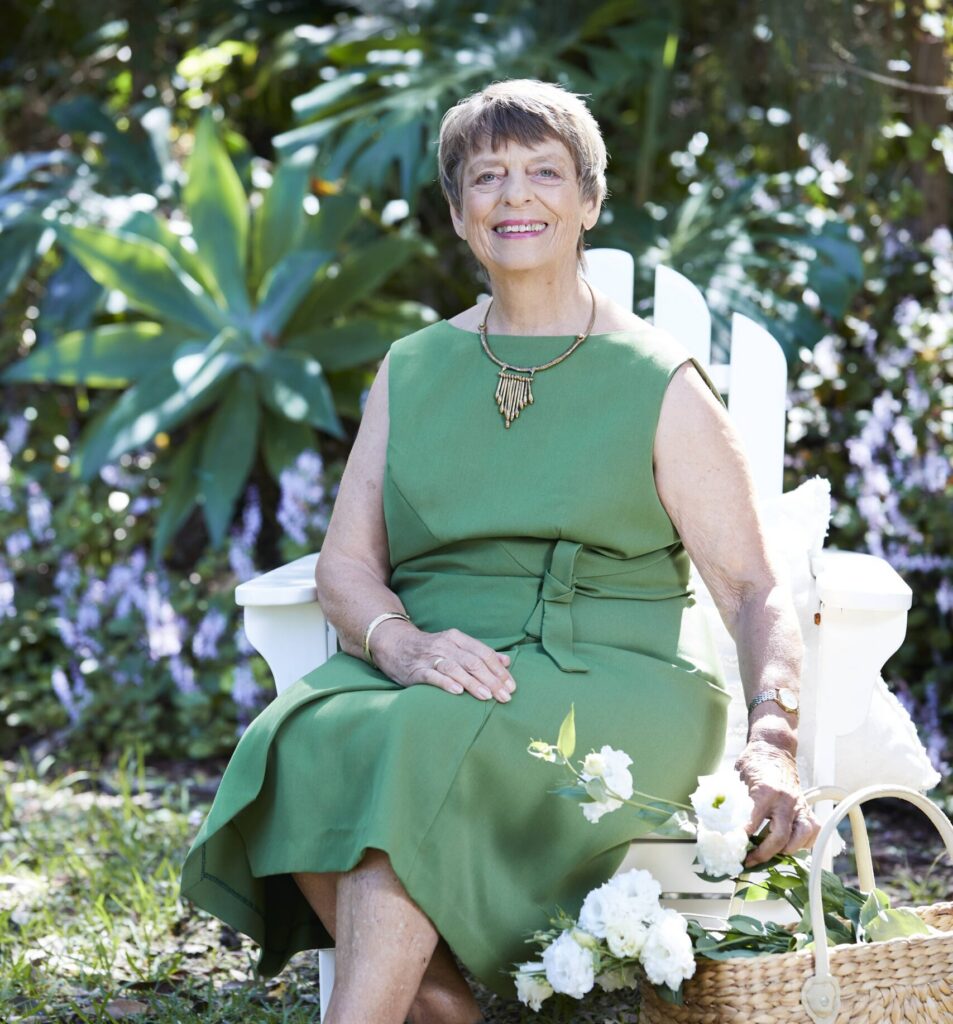
Valerie would love to know that a cure is possible one day or a long-term treatment that will help women overcome their breast cancer. That’s why she has left a gift to Breast Cancer Trials in her Will.
In 2005, when Valerie was aged 50 she was told that she had breast cancer after a regular screening mammogram. She remembers getting ‘that’ phone call to attend the Lyell McEwin Hospital for an ultrasound followed by a needle biopsy at Goodward Hospital. She still recalls the shock and the fear that she felt. She then wrote letters to her loved ones just in case.
Valerie moved to Australia from England in 1974 to be with Bill, who had migrated from Belfast in 1972. After arriving in February, Valerie and Bill were engaged on St Patrick’s Day and later married in November that same year. In October of the following year, Valerie and Bill were blessed with a daughter.
When Valerie moved from England, she left behind her family including her twin sister Helen. Valerie was quite the surprise delivery for her parents. After her mother Maggie had given birth to Helen, the midwife told her to expect another baby. Maggie’s doctor had told her she was just having a very big baby!
Helen was there to support Valerie over the phone through her breast cancer diagnosis and treatment, along with Bill, her daughter and friends. Valerie said it was times like that, you need the support of family and friends.
Valerie had a lumpectomy and some lymph nodes removed followed by radiotherapy for five days a week, for five weeks. She was very frightened at the thought of this. And she cried. A lot. Bill would drive her to the train station where she would catch the train to the city and then a tram or bus to the hospital. She would have her 3 minute ‘zap’ and then do the return trip home. To help Valerie overcome her fear of radiotherapy the oncology nurse had photos of Elvis Presley posted around the ‘donut’ but she was too frightened to open her eyes during her treatment.
When Valerie looks back on her life since her diagnosis, other than losing her husband Bill in 2008, she feels lucky. Her life went back to normal following her treatment. She feels lucky because she can spend time in the garden and with her loved ones and family. She can listen to the radio with the volume turned up and she has lots of friends around her.
She wants others to have their ‘normal’ back too. She doesn’t want young women to have to go through the rigors of chemotherapy or radical surgeries. That’s why Valerie donates regularly to Breast Cancer Trials and has left a gift in her Will.
Paul made the decision to leave a gift in his Will to Breast Cancer Trials, in honour of his late wife Fran.
“My late wife Fran was diagnosed with breast cancer at age 56 in 2001. She passed away four years later.
To watch a beautiful woman, someone you love, absolutely wrecked by treatment was very difficult.
I have confirmed with my family that I’ve included Breast Cancer Trials in my Will, and they’re 110 percent behind the decision.
Supporting Breast Cancer Trials appeals to me because I might be able to save another family from loss or give someone a prolonged life.
It’s distressing to know that girls and women live with the risk of breast cancer – just because they are female. I’d like my gift to help change that.
If women and families don’t have to live with that shadow over them anymore, that would be a fantastic thing.”
Submit an Enquiry
HAVE A QUESTION?
Please send us an email and one of our friendly staff members will be in touch.
“I’d like my gift in my Will to take away the fear.” – Paul, who lost beloved wife Fran to breast cancer.
Paul’s late wife Fran was diagnosed with breast cancer at age 56 in 2001 and passed away four years later. He has confirmed with his family that he is including Breast Cancer Trials in his Will — and they are 110% supportive.
“If women and families don’t have to live with that shadow over them anymore, that would be a fantastic thing.”


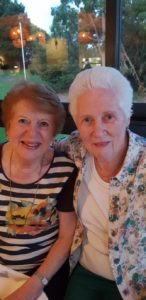 “My twin sister Gwenneth was diagnosed with breast cancer at age 47. She was living in England, but I was on the phone to her all the time as she went through treatment. Twenty-five years later, her breast cancer returned.