CARING FOR THE CAREGIVERS: PREVENTING BURNOUT IN ONCOLOGY
What happens when the people caring for everyone else are running on empty? In this episode, we explore burnout of the clinician, practical self-care strategies, and ways that we can better support healthcare workers before exhaustion takes its toll.
Caring for the Caregivers: Preventing Burnout in Oncology
What happens when the people caring for everyone else are running on empty? In this episode, we explore burnout of the clinician, practical self-care strategies, and ways that we can better support healthcare workers before exhaustion takes its toll.
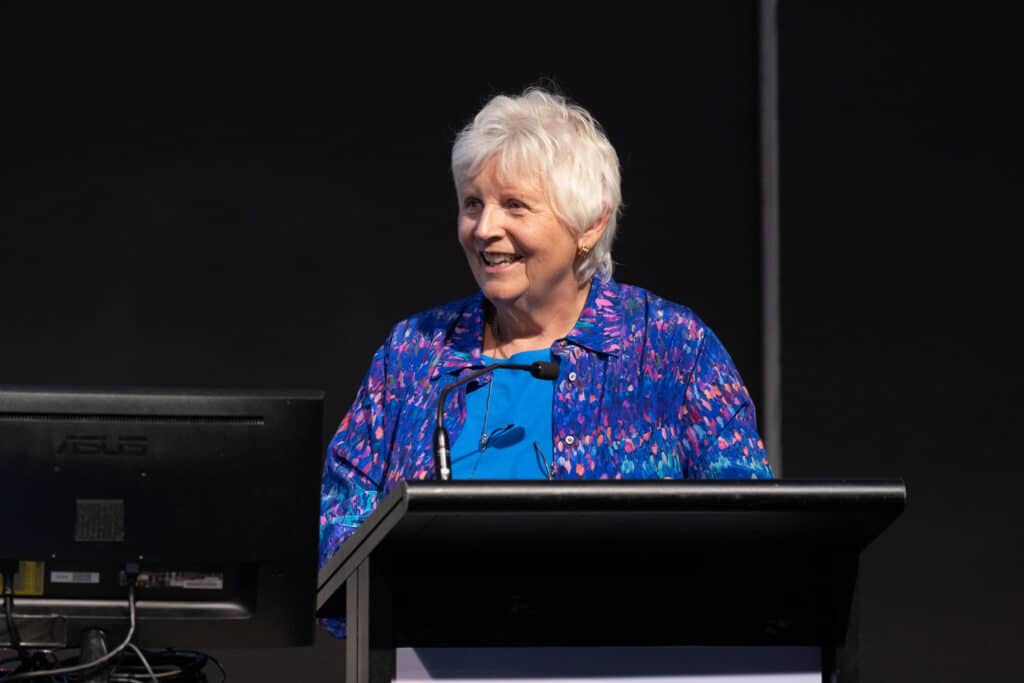
“I’m Professor Lesley Fallowfield. I’m a psycho-oncologist and I’m also director of a health outcomes research group at Brighton and Sussex Medical School in the UK.”
“There are surveys worldwide showing that many patients are increasingly dissatisfied with the care that they get from their doctors. In particular, many report that they feel doctors lack awareness of the emotional impact that cancer has on them and act sometimes with a degree of indifference to their problems when they’re communicating with them.”
“Now, this isn’t because doctors are bad people. Most doctors go into the profession because they care so much about the patients that they’re looking after and want to help them. But it’s precisely those doctors who care most who are liable to experience what we call in the trade, burnout, or sometimes we talk about compassion fatigue.”
“As I said, it often affects those who start off being the most caring doctors. So, if we’re going to help patients, you need to help the carers as well, and when I’m talking about doctors, I mean nurses as well. They have worldwide a problem with burnout and compassionate fatigue. This can sort of demonstrate itself in lots of different types of ways that people can cease to get enjoyment from their work.”
“They feel de-personalised. They don’t feel like they’re responding anymore to the sorts of things that normal human beings do. So why is this happening? Well, there’s a lot of things going on in the world. Perversely, the improvements we’ve made in cancer mean that more people are surviving, so there’s more people being treated through course in our clinics.”
“But this is all contributing to putting pressures on doctors. Most people, when they’re sitting in a busy clinic, can see the speed at which people are having to be processed. And I use that word specifically because that’s what patients feel. They feel like they’re being processed, and that people aren’t considering that they’re ordinary human beings.”
“So that’s one thing. I think it’s the rising numbers of patients being treated. But there are other things as well. I like to speak about the tyranny of emails. We think that all the modern technology has improved things and should help make things swifter and slicker and easier to deal with. But I mean, I don’t know what other people find, but I get about 50 emails a day and I haven’t got a busy clinic to run as well.”
“So, there’s the tyranny of emails, the pace which people expect you to be able to respond to things. We’ve seen another interesting thing happening of late, which is that the electronic patient record should mean that it’s simpler for doctors to access all the reports and information that they need when they’re treating a patient. Unfortunately, that doesn’t always happen very smoothly.”
“Not all our systems talk to each other, and that can lead to frustrations as well. So, there are multiple levels at which the system fails, a doctor and a nurse and a patient. But I think also we fail the most of all by not looking after their emotional needs too. You cannot expect a healthcare professional to get closer to the emotional needs of the patient, to act empathically when they’re describing sad, bad and difficult news with them if nobody gives a damn about them.”
“And I think we need to implement many, many more systems changes, that infuse getting help for doctors. And not to be seen as someone who can’t really come, or who just has to get on with it – that’s the job. It isn’t the job. The job should be a satisfying, well paid, career that has benefits for all the doctors and nurses involved and their patients.”
Listen to the podcast
What happens when the people caring for everyone else are running on empty? In this episode, we explore burnout of the clinician, practical self-care strategies, and ways that we can better support healthcare workers before exhaustion takes its toll.
Key takeaways
1. Burnout and moral injury are systemic problems, not personal failings
Professor Leslie Fallowfield highlights that many healthcare professionals — especially those who care deeply — experience burnout or compassion fatigue due to rising workloads, administrative burdens (“the tyranny of emails”), and inefficient systems. She distinguishes burnout from moral injury, where clinicians feel guilt or distress when system pressures prevent them from providing the care they believe patients deserve.
2. Emotional wellbeing of clinicians is critical to patient care
Clinicians cannot provide empathetic, high-quality care if their own emotional needs are ignored. When doctors and nurses are exhausted, depersonalised, or unsupported, patient satisfaction and safety suffer. Supporting healthcare workers’ mental health is therefore integral to good patient outcomes — not an optional extra.
3. Solutions require both personal self-care and organisational change
While individual strategies like CBT, counselling, exercise, rest, and setting boundaries (“learn to say no”) are valuable, Fallowfield stresses that real prevention depends on system-level reform — manageable clinic sizes, fewer redundant administrative tasks (“getting rid of stupid stuff”), mentoring and debriefing programs, and built-in mental-health supports as part of professional development.
4. Leadership and team culture are key buffers against burnout
Managers and team leaders must prioritise staff wellbeing as part of organisational sustainability. Strong, supportive, and well-functioning multidisciplinary teams reduce burnout risk. Communication-skills training and peer support enhance teamwork, efficiency, and resilience — creating a culture where asking for help is seen as strength, not weakness.
What are some of the key warning signs that a healthcare worker might be approaching burnout?
“There are lots of warning signs that people are approaching full blown burnout. Disillusionment with their job, frustration, that it doesn’t bring them the same sorts of pleasures that they used to experience.”
“There’s another thing I haven’t already mentioned, which is slightly different from burnout, but that I think I see in quite a few healthcare professionals whom I speak with. And that’s moral injury.”
“And that’s when you know that because of the pressures within the system, you’ve just not delivered the sort of care for a patient that makes you feel good and they deserve. And then people start feeling extremely guilty and you can’t enjoy a job when you know that the system is set up such that you can’t perform in the way that professionally you feel is appropriate.”
“We hear that error rates are firing. The retention rates within the system are sort of under threat everywhere. The loss of doctors and nurses are leaving the job precisely because it’s not that they don’t care, it’s just that they can’t care and perform their job in the way that they want. There are lots of interventions that can help prevent burnout, but you sort of alluded to require some systems changes.”
“There are also interventions in terms of therapies like cognitive behavior therapy, counselling, relaxation. That can help enormously if you’re the sort of person who does respond to those. But I’m more interested in going back a stage and helping doctors really think far about self-care. And what I mean about that is quite simple. Remember the things they advise their patients to do. Drink less, don’t smoke, eat proper food, exercise more, sleep better and make time for holidays. Have down time with the family doing other things.”
“We advise other people to do all this, but really some of the most committed doctors I know don’t make the same sorts of changes in their own lifestyle. And then I think if we go back to the work setting, I think it might need some really clever negotiation with management about expectations that people have on the size of clinics and the workloads that they have.”
“I think one ought to consider also the numbers of committees and extra things you’ll serve on.
“And I’m a dreadful culprit for this. Learn how to say no more often and at the end of the day, I always advise people that being an oncologist or a surgeon or a nurse should be what you do. It shouldn’t be who you are.”
“It shouldn’t be just when people are absolutely on their knees, they’re begging for some help, that they get these resources. They should be there all the time. It’s almost like a professional and a managerial responsibility I think.”
How can leaders and managers better recognise and respond to the needs of their teams?
“I think all managers now have a big responsibility to consider the health of their workforce and the numbers of health professionals leaving the job is unsustainable. I mean, we’ll make it even worse for the doctors and nurses who do remain if we can’t do something about staff retention or sometimes just simply the numbers of people who just go off sick because they cannot actually cope anymore things which ultimately puts pressure on those who are left behind as it’s a vicious circle or a spiral because they too then become even more burnt out.”
“So, from a manager’s perspective, I think there’s a clear need if they want to improve the survey reports about hospital patient satisfaction, if they want to reduce the numbers of complaints, the errors and litigation and hang on to a good, productive, happy work. For this they have to do something about looking at the organisation and implementing proper support for their doctors and nurses.”
Are there programs or initiatives that have made a real difference in supporting staff?
“During COVID, when pressures on everyone, certainly in places like the UK, were vast and huge, it was quite clear that there needed to be some overt support for the healthcare professionals trying against all the odds to keep systems going.”
“And we did see some sort of local initiatives that were effective at supporting people to do a most impossible job outside COVID. Some of those have continued, you know, sort of counselling, and mentoring, these sorts of things, but it becomes a problem if people don’t prioritise those, if they don’t see these sorts of supportive interventions for themselves as pivotal in maintaining their own professionals sort of work levels with patients there.”
“There are some small local initiatives to help support healthcare professionals in a preventive situation as well as then people do have burnout, but they’re not sort of routinely available everywhere. Despite recommendations that many professional bodies have made that these sorts of things should be integral to continuing a professional development, we need to have more of them.”
“It shouldn’t be just when people are absolutely on their knees, they’re begging for some help, that they get these resources. They should be there all the time. It’s almost like a professional and a managerial responsibility I think.”
Is there still a stigma around healthcare workers prioritising self-care? How can this culture shift?
“Times change, attitudes change, but you will still find in healthcare the few dinosaurs who you hear saying things like ‘well if they can’t stand the heat they should get out of the kitchen’. Or ‘in my day it was much worse, and we just got on with it’. Just because somebody else managed to get through a rotten system, doesn’t mean that we should force it on others. Indeed, we have a responsibility to make their work life much better.
“Before one really gets into full blown burnout, there are usually lots of other signs. People don’t find satisfaction in going to work, they’re depressed very often. That’s all associated with burnout, not sleeping well, not finding enjoyment in many things.”
How can healthcare organisations create an environment that better supports employee wellbeing?
“It’s a complicated issue to think about the sorts of institutional changes that are required so that the workforce is less liable to areas like burnout. It will differ of course, because different hospitals, different systems of healthcare have their own different types of pressures, but I think just making fees more efficient can help.”
“We do a lot of rubbish things in our hospitals. There was a very interesting project conducted some time ago called the ‘Gross Initiative’. This was done in a corporate setting and gross stands for ‘getting rid of stupid stuff’, which whenever I mention it people think, oh that’s some sort of semi-psychological sort of paper.”
“But that’s not the case. A big corporate organisation was worried about efficiency and so they asked everybody in the organisation, whatever level they were at, to complete a form saying stuff that they did that they couldn’t see the point of or that will get overturned by somebody else in another meeting.”
“And essentially when all of these results came back, they found that lots of people were suggesting exactly the same things. No one could understand why they were still having to do this or that. And within all of our hospitals, we do have systems and forms that we have to keep filling in or interacting with the computer on, that nobody understands why we still have to do this and does it matter.”
“So, I think first of all, getting rid of stupid stuff. It is a great idea for a manager to look at the repetitiveness of the sorts of things that get stored on the electronic record. I mean, repeatedly patients complain about being asked exactly the same questions by different healthcare providers that should be already there. Maybe checking is a good thing, but there’s too much repetition and these sorts of things are frustrating.”
“The reason I’m going on about it is that the reason most people came into medical nursing is because they love people. They like interacting with people, they like trying to fix things for them. And if you spend most of your day interacting with a computer, other than the really nerdy ones that like that sort of stuff, what fun is there in that? And that can be a frustration as well.”
“So, getting rid of unnecessary things is important. I think one of the things most of our organisations could do as well as implementing this, as I’ve referred to several times now, is being mandatory within any healthcare service that people have got debriefing facilities, mentoring facilities and housing facilities.”
“We all have to do mandatory training on fire extinguishers and goodness knows whatever else, while I think you need to extinguish the fires going out with burnout.”
What roles do peer support and team culture play in helping healthcare workers cope with stress?
“One of the things that has happened over the last couple of decades is that the delivery of cancer care now is a serious team business, and most healthcare systems have multidisciplinary tools or other variants of it now.”
“That’s great if you work within a supportive, well-functioning team. It’s not so great if the rest of your career is going to be spent in a dysfunctional workplace. So team training can be quite important because there are plenty of studies showing that if you are lucky enough to be a member of a well-functioning supportive team, then you’re less likely to experience full blown burnout because each other, everyone supports each other.”
“There’s another piece of evidence that I think is quite important and it’s sort of links in with multidisciplinary team working, and that is evidence that people who’ve attended well on evidence-based communication skills training programs actually are less likely to experience burnout because they know how to be more efficient with their use of time.”
“They know how to respond more appropriately in ways that are satisfying for themselves and patient. Of course, if you can’t communicate well with other members of your team, that’s not going to yield to a well-functioning one. So, the presence of a good, well run multidisciplinary team is a high protective feature and in preventing burnout.”
How can healthcare workers themselves advocate for better support without fear of judgement?
“Before they get really in a bad way, if there’s no obvious help available within their organisation there are some good online resources that people can access, relaxation techniques that they can learn.”
“Most professional organisations are available to physicians. Surgeons and nurses also run self-help programs that are worth looking at. But one of the things we often find about people who are very burnt out is they’ve lost motivation to even do that. So, it’s sort of acting before you really get into those bad steaks.”
“Working in Healthcare is such a privilege on one level, and good stress is good for you, but we want stress to burnish people, not burn them out. It’s very hard if you work with others who feel you’ve just got to be made of the right stuff and get on with it. And that does inhibit people from admitting that they’re struggling.”
“I guess the only thing I sometimes suggest, apart from the fact that I think everyone now has a responsibility to look after people’s mental health, not just their physical health. One of the techniques I often suggest to people is that they employ the evidence base. You just look at things like litigation and error rates in people, this often shows that they are burnt out, and most hospitals want to avoid that.”
QUICK ACCESS
Caring for the Caregivers: Preventing Burnout in Oncology
What are some of the key warning signs that a healthcare worker might be approaching burnout?
How can leaders and managers better recognise and respond to the needs of their teams?
Is there a stigma around healthcare workers prioritising self-care?
How can healthcare organisations create an environment that better supports employee wellbeing?
What role does team culture play in helping healthcare workers cope with stress?
How can healthcare workers themselves advocate for better support without fear of judgement?
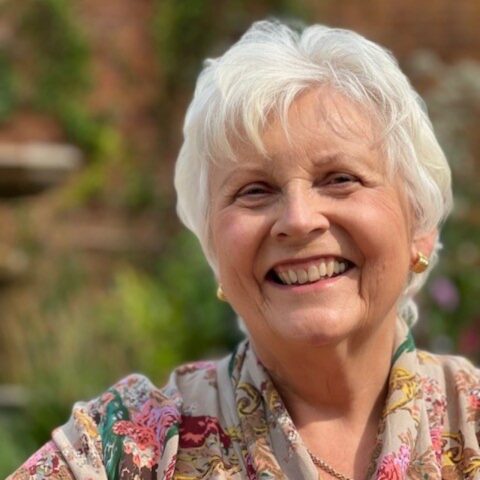
Professor Dame Lesley Fallowfield
Support Breast Cancer Research
Caring for the Caregivers: Preventing Burnout in Oncology
What happens when the people caring for everyone else are running on empty? In this episode, we explore burnout of the clinician, practical self-care strategies, and ways that we can better support healthcare workers before exhaustion takes its toll.
 Listen On Spotify
Podcast Transcript
-
Caring for the Caregivers: Preventing Burnout in Oncology
What happens when the people caring for everyone else are running on empty? In this episode, we explore burnout of the clinician, practical self-care strategies, and ways that we can better support healthcare workers before exhaustion takes its toll.
“I’m Professor Lesley Fallowfield. I’m a psycho-oncologist and I’m also director of a health outcomes research group at Brighton and Sussex Medical School in the UK.”
“There are surveys worldwide showing that many patients are increasingly dissatisfied with the care that they get from their doctors. In particular, many report that they feel doctors lack awareness of the emotional impact that cancer has on them and act sometimes with a degree of indifference to their problems when they’re communicating with them.”
“Now, this isn’t because doctors are bad people. Most doctors go into the profession because they care so much about the patients that they’re looking after and want to help them. But it’s precisely those doctors who care most who are liable to experience what we call in the trade, burnout, or sometimes we talk about compassion fatigue.”
“As I said, it often affects those who start off being the most caring doctors. So, if we’re going to help patients, you need to help the carers as well, and when I’m talking about doctors, I mean nurses as well. They have worldwide a problem with burnout and compassionate fatigue. This can sort of demonstrate itself in lots of different types of ways that people can cease to get enjoyment from their work.”
“They feel de-personalised. They don’t feel like they’re responding anymore to the sorts of things that normal human beings do. So why is this happening? Well, there’s a lot of things going on in the world. Perversely, the improvements we’ve made in cancer mean that more people are surviving, so there’s more people being treated through course in our clinics.”
“But this is all contributing to putting pressures on doctors. Most people, when they’re sitting in a busy clinic, can see the speed at which people are having to be processed. And I use that word specifically because that’s what patients feel. They feel like they’re being processed, and that people aren’t considering that they’re ordinary human beings.”
“So that’s one thing. I think it’s the rising numbers of patients being treated. But there are other things as well. I like to speak about the tyranny of emails. We think that all the modern technology has improved things and should help make things swifter and slicker and easier to deal with. But I mean, I don’t know what other people find, but I get about 50 emails a day and I haven’t got a busy clinic to run as well.”
“So, there’s the tyranny of emails, the pace which people expect you to be able to respond to things. We’ve seen another interesting thing happening of late, which is that the electronic patient record should mean that it’s simpler for doctors to access all the reports and information that they need when they’re treating a patient. Unfortunately, that doesn’t always happen very smoothly.”
“Not all our systems talk to each other, and that can lead to frustrations as well. So, there are multiple levels at which the system fails, a doctor and a nurse and a patient. But I think also we fail the most of all by not looking after their emotional needs too. You cannot expect a healthcare professional to get closer to the emotional needs of the patient, to act empathically when they’re describing sad, bad and difficult news with them if nobody gives a damn about them.”
“And I think we need to implement many, many more systems changes, that infuse getting help for doctors. And not to be seen as someone who can’t really come, or who just has to get on with it – that’s the job. It isn’t the job. The job should be a satisfying, well paid, career that has benefits for all the doctors and nurses involved and their patients.”
What are some of the key warning signs that a healthcare worker might be approaching burnout?
“There are lots of warning signs that people are approaching full blown burnout. Disillusionment with their job, frustration, that it doesn’t bring them the same sorts of pleasures that they used to experience.”
“There’s another thing I haven’t already mentioned, which is slightly different from burnout, but that I think I see in quite a few healthcare professionals whom I speak with. And that’s moral injury.”
“And that’s when you know that because of the pressures within the system, you’ve just not delivered the sort of care for a patient that makes you feel good and they deserve. And then people start feeling extremely guilty and you can’t enjoy a job when you know that the system is set up such that you can’t perform in the way that professionally you feel is appropriate.”
“We hear that error rates are firing. The retention rates within the system are sort of under threat everywhere. The loss of doctors and nurses are leaving the job precisely because it’s not that they don’t care, it’s just that they can’t care and perform their job in the way that they want. There are lots of interventions that can help prevent burnout, but you sort of alluded to require some systems changes.”
“There are also interventions in terms of therapies like cognitive behavior therapy, counselling, relaxation. That can help enormously if you’re the sort of person who does respond to those. But I’m more interested in going back a stage and helping doctors really think far about self-care. And what I mean about that is quite simple. Remember the things they advise their patients to do. Drink less, don’t smoke, eat proper food, exercise more, sleep better and make time for holidays. Have down time with the family doing other things.”
“We advise other people to do all this, but really some of the most committed doctors I know don’t make the same sorts of changes in their own lifestyle. And then I think if we go back to the work setting, I think it might need some really clever negotiation with management about expectations that people have on the size of clinics and the workloads that they have.”
“I think one ought to consider also the numbers of committees and extra things you’ll serve on.
“And I’m a dreadful culprit for this. Learn how to say no more often and at the end of the day, I always advise people that being an oncologist or a surgeon or a nurse should be what you do. It shouldn’t be who you are.”
And how can leaders and managers better recognise and respond to the needs of their teams?
“I think all managers now have a big responsibility to consider the health of their workforce and the numbers of health professionals leaving the job is unsustainable. I mean, we’ll make it even worse for the doctors and nurses who do remain if we can’t do something about staff retention or sometimes just simply the numbers of people who just go off sick because they cannot actually cope anymore things which ultimately puts pressure on those who are left behind as it’s a vicious circle or a spiral because they too then become even more burnt out.”
“So, from a manager’s perspective, I think there’s a clear need if they want to improve the survey reports about hospital patient satisfaction, if they want to reduce the numbers of complaints, the errors and litigation and hang on to a good, productive, happy work. For this they have to do something about looking at the organisation and implementing proper support for their doctors and nurses.”
And are there particular programs or initiatives that you’ve seen that have made a real difference in supporting staff?
“During COVID, when pressures on everyone, certainly in places like the UK, were vast and huge, it was quite clear that there needed to be some overt support for the healthcare professionals trying against all the odds to keep systems going.”
“And we did see some sort of local initiatives that were effective at supporting people to do a most impossible job outside COVID. Some of those have continued, you know, sort of counselling, and mentoring, these sorts of things, but it becomes a problem if people don’t prioritise those, if they don’t see these sorts of supportive interventions for themselves as pivotal in maintaining their own professionals sort of work levels with patients there.”
“There are some small local initiatives to help support healthcare professionals in a preventive situation as well as then people do have burnout, but they’re not sort of routinely available everywhere. Despite recommendations that many professional bodies have made that these sorts of things should be integral to continuing a professional development, we need to have more of them.”
“It shouldn’t be just when people are absolutely on their knees, they’re begging for some help, that they get these resources. They should be there all the time. It’s almost like a professional and a managerial responsibility I think.”
Do you think there’s still a stigma around healthcare workers prioritising self-care? And how can that culture shift?
“Times change, attitudes change, but you will still find in healthcare the few dinosaurs who you hear saying things like ‘well if they can’t stand the heat they should get out of the kitchen’. Or ‘in my day it was much worse, and we just got on with it’. Just because somebody else managed to get through a rotten system, doesn’t mean that we should force it on others. Indeed, we have a responsibility to make their work life much better.
And how can healthcare organisations create an environment that better supports employee wellbeing?
“It’s a complicated issue to think about the sorts of institutional changes that are required so that the workforce is less liable to areas like burnout. It will differ of course, because different hospitals, different systems of healthcare have their own different types of pressures, but I think just making fees more efficient can help.”
“We do a lot of rubbish things in our hospitals. There was a very interesting project conducted some time ago called the ‘Gross Initiative’. This was done in a corporate setting and gross stands for ‘getting rid of stupid stuff’, which whenever I mention it people think, oh that’s some sort of semi-psychological sort of paper.”
“But that’s not the case. A big corporate organisation was worried about efficiency and so they asked everybody in the organisation, whatever level they were at, to complete a form saying stuff that they did that they couldn’t see the point of or that will get overturned by somebody else in another meeting.”
“And essentially when all of these results came back, they found that lots of people were suggesting exactly the same things. No one could understand why they were still having to do this or that. And within all of our hospitals, we do have systems and forms that we have to keep filling in or interacting with the computer on, that nobody understands why we still have to do this and does it matter.”
“So, I think first of all, getting rid of stupid stuff. It is a great idea for a manager to look at the repetitiveness of the sorts of things that get stored on the electronic record. I mean, repeatedly patients complain about being asked exactly the same questions by different healthcare providers that should be already there. Maybe checking is a good thing, but there’s too much repetition and these sorts of things are frustrating.”
“The reason I’m going on about it is that the reason most people came into medical nursing is because they love people. They like interacting with people, they like trying to fix things for them. And if you spend most of your day interacting with a computer, other than the really nerdy ones that like that sort of stuff, what fun is there in that? And that can be a frustration as well.”
“So, getting rid of unnecessary things is important. I think one of the things most of our organisations could do as well as implementing this, as I’ve referred to several times now, is being mandatory within any healthcare service that people have got debriefing facilities, mentoring facilities and housing facilities.”
“We all have to do mandatory training on fire extinguishers and goodness knows whatever else, while I think you need to extinguish the fires going out with burnout.”
What roles do peer support and team culture play in helping healthcare workers cope with stress?
“One of the things that has happened over the last couple of decades is that the delivery of cancer care now is a serious team business, and most healthcare systems have multidisciplinary tools or other variants of it now.”
“That’s great if you work within a supportive, well-functioning team. It’s not so great if the rest of your career is going to be spent in a dysfunctional workplace. So team training can be quite important because there are plenty of studies showing that if you are lucky enough to be a member of a well-functioning supportive team, then you’re less likely to experience full blown burnout because each other, everyone supports each other.”
“There’s another piece of evidence that I think is quite important and it’s sort of links in with multidisciplinary team working, and that is evidence that people who’ve attended well on evidence-based communication skills training programs actually are less likely to experience burnout because they know how to be more efficient with their use of time.”
“They know how to respond more appropriately in ways that are satisfying for themselves and patient. Of course, if you can’t communicate well with other members of your team, that’s not going to yield to a well-functioning one. So, the presence of a good, well run multidisciplinary team is a high protective feature and in preventing burnout.”
So how can healthcare workers themselves advocate for better support without fear of judgement or repercussions before?
“Before one really gets into full blown burnout, there are usually lots of other signs. People don’t find satisfaction in going to work, they’re depressed very often. That’s all associated with burnout, not sleeping well, not finding enjoyment in many things.”
“And before they get really in a bad way, if there’s no obvious help available within their organisation there are some good online resources that people can access, relaxation techniques that they can learn.”
“Most professional organisations are available to physicians. Surgeons and nurses also run self-help programs that are worth looking at. But one of the things we often find about people who are very burnt out is they’ve lost motivation to even do that. So, it’s sort of acting before you really get into those bad steaks.”
“Working in Healthcare is such a privilege on one level, and good stress is good for you, but we want stress to burnish people, not burn them out. It’s very hard if you work with others who feel you’ve just got to be made of the right stuff and get on with it. And that does inhibit people from admitting that they’re struggling.”
“I guess the only thing I sometimes suggest, apart from the fact that I think everyone now has a responsibility to look after people’s mental health, not just their physical health. One of the techniques I often suggest to people is that they employ the evidence base. You just look at things like litigation and error rates in people, this often shows that they are burnt out, and most hospitals want to avoid that.”