SELECTING PATIENTS FOR VOLUME REPLACEMENT THERAPY

Peter Barry is a Consultant Surgeon at the Breast Unit, Royal Marsden in London. He was a guest speaker at our 2024 Annual Scientific Meeting and we spoke to him about the process of selecting patients for volume replacement therapy.

Peter Barry is a Consultant Surgeon at the Breast Unit, Royal Marsden in London. He focuses on breast oncoplastic techniques and reconstructive options following cancer surgery, as well as preventative surgery for high-risk women. He was a guest speaker at our 2024 Annual Scientific Meeting and we spoke to him about selecting patients for volume replacement therapy.

“We are trying to improve aesthetic outcomes for women who survive their breast cancer treatment and make surgery less of a challenge. In terms of cosmetic deformity, pain and other issues that can follow on from surgery. And so, we’re trying to sort of reduce the extent of surgery. So, reduce rates of mastectomy, that is breast removal.

“One of the methods of doing this is by actually filling the breast, especially when it’s a smaller breast, with tissue from either just beyond the breast or using fatty tissue, if there’s spare tissue around the body.”

“We can do what commonly people know as liposuction, but we do it in a way that harvests the fat to then actually transplant it into the breast and so rejuvenate and reshape the breast by using those techniques.”

Listen to the Podcast

We spoke with Dr Peter Barry about selecting patients for volume replacement therapy.

How do you work out who will be a good candidate for volume replacement surgery?

“Look, that’s a really good question. So, in the primary breast cancer scenario, we have women with either very extensive breast cancer where the volume of the actual cancer removal is quite large in comparison to the volume of the breast.”

“Often women with smaller breasts, where there’s less drop to the breast, that sort of thing, they’re the ideal candidates. And especially if they’ve got a little bit of spare tissue around the sides or underneath the breast, where we can then transplant that tissue and move it into the breast.”

“So, we rebuild the breast by removing tissue from outside and around the breast, or indeed other parts of the body using the fat, as I mentioned. So again, it just reduces the rate of women having to undergo very complex breast removal, mastectomy, and then more complex reconstruction procedures.”

What are the benefits of this procedure?

“These women will need to then undergo radiotherapy to the breast generally as part of the overall treatment, and possibly other treatments as well, drug treatments. And it just means these procedures are all day surgery treatments, so they’re in and out of the hospital in the same day.”

“The recovery is very quick. They’re relatively painless compared to some of the more extensive procedures, and they wake up with a pretty good cosmetic outcome. You might say, well, why not just use a breast implant for reconstruction? That’s pretty simple too, and sort of overnight hospital stay.”

“But breast implants will cause more general problems, complications, infections can happen. And there’s always some ongoing maintenance with implants. Whereas this is pretty well a one-step procedure, that’s robust and will last a long time, because it uses the patient’s own natural tissue, so that’s the key.”

“So, in fact, I know we do reconstruction using the patient’s own tissues, from the lower abdomen, the tummy tuck, if you like, or from the thighs or around other areas of the patient’s body where you can move bulk tissue. This removes tissue and replaces it just from around the breast.”

“So, it’s in the vicinity of the breast, so the downtime for the patient is much less. For example, with the tummy tuck procedure, these days, hospital stays are getting shorter. So, there might be three to five days, where there used to be seven to ten days in hospital. But often they can’t do heavy lifting, they can’t run and get back to their normal daily activities for probably six weeks or so.”

“Whereas with this procedure, they might have a little bit of restriction in their shoulder movement with the arm on that side for a couple of weeks. But, because we don’t use muscle in the procedure, that recovers very quickly. So, they’re not losing power or strength and generally, recovery is quick in comparison.”

“There are always risks with fiddling with small blood vessels. So, it does take training and we’ve done a sort of global study looking at training needs. This is probably considered a more advanced procedure for the breast surgeon. And so, we’re doing a lot of workshops to train people in the technique, so it becomes more widespread.”

“It’s certainly available in the larger centres around Australia as well and so it’s just a matter of asking, you know, what the options are and who can do this. Usually in one centre there’s at least one or two surgeons that will undertake this. Yeah, so probably about one in two hundred risks of part of the flap or the tissue dying off.”

“That can happen before or even after radiotherapy because radiotherapy will always stress the tissues. And so sometimes patients end up with a little area of hard tissue. Now that can happen with any breast reconstruction procedure using the patient’s own tissues. But it’s relatively easy to treat.”

“It can be a bit painful, but you can suck that out through liposuction or even local anaesthetic, and you can replace it with new fat from around the body. So, it’s pretty treatable and there shouldn’t be many complications.”

“Yeah, so I think particularly in the realm of fat transplant or what we call fat grafting or lipo-filling, these are all synonymous terms. Many people have heard of liposuction, which is a cosmetic procedure for some patients who want to get rid of sort of unsightly or excess fat in the body.”

“This now takes that procedure, which is quite a traumatic procedure if you’re just removing it. But we’ve adapted the procedure over many years, and there are several machines developed for this. Which actually treat the fat super gently. We remove it in a very gentle way because this fat is literally like liquid gold now, we want to put it back to make sure it survives, and we traumatize it as little as possible. The body basically will sort re-adapt itself to take that fat on board, and then new blood vessels can be formed, and the fat then regenerates.”

“It’s shown to also improve the tissues after radiotherapy, which damages the normal tissues, and so it can reduce scar formation and tissue distortion after radiotherapy, so it’s a great procedure.”

“Alot of people are using it in many different cases, not just with breast conservation, but even over breast implant reconstruction. We’re even reconstructing whole breasts using fat grafting. The downside of fat grafting is you need to do multiple procedures, although each procedure is about 60 to 90 minutes. But you often need to do a repeated procedures a few months apart. So, it’s a process.” It’s often not one single procedure unless it’s just a tiny cosmetic thing you want to fix. But really, this is part of regenerative medicine and it’s a very exciting area. So, I think that technology is going to only improve with time.”

“To say that with the lipo filling fat transfer aspects of it, we are using what we call stem cells. The fat tissue in our body has an abundance of stem cells. In fact, maybe most of the body’s soft tissue stem cells are actually found with the fat. And so, we know which part of the tissue that we take out when we take fat out through these small needles.”

“One of the advantages is the scars are very tiny because we use two, three, four-millimetre needles to harvest the fat. But part of that fatty tissue is what we call the adipose derived stem cells. And those stem cells, if you just inject those back, particularly just under the skin, can rejuvenate scars, they reduce further scarring and they can make the body tolerate much more trauma, like radiotherapy and other issues. And it lasts a long time as far as we can tell.”

“We can also always, also use the patient’s own blood and extract what we call platelet rich plasma. And that also has regenerative qualities and people are trying different ways of enriching the fat so that more of it takes and the results are better with fewer procedures. So, it’s a really exciting area in development.”

What is the role of the patient and how can they keep informed about their treatment?

“Yeah, it’s a really good question because I mean for breast surgery in particular, we talk about the concept of shared decision making. And this is exemplified in breast cancer surgery because, I mean the very initial decision is sort of mastectomy, removing the breast versus keeping part of the breast and conserving the breast.”

“This was something that was established years ago that either alternative is as safe in terms of the cancer outcomes. And in fact, we have a lot of data now, probably over a million patients, although it’s sort of data looking back at large patient databases. And we are asking maybe it’s even safer to not remove all the breast tissue.”

“This is something we’re a little bit circumspect about, but we know it’s at least as safe to keep some of the breast and perhaps there’s some immune local and microenvironment in the breast tissue that we left behind that might even protect the patients against cancer cells going to other parts of the body and setting up camp in different sites, which is obviously metastatic disease, and that’s what we’re trying to prevent.”

“So, there are some signals that that might be beneficial, but in terms of overall shared decision making, we’re really just trying to help the patient make decisions depending on their own priorities. So, if their priority, for example, is to have chemotherapy, as soon as possible after surgery, because that’s really important for their disease control and prevention of further disease, then we want to get them, get them recovered as quickly as possible, get them out of hospital as quickly and get on with their lives.”

“Some women have young children and so they don’t want to be burdened by a big abdominal scar where they can’t carry their child for several weeks. With some of these other procedures they can immediately use their arms, do lifting, that sort of thing.”

“So, there are many different aspects that we need to tell patients about. Again, depending on what they do with their arms and hands in their occupation and life, sort of the general lifestyle, we try and guide them as to what might be the best thing. At the end of the day, the patients will try and choose and trade off what works for them the best in the long run.”

“Often, you’ve got to guide patients a little bit because they’re initially so scared about the cancer. Often women will come and say, look, just chop off my breasts because, you know, they’re in total shock.”

“But we’ve got to look forward. Survival’s so good nowadays that we’ve got to look forward to survival issues. And we know that as women go forward one, two, three years beyond their surgery, they’re going to be more concerned about their aesthetic outcomes and their functional outcomes. So, this is really important to try and bring the patient back to that scenario early on.”

“Whilst you’re of course treating the cancer in the optimal way, you want to improve all those other outcomes for the longer term as well.”

“I want to mention the lymph nodes in the armpit, just for a moment if I could because it’s such an important area. It’s probably, arguably, much more a morbid issue than the breast itself for many patients because they can get lymphedema of the arm, shoulder stiffness, pain, and all that sort of issue.”

“I’m involved with a couple of trials including one based in the UK, called Tadpole, that’s sort of still in development, but coming along soon. We’re going to randomize patients between what we call a targeted axillary dissection, which is this removal of two or three lymph nodes, when one or two lymph glands are involved, versus taking all the lymph glands to try and prevent that sort of knee jerk reaction of taking all the lymph glands when often it’s just one or two that need to be removed.”

“So, we’re trying to refine that surgery better. And then on the other side, there is a worldwide trial called Sentinel 2, led from Sweden by a colleague of mine. And that’s where we use a particular magnetic liquid that we inject at the time of surgery for pre-cancerous change.”

“In about a fifth of those patients, they’ll come back with actual fully formed invasive cancer where we then need to go back and remove one or two lymph glands. And in this patient cohort, we never know up front whether we should remove the lymph glands, because what if we find invasive disease? Whereas with this, the actual trace that we inject at the time of initial surgery marks the lymph glands for one or two months even.”

“And so, we can then avoid taking the lymph glands if they don’t need to be taken. The pathology comes back as invasive cancer. We can then go back selectively in those 20-25% of patients and just pick out the one or two lymph glands there.”

“All of this research is aimed at reducing unnecessary axiliary surgery or armpit surgery on the lymph glands. So, I think that’s a really exciting development that’s happening as well worldwide.”

Where do you see research going in the future?

“I think in general, the first thing is to raise the level of technical ability for surgeons, so that we increase what’s on their tool belts, to give patient options like the reduction of the breast mammoplasty, as well as volume replacement techniques, which originally were thought to be more plastic surgical treatments.”

“But often, especially in Australian remote areas, patients don’t have access to plastic surgical resources as much as they might, in the big cities. And so, it’s really important to equip surgeons to offer these various options.”

“That’s one thing. And on the other hand, I think with the armpit surgery, to try and just reduce the extent of armpit surgery. Many of us still feel very twitchy about leaving lymph glands behind because we think somehow the cancer’s going to come back, whereas we know it’s really just, if you like, a surrogate marker of the potential for cancer to go to other sites.”

“We really believe increasingly that the lymph node is not the source of the spread to other body sites. It’s more that it’s just a marker of risk. And so, we need to just remove the involved lymph glands obviously, but we don’t need to remove all the lymph glands. So, I think many of us are doing this already, but I think if we can just spread the word and make sure that treatment’s more homogenous across the board, doing less for patients, I think the patients will benefit just by reducing the morbidity.”

Support Us

Help us to change lives through breast cancer clinical trials research

Latest Articles

neoadjuvant now: what’s next in pre-surgical breast cancer treatment?
intimacy and insight: sexual health after breast cancer
split-banner-image

2024 San Antonio Breast Cancer Symposium

A summary of key announcements and research developments presented at the 2024 San Antonio Breast Cancer Symposium (SABCS).

2024 San Antonio Breast Cancer Symposium

The San Antonio Breast Cancer Symposium (SABCS) is one of the largest and most influential events in the field of breast cancer research, where the latest clinical trials, research and treatment innovations are presented.

The event attracts thousands of delegates from around the world each year, including several researchers and consumers from Breast Cancer Trials (BCT).

The following is a selection of highlights from SABCS 2024.

Results from the PATINA Clinical Trial

Researchers say that the results of the PATINA clinical trial may represent a new standard of care for patients diagnosed with metastatic breast cancer that is hormone receptor positive and HER2-positive.

PATINA investigated if the addition of the drug Palbociclib, when given in combination with anti-HER2 treatment (trastuzumab and pertuzumab) and endocrine therapy, could improve cancer control rates for women with hormone receptor (HR) positive, HER2-positive metastatic breast cancer. These patients received initial treatment with chemotherapy, trastuzumab and pertuzumab. If eligible for the trial, all patients received standard treatment with ongoing Trastuzumab, Pertuzumab and hormone blocking therapy, and half received Palbociclib in addition.

Researchers have found that adding Palbociclib to standard treatment significantly improved progression free survival by 15.2 months, compared to standard treatment alone (trastuzumab, pertuzumab and hormone blocking treatment). The study also found that patients experienced manageable side effects from this additional treatment.

PATINA is an international clinical trial, which enrolled 496 patients worldwide, including 49 patients from Australia and New Zealand.

For more information on these results, click here.

The Lancet Breast Cancer Commission Report: Progress and Afterlife

In 2024, the Lancet Breast Cancer Commission Report provided a critical update on breast cancer, highlighting urgent challenges and inequalities throughout the world. It emphasised six key themes: prevention, personalisation, inclusion, collaboration, identification, and communication.

The Executive Summary of the report states:

“Despite tremendous advances in breast cancer research and treatment over the past three decades—leading to a reduction in breast cancer mortality of over 40% in some high-income countries—gross inequities remain, with many groups being systematically left behind, ignored, and even forgotten. The work of the Lancet Breast Cancer Commission highlights crucial groups, such as those living with metastatic breast cancer, and identifies how the hidden costs of breast cancer and associated suffering are considerable, varied, and have far-reaching effects. The Commission offers a forward-looking and optimistic road map for how the health community can course correct to address these urgent challenges in breast cancer.”

During the 2024 SABCS, a panel of experts discussed the report findings and recommendations. BCT researchers Professor Kelly-Anne Phillips, Professor Prue Francis and Ms Rebecca Angus (Member of the BCT Consumer Advisory Panel) were guest speakers.

COMET Shows Promising Early Results

Ductal carcinoma in situ (DCIS) is a non-invasive condition where abnormal cells are found in the milk ducts of the breast but have not spread outside these ducts. While DCIS itself is not breast cancer, it is considered a precursor or potential risk for invasive breast cancer if left untreated.

In Australia, studies suggest that about 30-50% of untreated DCIS cases may progress to invasive breast cancer over time. This risk depends on various factors, including the grade of the DCIS (low, intermediate, or high), its size, and the presence of certain molecular characteristics.

What is not known is how best to treat DCIS. ‘Active monitoring’ is a strategy in which patients are monitored closely, with surgery reserved for those patients whose DCIS worsens, including those who develop cancer. With close monitoring, those cancers are typically found at a very early, and curable, stage.

In the primary analysis of the COMET trial, researchers found that active monitoring patients with low-risk DCIS was comparable to treating patients upfront with surgery.

Researchers also found that patients with low-risk DCIS who underwent active monitoring reported similar physical, emotional, and psychological outcomes to patients who received upfront treatment.

The data suggest that, in the short term, active monitoring is a reasonable approach in terms of the patient experience. Researchers will now examine longer-term follow up data, which could lead to a new management option for women with low-risk DCIS.

EBCTCG Obesity Overview

An analysis of data from 206,904 women with early breast cancer has found that elevated BMI (Body Mass Index) increases the risk of breast cancer mortality and recurrence.

BMI is a measure used to assess whether a person has a healthy body weight for a given height. It is calculated by dividing a person’s weight in kilograms by the square of their height in meters (kg/m²). BMI is often used as an indicator to categorize individuals into weight ranges such as underweight, normal weight, overweight, or obese. It helps identify potential health risks associated with underweight or excess weight, including complications related to obesity and chronic conditions like breast cancer.

The research was undertaken by the Early Breast Cancer Trialists’ Collaborative Group (EBCTCG), who found that there is an increased risk of breast cancer recurrence and risk of mortality regardless of age, tumour, type, year of diagnosis and hormone receptor status.

Researchers say that this confirmation of data suggests that future studies are needed to explore whether weight loss interventions can reduce the risk of recurrence or mortality among women with early breast cancer and elevated BMI.

The OlympiA Clinical Trial

The latest results from the OlympiA clinical trial – released 10 years after the trial began recruitment – show that olaparib successfully keeps cancer at bay in the long-term and reinforces the importance of BRCA testing at cancer diagnosis, so that patients who may benefit from olaparib treatment can be identified as early as possible.

New findings presented at the SABCS, show that adding olaparib to standard treatment cuts the risk of cancer coming back by 35 per cent, and the risk of women dying by 28 per cent.

After six years, 87.5 per cent of patients who were treated with the drug were still alive compared with 83.2 per cent of those who were given the placebo pills alongside standard treatment.

Inherited mutations in the BRCA1 or BRCA2 genes account for five per cent of all breast cancers. Women with early-stage breast cancer who have inherited BRCA1 or BRCA2 mutations are typically diagnosed at a younger age and often require more intensive treatment. Olaparib targets the specific biology of the BRCA genes, killing cancer cells while leaving healthy cells alone.

1,836 patients worldwide participated in the OlympiA clinical trial, including 60 women from 12 participating institutions in Australia.

DECRESCENDO

HER-2 positive breast cancer represents around 15% of all breast cancer diagnoses. Treatment of early stage disease typically includes intensive chemotherapy along with targeted agents such as trastuzumab and pertuzumab.

The DECRESCENDO researchers aimed to find out if a shorter duration of chemotherapy with trastuzumab and pertuzumab before surgery would lead to outcomes that were just as good as if a more intense treatment were used, but without as many side effects. Patients with lymph node negative, hormone receptor negative, HER2-positive early breast cancer were given treatment prior to surgery. The findings reported a very high 86% complete clearance of cancer cells by the time of surgery.

139 patients were recruited worldwide to this trial, including 22 from Australia.

SUPREMO

Patients with lymph node positive or high risk lymph node negative early stage breast cancer may be offered chest wall radiotherapy after mastectomy to remove the cancer. This has been shown to improve outcomes in selected patients. This treatment comes with long and short term side effects and a cost to the health care system.

The SUPREMO trial aimed to find out if some patients might be able to be spared radiotherapy without any detriment to their long term outcomes. Eligible patients were randomly assigned after their mastectomy to receive either chest wall radiotherapy, or no radiotherapy, and were followed up for an average of 10 years. The trial found equivalent overall survival in both groups, without any differences according to lymph node involvement or oestrogen receptor status. There was a very small 1.4% increase in chest wall cancer recurrence in the patients who did not receive radiotherapy, but this did not translate into any difference in regional or metastatic recurrence.

These findings suggest that selected patients with a low axillary nodal burden can safely avoid radiotherapy after mastectomy.

Support life-saving breast cancer research

Latest Articles

neoadjuvant now: what’s next in pre-surgical breast cancer treatment?
intimacy and insight: sexual health after breast cancer
split-banner-image

BREAST CANCER MAMMOGRAMS: WHAT YOU NEED TO KNOW

Explore the importance of mammograms in breast cancer detection, including guidelines, costs, and what to expect during the examination.

Breast Cancer Mammograms: Key to Early Detection

Mammograms are specialised X-ray imaging tests designed to examine breast tissue for early signs of breast cancer. By detecting abnormalities before symptoms arise, mammograms play a crucial role in improving outcomes, as early detection significantly increases treatment success and survival rates.

Reasons to Get a Mammogram

  • Early detection saves lives: Mammograms of breast cancer can identify a problem at its earliest and most treatable stages, often before a lump is noticeable.
  • Improved prognosis: Early treatment reduces the likelihood of cancer spreading, improving survival rates.
  • Peace of mind: Regular screenings provide reassurance, particularly for those who have previously recieved a breast cancer diagnosis, or allow timely intervention if issues are found.

According to Cancer Australia, early detection of breast cancer on a mammogram can reduce mortality by up to 41%. About 90% of women diagnosed at Stage 1 breast cancer survive five years or longer compared to lower survival rates at later stages.

How Often Should You Have a Mammogram?

Based on Australian screening guidelines, women aged 50–74 are recommended to have a mammogram every two years through the free BreastScreen Australia program. However, women at high risk of developing breast cancer and are aged 40–49 or over 74 can also access free mammograms but should consult their doctor for tailored advice.

What age should you get a mammogram if breast cancer runs in the family?

If breast cancer runs in your family, or you have a close relative with breast cancer (like a mother or sister), it is recommended that you start mammograms 5–10 years earlier than their age at diagnosis (e.g. if your mother was diagnosed at 45, begin screening at 35–40).

Cost of mammograms?

  • Under the BreastScreen Program: Free for eligible age groups (50–74).
  • Private mammogram costs: Out-of-pocket costs for private mammograms typically range from $100 to $400, depending on the provider and location. This is the cost of mammograms under 40.

How is Breast Cancer Diagnosed Through Mammograms?

A mammogram involves the following steps:

  • Compression: Each breast is gently compressed between two X-ray plates to spread the tissue evenly and capture detailed images.
  • Imaging: Two images of each breast are taken, one from the top and one from the side.
  • Duration: While the process can cause some discomfort, the imaging process takes about 20 seconds per image.

After the scan:

  • Results: A radiologist reviews the images for abnormalities such as lumps, calcifications, or distortions.
  • Waiting for results: If you’re wondering how long it takes to get abnormal results, these are typically available within a few days, but it’s common to experience anxiety waiting for mammogram results. Contact your provider if delays occur.
  • Recalls: The most common reasons for being recalled after a mammogram include unclear images or findings that require further investigation.

The difference between screening and diagnostic mammograms?

  • Screening mammograms: Routine exams for women without symptoms, focused on early detection.
  • Diagnostic mammograms: Examinations for women with symptoms or abnormal results, providing more detailed imaging and analysis.

Can I have a mammogram with breast implants?

Yes, you can have a mammogram with implants. Radiologists use specialised techniques, including implant displacement views, to examine the breast tissue around the implants. Inform your technician beforehand to ensure accurate imaging.

One of the risks of some breast implants is an extremely rare type of cancer known as breast implant-associated anaplastic large cell lymphoma (BIA-ALCL). Find out more about breast implant associated cancer.

What does breast cancer look like on a mammogram?

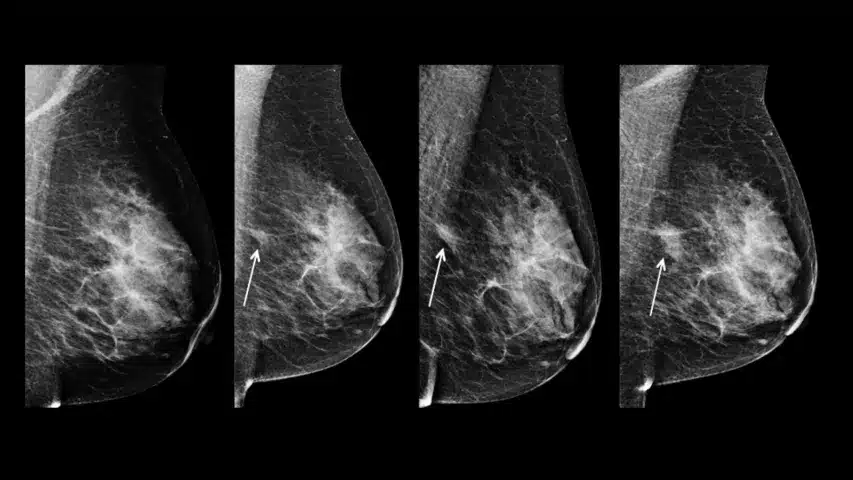
On a mammogram, breast cancer may appear as:

  • Lumps or masses: Areas with a defined shape or irregular borders.
  • Calcifications: Tiny white specks that may indicate early cancer.
  • Asymmetry: Uneven densities between the breasts or changes compared to prior scans.

Examples of breast cancer on mammograms:

Example of asymmetry in breast imaging. This is a series of breast cancer mammogram images obtained at annual screenings in the same patient, displayed from oldest (far left) to most recent (far right). An asymmetry in the posterior central left breast (arrows) becomes more obvious and increases in size over time, highlighting the importance of frequent mammograms. Image courtesy of RSNA.

what does breast cancer look like on a mammogram?

Help us improve breast cancer detection?  

We want to ensure no more lives are cut short by breast cancer. Support our life changing research with a donation, or participate in a clinical trial to help us to find a cure.


Latest Articles

neoadjuvant now: what’s next in pre-surgical breast cancer treatment?
intimacy and insight: sexual health after breast cancer

METASTATIC BREAST CANCER TREATMENT

Dr Carlos Barrios is a medical oncologist from Brazil. He was a guest speaker at our 2024 Annual Scientific Meeting and we spoke to him about the sequencing of antibody drug conjugates and what to do after metastatic breast cancer patients progress on CDK4/6 inhibitors.

Dr Carlos Barrios is a medical oncologist from Brazil. He has dedicated his career to breast cancer research and clinical trials,  and coordinates the Latin American Cooperative Oncology Group in Brazil, which congregates investigators from 16 different countries in the region.

His main interest is to establish collaboration between institutions across different countries, to further breast cancer research.

He was a guest speaker at our 2024 Annual Scientific Meeting and we spoke to him about the sequencing of antibody drug conjugates and what to do after metastatic breast cancer patients progress on CDK4/6 inhibitors.

“Well, I’m here to discuss a number of things in two different talks. One of them, is going to address antibody drug conjugates. We need to realize that we are facing three different revolutions at the present time in the management of cancer in general, but breast cancer in particular. One is immunotherapy that has a broad impact in oncology in general, and it’s starting to have a larger impact in breast cancer.”

“The second one is the CDK4/6 inhibitor revolution, where we are changing the treatment of patients with hormone-receptor positive disease, with survival benefits we have never seen before. And the third revolution is the antibody drug conjugate.”

“Antibiotic drug conjugates are different complex drugs, where you put together an antibody that is directed to a specific antigen, you put a linker that actually links that antibody to a cytotoxic, such as a chemotherapy, and that conjunct of components actually has demonstrated to be much more effective than standard chemotherapy whenever it has been tested.”

“So, these drugs are revolutionising the management of breast cancer in different arenas. Particularly in HER2-positive disease, but also in hormone-receptor positive disease and triple-negative breast cancers.”

“So, I presume, or I predict that these drugs are going to be more and more impactful in what we do in our everyday life in clinical practice. And we’ll have a significant impact on outcomes for patients whenever the drugs are indicated.”

Listen to the Podcast

We spoke with Dr Carlos Barrios about the sequencing of antibody drug conjugates and what to do after metastatic breast cancer patients progress on CDK4/6 inhibitors.

So, essentially, it allows the chemotherapy to more effectively target the tumour, is that correct?

“Well, the mechanism of action of the antibody drug conjugates remains, in my opinion, to be elucidated. We discuss the principle that by linking the drug to the antibody, you will prevent some of the toxicity that cytotoxic drug will have. However, that’s not necessarily what we see. We see significant amount of toxicity still when you give these drugs, but they are much more effective.”

“And at the same time, these drugs are more effective than most of the chemotherapies that have been tested against. So, I think that the idea of the mechanism of action, still remains to be clarified. There are a number of different potential mechanisms of action, not necessarily just protecting that particular toxic drug from causing toxicity.”

“I think that if you look at it from a historical perspective and we look at the academic community in general, we have been fairly good together with pharmaceutical industries in bringing new drugs into the market. And we have been able to do that with positive outcomes for our patients.”

“However, the process still has some caveats we need to recognize importantly. We do not study very well the mechanism of resistance to these drugs. We just define that they work better than we had before. But why they stop working remains, in most cases, still a black box.”

“We know some of the mechanisms, but not necessarily all. And that’s critical for one reason as we have these drugs now into the market, and as we benefit more patients, after the patients actually progress, or the drugs stop working, what do we do next?”

“So, sequencing these drugs that seem to be a better way of delivering chemotherapy remains something that we have not been able, from the academic point of view and from the industry point of view, to study the best way possible. So that remains an unmet need and that’s what’s going to be reflected in my presentation.”

What options are there available to patients when they progress on CDK4/6 inhibitors?

“Well, the presentation I’m going to address, is a very interesting scenario that actually represents a change in what we have been doing for over the last 40 years.”

“For the last four decades, we have been treating patients with hormone receptor positive disease as if we’re all the same, giving them endocrine therapy. We have learned over the last couple of decades, that the pathways involved in endocrine signaling are much more complicated and complex.”

“And the issue, as a consequence of that, is that when we start combining drugs with endocrine therapy, we get better results. And this is what happened with the introduction of CDK4/6 inhibitors. And these are not going to be the only drugs. There are going to be other drugs that will be playing into that field. The point is that after the introduction of CDK4/6 inhibitors, we now have revolutionary survival amounts of time for patients with hormone receptor positive metastatic disease in excess of five years.”

“That’s absolutely fantastic, but the question is most of these patients actually progress at some point and what we’ll be addressing which represents again a consequence of our understanding or better understanding over the last 15 years of how complex hormone receptor positive disease is, what do you do after progression?”

“And the fact is that a number of different alternatives have been generated that actually call our attention to the fact that first we need to identify different patient populations that before we treated as if we’re all the same. Now, we must identify different subgroup of patients that have different biological characteristics, that have different biological outcomes or rhythms.”

“The disease may be more or less aggressive. And all these factors do have an influence on how you treat these patients after progression of the CDK4/6 inhibitors. And I kind of make a joke that that’s the scenario, where breast cancer is going to ever be as similar as lung cancer is. In lung cancer, we were able to, after the year 2000, identify different subgroup of patients with different diseases that are characterized by different molecular abnormalities.”

“This is not exactly the same, but similar. Breast cancer is different from lung cancer. But this is what we’re facing at the present time. So, there are three, four, five different categories, clearly identifiable categories of patients that actually deserve different treatment approaches. And this is what we’re going to be discussing in the other presentation.”

“Cancer is a disease that needs to be communicated as being curable. As long as you detect the disease early, you actually cure most of the patients where that happens. However, when the disease disseminates, the situation is different.”

For those who aren’t familiar, why do we need to explore different sequencing options for treatment?

“Well, what we have been able to do in some cases is to cure the disease, even if it is disseminated. But that’s a minority of patients. What we do most of the time is control the disease for a period of time, but inevitably after a certain period of time, the disease becomes resistant to the therapy we give, and we need to select new alternatives.”

“So, what we do in patients that have disseminated disease, we sequence different therapies in order to prolong the life of the patients. In that very difficult process, we need to consider how long we do that in each step. And we need to consider quality of life with the toxicities patients actually have, which is each line of therapy.”

“So, sequencing remains a very important issue mainly because of efficacy and the toxicity and the consequences that these two elements have in the physician’s decision. I need the patient’s decision on how to select one treatment after the other.”

What are the benefits of antibody drug conjugates when treating breast cancer?

“The antibody drug conjugates represent a revolution because they are very elegant molecules, that are difficult to build, and they have been developed over the last 30 to 40 years. So, the concept is not new. But once we used this drug in practice, the initial idea was to prevent the very toxic chemotherapy we attach to the antibody to cause toxicity.”

“And we would have the idea that these drugs would be more tolerable.” “What we have learned is not that the toxicity is the same. We have learned, and this is the main advantage, these drugs are much more effective and in certain circumstances are leading to prolonging the survival time of some of the patients.”

“So, I think that the idea is that we have learned in this process, even though we don’t have less toxicity. We have much more effective drugs to prolong the treatment control and maybe some of these patients in certain subgroups may be cured of the disease and I’m sure that’s going to happen.”

“For example, in HER2-positive disease. We know we can cure HER2-positive disease with chemotherapy and antibodies against the disease. Certainly we have found significantly much better results and the perspective or the idea that we can cure more patients, even in the metastatic setting, in this situation is something that is keeping us very enthusiastic with the clinical applications of these drugs and clinical practice.”

“I think that with the community involvement, government involvement, societal involvement, patient involvement, industry involvement, we should be able to advance at faster rates than we have so far.”

How do we ensure new treatments like these are safe and effective for patients?

“Well, I think that’s part of the clinical trials and Breast Cancer Trials is actually doing that. It’s obviously critically important to recognise that we need research. We need the support for research. I think that it’s extremely critical for us to realize that support for research is scarce. We can only do limited trials from all the things that we need to investigate.”

“Certainly, we are generating a number of different alternatives for treatment over the last 5 to 6 to ten years that is absolutely impressive, but we need to do more. There are still questions we need to answer and support for research that will be well defined, well designed, and directed specifically to the populations that need treatment.”

“It’s going to be critical for us to move forward. So, I guess the final message on this issue is the fact that research is something we should all be involved with. From the patient, their physicians, society, government. In pharmaceutical industry, everybody involved in clinical research actually gains something from their participation.”

“So, I think that supporting clinical research is absolutely a must for all of us in order to improve cancer outcomes even further.”

What advice would you give to a patient who was exploring new breast cancer treatment options, such as antibody drug conjugates?

“I think that patients are a critical aspect, and they are actually the most critical aspect of all we do. Involvement of patients in the whole process is obviously mandatory. So, the patient is central in this process. But in research, we cannot do research without patients and certainly involvement of patients in research is obviously critical.”

“So, I think that that we should envision a situation where patients, when facing a situation on changing therapy or starting therapy, should ask their doctors, is there a clinical trial? Is there something I can do in order to improve knowledge and participate, gain benefits from participation of your generating information.”

“I think that in that setting, patients are obviously also very, very critical because their involvement with clinical research is absolutely mandatory in order for this to move forward.”

What excites you about the future of breast cancer treatment?

“I think that we have many challenges. And I look forward to what I can expect in the next 5, ten, twenty years. I think cancer is not going away. It’s something that we’re going to have to face together. It’s a big challenge.”

“So, we’re going to have to build a big group of people involved. In order to challenge all the issues that we need to solve, leading with cancer. Personally, I think that when you look at the results that we have today, they are better than what we had, but there’s a lot of room for improvement.”

“I think that one of the most critical things that touches me, and that I have been trying to get more and more involved in, is with the issue of access and the issue of not having equal availability of treatments all over the world. Most new drugs that are launched into the market are only available for less than 10 percent of the world’s population.”

“That’s a very big discrepancy. And that explains why the outcomes are so different in different countries and different regions. So, we need to fight against that. And there are many issues related to that. But certainly, that’s one of the things that I feel we all should be involved with. The second aspect is to stimulate more research.”

“I think that we need to build that group of people. Concentrated in trying to answer the most important questions. And having all the players actively involved. Industry, patients, governments, physicians, societies, research groups. All these need to be sitting at the table and discussing what the best ways forward will be.”

“And that probably is context dependent, in terms of what could be a solution in Australia may not necessarily work for the US or for the UK or the rest of Europe, or certainly not for South America or Africa. So, I need to see that these groups of players meet and get together within their context with specialists that know their reality in order to be practical and find the solutions that actually will help people in each different region.”

Support Us

Help us to change lives through breast cancer clinical trials research

Latest Articles

neoadjuvant now: what’s next in pre-surgical breast cancer treatment?
intimacy and insight: sexual health after breast cancer
split-banner-image

DCIS AND THE RISK OF LOCAL RECURRENCE

Dr Christina Kozul is an accredited general surgical trainee at the Royal Melbourne Hospital. We spoke with her about DCIS and why the risk of local recurrence might be a concern for some women.

Dr Christina Kozul is an accredited general surgical trainee at the Royal Melbourne Hospital who aims to sub specialise in breast surgery. She is passionate about contributing to breast cancer research to improve outcomes for women with ductal carcinoma in situ, also known as DCIS, and breast cancer.

We spoke with Dr Kozul about DCIS and why the risk of local recurrence might be a concern for some women.

“So, DCIS is an early stage of breast cancer. It’s where the cancer cells are contained still within the duct. So, they haven’t evaded outside of the duct, and it accounts for about 25 percent of mammogram-initiated diagnoses.”

“We think that if you leave most DCIS untreated, that most will develop into invasive breast cancer. And that’s why we treat it quite aggressively with surgery, radiotherapy, and endocrine therapy. But we’re getting excellent survival rates now at 99 percent in five years.”

“So we’re thinking, can we identify a patient group that we can reduce their risk or reduce their treatment burden. And the reason why we worry about their risk of recurrence is because if they go on to then have a cancer then obviously that is a life threatening disease, but DCIS in isolation is not life threatening because the cancer cells have not have not exited the duct.”

Listen to the Podcast

We spoke with Dr Kozul about DCIS and why the risk of local recurrence might be a concern for some women.

Can you explain the different treatment options available for DCIS and why might some women choose treatments without radiotherapy?

“So, the primary treatment for DCIS is surgery. So, in my patient cohort, only 2 percent of patients will have breast conserving surgery or what we describe as a lumpectomy. So we just cut out the cancer and we leave the remaining breast. Mastectomy is reserved for patients that have breast cancer, or who have a large burden of disease or multifocal disease, that are not suitable for breast conserving surgeries, they would have a large defect.”

“And some women would just prefer to have the whole breast taken off if they have an increased risk. So, then we use adjuvant radiotherapy to try and decrease the risk of recurrence. And we’ve shown in multiple, randomised control trials that it can reduce the risk of recurrence by 50%.”

“However, it doesn’t alter survival. So, you may have a decreased risk of having a breast cancer in the future, but it doesn’t affect how long you live for. So, some patients are receiving radiotherapy with no benefit. We know that, and despite 70 percent of women worldwide receiving radiotherapy after their breast conserving surgery, endocrine therapy is determined by looking at the patient’s receptor status and diagnosis. That’s the ERPR, or your estrogen receptor positive, or progesterone.”

“If it’s ER positive, so estrogen receptor positive, then we use hormonal therapy to try and decrease that patient’s risk of recurrence. And that can reduce their risk of not only in the breast that they had the DCIS, but also in the other breast by up to 30%.”

“So, patients will have very close follow up in the first couple of years of years after treatment. So, they’ll be seen by their treating team every three to six months for the first two years. Every 12 months they will have some imaging, most of the time it’s a mammogram, depending on what centre you’re in.”

“We use contrast enhanced mammogram at the Royal Melbourne where I work, and those patients will have yearly mammograms usually within their breast service for the first five years. And then potentially they’ll be discharged to a shared care model, which is where the GP organises the mammogram and collects the results, and then only will it escalate to the breast care unit if something is abnormal on that imaging, or from the results.”

“So, women really like that option because they can go to their local GP that they love and they trust, and they don’t have to travel often as far or wait in clinics for many hours.”

What support resources are available to women who have been treated for DCIS, particularly in understanding their risk of local recurrence and managing any concerns they might have?

“So, their breast surgeon will be the primary source of information. They will help guide the lady through what type of treatment would be best for her. And also trying to consider all of the unique patient factors for that patient. So, looking at what matters to them, or what they would prefer, and that in combination with the best available evidence will come together and then the surgeon will make a plan with the patient about what their best treatment option will be.”

“And then if there is an area of concern that the patient has, then we’ve got lots of resources and people we can speak to about trying to give that patient more support.”

“We have a wonderful group of breast care nurses at my institution, and they can really help navigate the patient through the experience. And if there’s any issues, they’re a fantastic port of call to ask and try and navigate through that.”

“Also, I guess the primary treatment team, including the GPs can help as well, but a little bit depends on what the problem is. There’s always someone that can help.”

Support Us

Help us to change lives through breast cancer clinical trials research
Latest Articles

neoadjuvant now: what’s next in pre-surgical breast cancer treatment?
intimacy and insight: sexual health after breast cancer
split-banner-image

THE IMPORTANCE OF PATIENTS HAVING A VOICE IN THEIR TREATMENT

We spoke to one of our Consumer Advisory Panel members, Rebecca Angus, about the importance of patients having a voice when it comes to their treatment.

Rebecca Angus is a senior podiatrist with a personal history of breast cancer, being diagnosed with the disease in 2018 at just 33 years old. She is also a member of the Breast Cancer Trials Consumer Advisory Panel, who provide a patient’s perspective in all aspects of clinical trials research.

We spoke to her about the importance of patients having a voice when it comes to their treatment.

“So, in an era where information and collaboration with consumers on providing treatment optimisation and designing the best clinical trials with consumer engagement, we discussed what the consumer’s perspective is on endpoints.”

“I think what we found was that there is a real lack of evidence and understanding around clinical endpoints. So, in the future I feel that we need to empower patients with education and more understanding around what clinical endpoints mean and what they mean for their treatment.”

“That’s only going to happen through forming the right language around clinical endpoints and with treatment practitioners actually engaging with their patients and explaining it a little bit better so that they understand what’s going on, what the outcomes are, and what the aim is for their current treatment.”

Listen to the Podcast

We spoke to one of our Consumer Advisory Panel members, Rebecca Angus, about the importance of patients having a voice when it comes to their treatment.

How can understanding the ‘end point’ empower patients in their treatment decisions and discussions with their healthcare providers?

“I guess it just depends on how much patients are reading the research and how much they really understand. So obviously, we all want overall survival. But we also want good quality of life with our treatments as well. And there is a balance between both of those things. So, I feel like understanding what a treatment is going to do for you, is important for the patients to understand all the side effects.”

“So, think it’s important that patients understand all aspects of how it’s going to impact them. We all know that cancer treatment does have many impacts, and impacts different aspects of a patient, but it is also reassuring, for patients to know that through being part of a clinical trial, the researchers are going to look at all aspects of the patient and not just focusing on what a particular drug is going to do to you.”

“You’ll also be assessed, and they’re going to look after you. The main aim is to improve all outcomes in all areas for people affected by breast cancer, and I know that the trials that Breast Cancer Trials conduct do that.”

What are your hopes for the future?

“I really hope for more consumer engagement on clinical endpoints and working out what’s important to patients. Whether or not it is more quality of life aspects of a clinical trial, and having them put into earlier phases in clinical trials so that we are capturing some of the patient voice earlier on.”

Support Us

Help us to change lives through breast cancer clinical trials research
Latest Articles

neoadjuvant now: what’s next in pre-surgical breast cancer treatment?
intimacy and insight: sexual health after breast cancer
split-banner-image

COLLABORATING WITH PATIENTS FOR A SUCCESSFUL CLINICAL TRIAL

We spoke with Medical Oncologist and Medical Advisor, Dr Nicholas Zdenkowski, about the importance of collaborating with patients and why their involvement is crucial for the success of a clinical trial.

Dr Nicholas Zdenkowski is a medical oncologist and medical advisor with Breast Cancer Trials. He is the Chair of the Breast Cancer Trials Scientific Advisory Committee and works on a broad range of breast cancer research, including shared decision making, clinical trials and patient reported outcomes, particularly around neoadjuvant systemic therapy.

We spoke with Dr Zdenkowski about the importance of collaborating with patients and why their involvement is crucial for the success of a clinical trial.

“Collaboration with patients on clinical trials is crucial to the success of those trials, and there are two main aspects to that. One is in the design of the clinical trials, and that’s where consumers come in and a consumer is somebody who has a lived experience of a medical condition. They are able to give an understanding and commentary about how that medical condition, in this case breast cancer, affects people with that condition, and how that research might be able to be optimised to give the best outcomes for those patients who are diagnosed with breast cancer.”

“There’s a lot of complexity in designing clinical trials, and so consumers also have a lot of training to allow them to understand the research processes that takes place to be able to give the best advice and to help strike that balance between a good clinical trial that is going to ask a question but that might not be feasible or practicable and the trial that might be very practical, but doesn’t necessarily answer the question.”

“We need to be able to produce interventions or new treatments that are going to improve outcomes, and that people are going to be more informed, and willing to receive a new drug that has lots of side effects is something that people aren’t going to want to receive.”

“So, we need to work with consumers right from the start of those clinical trials through to the reporting of the clinical trials. The second aspect is in partnering with the potential trial participants.  So, trial participants are key to understanding the effect of an intervention, and that’s what we’re doing in trials, is working out if some new way of treating breast cancer can improve those outcomes.”

“And that might be reducing the likelihood of breast cancer returning. It might be the same degree of prognosis, but with reduced side effects, or it might be related to having less treatment with the same outcomes. And that’s something that Breast Cancer Trials has been quite interested in. So, working with those trial participants is very important and allowing trial participants to contribute fully and to understand what they’re participating in is the second key aspect of a successful trial.”

Learn more about participating in a clinical trial.

Listen to the Podcast

We spoke with Medical Oncologist and Medical Advisor, Dr Nicholas Zdenkowski, about the importance of collaborating with patients and why their involvement is crucial for the success of a clinical trial. 

How can potential participants make informed decisions about participating in a clinical trial?

“There is a process of consent for a clinical trial. Consent is often considered in the form of a document. The document is called a patient information and consent form and that is signed by the patient when they are examined and becoming a trial participant.”

“The real consent is in understanding what the trial involves, and so signing the piece of paper is just the documentation of it, and it’s often a very difficult document to understand. It might be 20 pages long. And so having those discussions is crucial. That’s with the clinician, with the doctor who is offering that clinical trial, with the clinical trial coordinator, who is often a nurse who can sit down and take some time to explain some of the nitty gritty around the trial and what it involves.”

“Taking some time to go and talk to loved ones, talking to other doctors, a GP for example, and then coming back and asking questions, and really understanding what they’re going to get into. If they have reservations, often that can be addressed about what the trial involves, but ultimately, it’s a choice.”

“It’s not an obligation to participate in a clinical trial. For some people, it just doesn’t fit, and if they’ve thought about it, and decide against it, then that’s no problem. That’s not an issue at all because my real expectation and hope is that for people who participate in clinical trials, they do their best to continue with that clinical trial to enable the trial to collect the information that is going to lead to outcomes from the trial that we can interpret and then introduce into routine clinical care.”

Learn more about what is meant by Informed Consent and other key terms used in breast cancer research.

How important is clear communication between a medical professional and a patient during the clinical trial process? What should patients expect?

“The patients should expect that the doctor talks about what standard care is in the first instance because that’s what we have available and then after that they would talk about the potential clinical trial that’s available and I would expect that it is a very clear process and that they take the time right at the outset for the potential trial participant, who’s currently their patient, to really understand what’s going to happen as part of that trial.”

“It’s a problem if later on down the track there are surprises. If there’s a surprise as a result of the trial that could have been anticipated, then the patient might be wrong footed, and they might then feel as though participating in the trial is not for them.  And if they then pull out of the trial, which is well within their right, that has the potential to reduce the impact of that trial.”

“Or if too many people drop out of the trial, then the results just may not be interpretable, and the trial is done in vain. And that’s a shame because of the amount of effort that goes into running clinical trials. So having that time up front is just so crucial.”

Learn more about the importance of language between patients and their health team.

“Support systems for trial patients include the time spent with the doctor and often in the clinical trial they have more visits and that can be a source of reassurance to have more trial visits, more time to discuss. Sometimes there will be some additional tests that will be done as well, which can provide a degree of reassurance.”

What support systems are in place to assist patients when participating in a clinical trial?

“An important component of clinical trials is the involvement with the clinical trial coordinator. So, a clinical trial coordinator is there to help smooth that process. It can feel a little bit overwhelming to many people because cancer is really confronting and it’s an emotional process going through a cancer diagnosis and treatment.”

“And then to layer the complexity of a clinical trial on top of that can just feel too hard. But having a clinical trial coordinator helps and goes a long way to smoothing that out and making it a whole lot easier, and in fact, they coordinate a lot of the treatment for those participants to make it easy so that they can come in, have the trial treatment, and be a source of questions and answers.”

“There’s a lot of information out there about clinical trials as well. Breast Cancer Trials has information about clinical trials. Breast Cancer Network Australia has information as well. And what I’m seeing overall is that society understands that clinical trials are a key aspect of routine patient care.”

“And so, there’s increasing acceptance of clinical trials and a lot of oncologists see clinical trials as being crucial. So that people come in asking about them and understanding what the trials are about. And that makes people more confident that the clinical trials are a treatment that they can rely on.”

Learn more about clinical trials.

What are your hopes for the future of breast cancer research?

“That’s a hard question to answer. There’s lots of things that that we can do, and over the years we’ve seen reduced breast cancer mortality, more people surviving breast cancer, and over the coming decades, I think that it’s going to take a long time before we can prevent breast cancer, but I’d like to see a lot more breast cancers prevented and there are ways to do that.”

“I would also like to see patients have sufficient confidence that they can live their lives after a diagnosis of breast cancer, without having to worry about the potential for that cancer coming back, that we can tell them for sure that this cancer is really not going to come back. One, because the treatments have been so effective. And two, because we’ve got a test or another way of knowing that for that individual, the cancer is almost certainly cured.”

Support Us

Help us to change lives through breast cancer clinical trials research
Latest Articles

neoadjuvant now: what’s next in pre-surgical breast cancer treatment?
intimacy and insight: sexual health after breast cancer
split-banner-image

QUALITY OF LIFE OUTCOMES AND TREATMENT SUCCESS

Dr Deme Karikios is a medical oncologist working at the Nepean Hospital in Sydney. We spoke to him about the importance of quality-of-life outcomes and looking beyond survival rates when discussing treatment success.

Dr Deme Karikios is a medical oncologist working at the Nepean Hospital in Sydney. He has a clinical and research interest in thoracic and gastrointestinal malignancies. We spoke to him about the importance of quality-of-life outcomes and looking beyond survival rates when discussing treatment success.

“So, I think outcomes that matter are those that really meaningfully improve the patients’ lives, whether they have metastatic breast cancer or any other type of cancer or illness for that matter. For us as a movement, we think those main things are survival time, so how long you live and also the quality of that time.”

“I think they’re the two main things that matter to really anyone living with any illness, and the most important things we can measure in any trials we do looking at new treatments.”

How does focusing on these outcomes enhance patient centred care in oncology?

“So, if we imagine doing studies and trials of new treatments, where we measure things that don’t actually improve people’s quality of life or survival, then we’re sort of wasting their time. There’s a number of concerns with that.”

“Coming to the doctor and having tests and having all this treatment, which may cause many side effects, which doesn’t actually improve things for years is terrible. So, we want to really avoid that. So really doing research that tries to identify outcomes that matter and measure them better is only going to ultimately help individuals with cancer to feel better and live longer.”

Listen to the Podcast

We spoke to Dr Deme Karikios about the importance of quality-of-life outcomes and looking beyond survival rates when discussing treatment success.

What are some key indicators of quality of life that are considered most important in evaluating treatment outcomes for breast cancer survivors?

“Yeah, it’s tricky because I think I guess it depends on the tool you use. I’m not personally familiar with all the best possible tools to use in someone with metastatic breast cancer or any breast cancer survivor for that matter.”

“I think using a quality-of-life tool that really captures what’s important to patients is what we should be aiming for obviously. We want to make sure that tool is validated, so it can measure what it says it’s measuring. I guess ultimately if we get that right and get the measures right, I’m not sure exactly what should go into those tools, but if we get that right, then we’re going to be more certain that the treatments we’re offering patients do really improve their quality of life and ultimately make them happier and feel better.”

Why is it important to look beyond survival rates when discussing treatment and success in breast cancer?

“I still think survival is one of the most important things. If I was having treatment for cancer, I’d want to know how long I’m going to live or what’s my chance of cure with this treatment versus that one. But of course, we want the journey on the way to be of the best quality as possible.”

“So, I think a lot of trials that we do, whether it’s within trials groups like Breast Cancer Trials, or any trials groups, don’t focus on quality of life enough and that’s because it’s challenging to measure and often expensive and takes longer. I think we need to put a lot of effort into that so we can make sure however long someone might live with cancer, that their quality of life is as good as it can be or we’re measuring it as good as we can be.”

“So, I think for focusing on the things that matter to patients, then it’s much easier to explain what benefits a certain treatment has. If you can imagine when you’re talking about things like whether a tumour shrinks on a scan or whether the pathology is good or bad, they’re things that are a bit abstract. What I like about trials that measure survival and quality of life, are that you can explain to someone more clearly what benefits they will have.”

“You can say, ‘you’re going to likely live six months longer or 12 months longer with this treatment’. Or ‘you might have a 10 percent chance of cure if you have this treatment’. I’m talking about those other concepts. Sometimes it’s a bit difficult to explain to a person, what does that really mean to me? What does that mean long term?”

“That information is useful but isn’t helpful to them when making treatment decisions. I think when we’re talking to patients, we want to be as clear as possible about what benefits they actually should expect. And so, I think that’s why we need to focus on those outcomes that matter to them because then you can explain to them, ‘this is what this treatment will do for you’.”

“I think just discussing what matters to you with your treating doctor is probably the best thing, because then they can tailor the treatment to your needs.”

For women who might currently be navigating breast cancer, what advice would you give them in terms of prioritising outcomes that matter to them personally?

“I think it’s about talking to your treating doctor, whether it’s your surgeon, radiation oncologist, medical oncologist, whoever it is about what matters to you. Of course, we think survival and quality of life matter most, but there may be specific things that matter to the individual and raising them any time along the journey is important because I think then the treatment that is offered to you can be tailored based on those wants and needs.”

“For example, patients might say, ‘I want to come in less often because I have to care for my child’. And I think that’s useful, because then we can sometimes offer them a treatment which is less frequent or perhaps give them less treatment because those things are more important.”

What are your hopes for the future of breast cancer research?

“I’m not a breast cancer doctor, but I am obviously involved in cancer care research, and I think obviously if we could get a cure for breast cancer, that’d be fantastic. I think that happens with early disease, which is great. But what I would love is for patients to have the best possible treatment that helps them live the longest but feel the best.”

“You know, in an ideal world there is a treatment, even if you have an incurable cancer, a treatment that you can stay on forever without any quality of life issues and you can live a length of life that you would normally live.”

Support Us

Help us to change lives through breast cancer clinical trials research

Latest Articles

neoadjuvant now: what’s next in pre-surgical breast cancer treatment?
intimacy and insight: sexual health after breast cancer
split-banner-image

WHAT IS DUCTAL CARCINOMA IN SITU (DCIS)?

Professor Sunil Lakhani is the Chair of the Breast Cancer Trials Board of Directors, and we spoke with him about ductal carcinoma in situ (DCIS) and how it relates to breast cancer.

Professor Sunil Lakhani is the Chair of the Breast Cancer Trials Board of Directors. He is a clinical diagnostic pathologist and also heads up a research team at the University of Queensland, comprising scientists and clinicians ensuring a translational focus to the program. We spoke with him about ductal carcinoma in situ and how it relates to breast cancer.

“So, DCIS stands for ‘ductal carcinoma in situ’ and the reason why it is called ‘in situ’ is because we are talking about a disease process, a cancer that is still confined within the ductal and lobular structure of the breast. So, in other words, it’s inside the tube-like structure in which the cells are normally present, which are benign and then eventually turn into cancer, but they’re still confined to the ductal lobular tree.”

“In order for the disease to be invasive, and therefore, how it differentiates from invasive cancer is that the cells have to break out of the tube-like structure and invade the surrounding stroma that contains those ducts. And so, in that sense, it is a cancer, but it is not a cancer that is broken out of its structure in which it is arising.”

“And therefore, doesn’t really have a propensity to spread to different parts of the body. So, it’s a good prognostic cancer. Because it is not invasive and therefore doesn’t have access to blood vessels and so on, in order to spread to the other parts of the body.”

“So, in the old days, you know, 50-100 years ago, DCIS would have been diagnosed because patients presented with a mass in the breast or pain or some other symptom. But these days almost all DCIS is diagnosed because of the mammographic screening program. Some types of DCIS have a propensity to get calcification within it because of the cells dying.”

“And when the cells die, that necrotic tissue often gets calcium deposited into it. And so, on the mammographic screening, the radiologist might pick up types of calcifications, which make them suspicious that it is present inside the ducts, and therefore that patient may have DCIS. So, most DCIS these days is actually picked up because of mammographic screening programs.”

Listen to the Podcast

Professor Sunil Lakhani is a clinical diagnostic pathologist and also heads up a research team at the University of Queensland, comprising scientists and clinicians ensuring a translational focus to the program. We spoke with him about ductal carcinoma in situ and how it relates to breast cancer.

What are some key pathological characteristics of DCIS and how might these impact its management and treatment?

“So, as I said the DCIS is basically a carcinoma in situ, meaning that the cancer cells are present inside the duct. And so, at biopsy, when somebody is suspicious that a patient has DCIS, that biopsy shows us that there are these atypical cells inside the duct.”

“And then we use features relating to how bad it looks to decide whether it is benign or malignant. And once we have decided that it is DCIS, we classify it according to the growth pattern in which we see those cells. But more importantly we grade them or type them by the nuclear characteristics, into low grade, intermediate grade, or high grade.”

“Now, these are not absolute categories. They are a continuum. But we try and separate these types of DCIS into those that we think might be less aggressive versus more aggressive through grading them into low, intermediate, and high. And all DCIS is managed mostly by surgical treatment, so you excise it.”

“And if you have a conservation operation, in other words, not a mastectomy, the patient will often have radiotherapy to try and reduce the risk of recurrence. The high-grade ones are more likely to recur than the low-grade ones. But overall, the treatment strategies are similar in that surgery is the mainstay, followed by radiation.”

“Pretty much all DCIS will have surgical treatment. The radiation is given if the operation is limited. In other words, it’s not a mastectomy. So, if it’s a conservation operation, for example a wide local excision, then radiation is usually given in order to reduce the risk of recurrence coming back into the breast.”

“The recurrence is also dictated by how wide the margins are during the surgical excision. But generally, the patient will receive radiotherapy to reduce recurrence.”

“I think breast cancer research is important because everything from diagnosing a tumour early such as we do with DCIS or other types of ‘in situ’ malignancies, as well as understanding how the biology of these different lesions impacts the recurrence rates and the ability to develop new therapeutics so that we can treat patients who have aggressive disease, is important in reducing the burden of disease as well as making the lives of patients.”

For women who have been diagnosed with DCIS, what important information should they know about the management of their condition?

“So, when they have a diagnosis of DCIS, they will go and see the surgeon, and then following the surgical treatment, they’ll also see a radiation oncologist. And so, they’ll get information relating to what type of DCIS it was and what kind of surgical procedures have taken place and, therefore the likelihood of recurrence depending on what grade it is.”

“But actually, most patients with DCIS will do well, and certainly there’s a very low risk of dying from the disease. Unless it recurs in the future, you know, with some other disease.”

How can knowledge about DCIS empower women in their healthcare decisions and discussions with their medical team?

“Well, I mean once you have a diagnosis of DCIS, obviously you’ve therefore had the disease and knowing that you’ve had the disease is important so that you can have regular screening where you will hopefully identify if any recurrence takes place. But the important thing is not to be over-anxious about it because it hasn’t broken out and become invasive and therefore it’s manageable and it’s highly unlikely that a very big harm will come to women with a diagnosis of DCIS.”

“So, they shouldn’t be scared of it and there’s certainly possibilities in terms of the screening program that will help to make sure that if there is a recurrence, it will be picked up sooner rather than later.”

Support Us

Help us to change lives through breast cancer clinical trials research
Latest Articles

neoadjuvant now: what’s next in pre-surgical breast cancer treatment?
intimacy and insight: sexual health after breast cancer
split-banner-image

EXPANDED RECRUITMENT, TELEHEALTH AND CENTRALISED SCREENING IN CLINICAL TRIALS

Dr Zardawi is dedicated to providing compassionate, patient centred care for patients and their families at all stages of their cancer treatment, and we spoke with her about the role of telehealth in the conduct of clinical trials research.

Dr Sarah Zardawi is an early career medical oncologist who has trained in palliative medicine. She has a private practice in Maitland, New South Wales, and is working as a clinical fellow at Breast Cancer Trials in Newcastle.

“Cancer medicine and clinical trials are increasingly targeted as we try and deliver personalised medicine for patients. As a result, we’re testing more and more specific things in more and more specific situations, which is great for patients in terms of patients getting the right treatment at the right time with as few side effects as possible.”

“But it means that it’s increasingly difficult for clinical trials to find those patients and run the trials in those patients. So, our project is about trying to expand recruitment and reach more patients to try and catch those patients that are eligible for these increasingly specific clinical trials, and also just reach more patients in general that might not live in a metropolitan area.”

How has telehealth transformed the way that breast cancer clinical trials are conducted and what are the advantages and potential limitations?

“So telehealth is an increasing priority in healthcare and particularly after COVID-19, patients are increasingly wanting and expecting telehealth because of the benefits in terms of convenience.”

“So clinical trials are very complicated, and it is difficult to run a trial entirely via telehealth, but that is an increasing research priority. Our project is just a small part of the clinical trial process, wherein we’re trying to help find the patients that are eligible for some particular breast cancer clinical trials using telehealth.”

“So we’re taking the travel and the logistics out of the first part of the clinical trial process, where patients are able to be assessed remotely via telehealth, to see if the trial would be a good fit for them. If they’re a good fit for the trial we connect them with a main trial site, which does involve them travelling, but we’ve at least streamlined the start of that process for them.”

“So, it’s a new process for us and we’ve had to develop some new systems to be able to receive referrals, review patients, test patients, and communicate the results back to patients and to their regular oncologist. So, it’s definitely been a logistical process that we’ve worked through.”

“We’re hoping that we’ll be able to use this for more and more breast cancer trials in the future. Because as I said before, our trials are increasingly trying to target very specific patient groups.”

Listen to the Podcast

Dr Sarah Zardawi is an early career medical oncologist who has trained in palliative medicine. She has a private practice in Maitland, New South Wales, and is working as a clinical fellow at Breast Cancer Trials in Newcastle. We spoke with her about the role of telehealth in the conduct of clinical trials research.

What impact does telehealth have on making breast cancer clinical trials more accessible to women in remote areas?

“So, most breast cancer trials are run in major cities around Australia, which obviously means that there can be travel involved for patients that live away from those major cities. So, we’re hoping that with telehealth we can remove that travel component for patients. And as a result, those patients will have access to breast cancer trials and the treatments that are being investigated.”

“We also hope that it will improve the quality of our breast cancer trials data, because it will mean that it’ll be representative data. So, we will be testing treatments in real world patients as well as taking trials to patients that live more rurally. We’re hoping that by making it easier for patients that live a bit more regionally or rurally to participate in breast cancer trials, the data that we’re collecting about how breast cancer treatments work will be more representative, and more able to be applied to a real-world population.”

“So, one of the major challenges we’ve experienced so far is actually getting the word out there about the fact that we are offering telehealth for that introductory part of some of our clinical trials.  We’ve got a great communication set up with existing Breast Cancer Trials sites and there are staff there that we work closely with.”

“But the purpose of this project is actually to take a step beyond that and to try and help patients who aren’t at a Breast Cancer Trials site to be involved in our trials. We’ve tried reaching out to the doctors, to the medical oncologists in particular, but hopefully some activities like this and reaching out to patients directly will help us implement this process and reach more patients.”

What role do educational initiatives play in increasing awareness about the benefits of clinical trials among patients?

“So clinical trials offer a range of benefits for patients in addition to testing a potential new intervention in patients. We know that the extra supervision and monitoring increases outcomes. So, it improves the outcomes for patients, even if they’re allocated to the usual standard treatment in a clinical trial.”

With clinical trials it’s really about reaching patients, and the more awareness that there is about the benefits of trials and the way that trials are run carefully, safely, and appropriately, wherein patients aren’t guinea pigs at all, but they are well cared for with the care that they need, receiving quality treatments, which are at least the best current standard of care. The more patients know about that, and hopefully the more willing they will be to participate in clinical trials and help us to improve our breast cancer treatments for the patients of today and tomorrow.”

“So, I think patients being aware of the benefits of clinical trials and also aware of any particular clinical trials that are relevant to their specific situation will just help with our research process, help us recruit those patients, reach those patients, and collect good data.”

Support Us

Help us to change lives through breast cancer clinical trials research
Latest Articles

neoadjuvant now: what’s next in pre-surgical breast cancer treatment?
intimacy and insight: sexual health after breast cancer
split-banner-image

LOBULAR PROGNOSTIC BIOMARKERS – WHAT IS THEIR ROLE IN BREAST CANCER?

Associate Professor Amy McCart Reed holds a PhD in molecular biology from the University of Queensland. She is on the Scientific Advisory Board for Breast Cancer Trials, and we spoke with her about lobular prognostic biomarkers and their role in breast cancer diagnoses.

Associate Professor Amy McCart Reed holds a PhD in molecular biology from the University of Queensland and has undertaken a series of studies investigating the genomic landscape of certain breast cancer types.

She is passionate about breast cancer research, biobanking, and precision oncology. In addition to her breast cancer research portfolio, she is on the Scientific Advisory Board for Breast Cancer Trials. We spoke with her about lobular prognostic biomarkers and their role in breast cancer diagnoses.

“So, lobular breast cancer is the second most common breast cancer, and it accounts for about 15 percent of all breast cancer diagnoses. But we don’t know as much about lobular breast cancer. For a long time, it’s been sort of sidelined from research.”

“The lobular participants in clinical trials data were not analysed, and so we’re not very clear on how to manage these cases. And currently they’re managed the same as any other breast cancer patients, based on their expression of estrogen receptors or progesterone receptors. And so, there are some aspects of their management that still remain unclear.”

“So, we have been working to try and develop a prognostic test or predictive biomarker test to help us look at the different lobular cases and work out which patients will do well, and which patients are less likely to do well and may need a more aggressive intervention plan.”

How do lobular prognostic biomarkers influence decisions regarding treatment options for breast cancer patients?

“At the moment, the biomarkers that we’re developing are antibody-based biomarkers and we have a provisional patent application submitted and we’re looking to develop a mechanism where we can do two biomarkers staining at the same time that we would do an estrogen receptor stain.”

“And we want to work out from the point of diagnostics whether the lobular samples that we’re looking at have a low risk of progressing and having a poorer outcome or have a high risk. So, at the moment there aren’t any available but we’re working on them.”

Listen to the Podcast

Associate Professor Amy McCart Reed holds a PhD in molecular biology from the University of Queensland. She is on the Scientific Advisory Board for Breast Cancer Trials, and we spoke with her about lobular prognostic biomarkers and their role in breast cancer diagnoses. 

How do lobular prognostic biomarkers contribute to personalised medicine approaches in breast cancer treatment?

“These kind of biomarkers for specific breast cancer subtypes are critical in personalizing care. We need to be able to look at an individual patient and work out which patient is likely to respond to which therapy. At the moment, we treat lobular breast cancers the same as an invasive carcinoma of no special type.”

“So, there’s limited precision medicine taking place for this cohort, and we really need to improve on that.”

How are lobular prognostic biomarkers changing the way that breast cancer is managed or treated?

“I see that these kinds of biomarkers are really complementary to traditional approaches and will be a companion diagnostic, which can help to inform new strategies for these patients alongside our existing strategies, which for a number of patients do work very well.”

“At the moment we are validating these biomarkers in independent cohorts from collaborators around the world and should this pan out we really hope to be able to move towards some sort of a clinical trial or an implementation study and then move these biomarkers into the clinic so that we can help get some more equitable precision medicine across breast cancer care in Australia and around the world.”

“I really think that we can be more strategic about who we give which drugs. We have a number of drugs that work very well in the right patient, but at the moment, the side effect burden from a number of these drugs is really quite appalling.”

What are your hopes for the future of breast cancer research?

“We need to be very careful about who we give certain drugs to. And we have the tools to do this, but we don’t really have the mechanism to make it an equitable rollout for everyone. So, I think there’s great scope for improving the drugs that we have and how we prescribe them, but also for developing new drugs and treating each breast cancer patient individually.”

Support Us

Help us to change lives through breast cancer clinical trials research
Latest Articles

neoadjuvant now: what’s next in pre-surgical breast cancer treatment?
intimacy and insight: sexual health after breast cancer
split-banner-image

SURVIVORSHIP IN BREAST CANCER AND POST TREATMENT CHALLENGES

Dr Syapiq Long is an early career medical oncologist, And we spoke with him about survivorship and some of the challenges that patients face after completing their treatment.

Dr Syapiq Long is an early career medical oncologist. He graduated from the Royal College of Surgeons in Ireland and moved to Australia in 2015 to complete his training in medical oncology.

He is currently working as a joint fellow at the Calvary MARTA and Breast Cancer Trials in Newcastle. And we spoke with him about survivorship and some of the challenges that patients face after completing their treatment.

“So today my talk will be about survivorship. And just briefly I think it’s becoming more relevant in this day and age, particularly with the increasing number of breast cancer survivors. We’re seeing the oncologists, and all of the doctors are doing so well at picking up breast cancer early and our improved treatments to the fact that we’re having increasing number of breast cancer survivors.”

“But also, I think there are some overlooked issues that cancer survivors can have that maybe we need to bring some awareness about, and that’s why I’m doing the talk today about it.”

What are some common challenges that breast cancer survivors face after completing their treatment and how do these vary from individual to individual?

“I suppose certainly there’ll be a huge variation as to the individual experience particularly around the challenges that the survivors have. But overall, the challenges are broken up into physical, social, and psychological challenges. And I do feel genuinely that some of this is an area of unmet need.”

“Most survivorship care involves us as oncologists treating the physical aspects of long-term effects of treatment, but rarely I think are the psychological and social aspects dealt with, in a comprehensive manner. And that’s down to various issues, particularly healthcare systems and the limited capacity and resources to deal with them.”

“But some of the physical challenges, for example, things like the menopausal symptoms that come with the treatments, chemotherapy and hormonal therapies, things like heart flutters, weight gain, night sweats, fatigue or tiredness from the treatments that they have.”

“Also, some of the sexual issues that come with the treatments, sometimes the loss of the ability to have a child and become pregnant, or some of the physical issues. That’s just skimming the surface, obviously. But some of the psychological issues as you can appreciate are the anxiety that comes with treatment, and the mood related problems that come with feeling low and depressed from having such a diagnosis, as well as the fear that cancer can come back at any time.”

As you can appreciate also, this will impact the individual socially, the relationships that you might have and your ability to continue to work. And so, I think we probably don’t deal with enough with these psychosocial issues as well as we should do. And I think that it’s good to bring awareness to them.”

How can a treatment team best support breast cancer patients who participate in clinical trials, especially in addressing the challenges that they face post treatment?

“Trial coordinators are probably the primary people that will make contact with participants who have completed their treatment, and these are the cancer survivors. And, you know, they will usually be the first ears that will hear all the problems that patients have been facing. And I think they are a good point of contact to, as their name suggests, they coordinate the care for patients.”

“So, finding out about their problems, identifying it, and then bringing it to the attention of the relevant teams, be it the oncologist, the general practitioner, or other health disciplines that might be able to assist, including physio, exercise physiologist, social worker, etc.”

“But obviously that’s all down to the resources that are available at the center that’s involved. But it’s a call of action for trial coordinators to be aware about all these issues so they can take initiative.”

Listen to the Podcast

Dr Syapiq Long is currently working as a joint Fellow at the Calvary Mater Newcastle and Breast Cancer Trials, and we spoke with him about survivorship and some of the challenges that patients face after completing their treatment.

What are some strategies or resources that trial coordinators can implement to best assist breast cancer survivors when coping with issues like fatigue, anxiety, fear of recurrence?

“I think initially patients will come out and I’ll tell you about all these problems. I suppose most of the time things like fatigue, anxiety, fear, recurrence, you know, a lot of it can be dealt with, through self-management strategies and things that we do all the time, such as listening to them, referring them to some mindfulness resources that are available on the internet. And I think for more complex cases, thinking about where we can make referrals to the relevant, allied health services, particularly psychologists when we talk about anxiety and fear of recurrence.”

“So, they have other strategies to rely on in terms of helping with their treatment. And I think from a fatigue perspective, certainly exercise and encouraging healthy living and promoting a healthy lifestyle after cancer treatment can help.”

“There have been suggestions that depending on what level of intensity of exercise when we talk about low to moderate exercise, there was a set number that was given, but it worked out at roughly about 30 to 40 minutes of low to moderate intensity exercise. So that’s exercise which doesn’t put you out of breath, but you are doing something like walking at a reasonable pace. Whereas at a high intensity of exercise, where, for example, you have more difficulty in completing sentences, a shorter period with 20 to 30 minutes is sufficient.”

“We’re still finding out a lot more about how we dose or prescribe exercise. And I think, you know, certainly an exercise physiologist and having access to that type of service would be very beneficial for patients.”

And could you highlight some clinical trials that are specifically focused on addressing the needs of breast cancer survivors after completing treatment?

“I’ll highlight some breast cancer trials that have looked at some survivorship issues, not specifically exercise, but for example the POEMS trial, which looked at the use of an injection given subcutaneously every month, when patients are on chemotherapy treatment to essentially prevent or to shut down their ovaries, and somewhat protect them, to allow a quicker recovery after they’ve completed their treatment.”

“And it’s shown that women who had these injections during the time of the chemotherapy, it did allow for them to still parent a child and have a pregnancy. And in some ways it did preserve their fertility as well.”

“So, you know, I think that there are trials like that that have been done in the past. I don’t know of all the specific trials that are happening in the current space, but certainly I think these are some of the initiatives that need to be taken, particularly more trials that look at addressing some of the survivorship issues, some that are even more challenging, such as cognitive dysfunction that can happen after chemotherapy and also neurotoxicity like peripheral neuropathy, which is quite common amongst breast cancer patients after their chemotherapy.”

“I’d like to see that trials are looking at providing optimum treatment to patients, so that means not necessarily more treatment, but the treatments that will work best for patients and so will improve their survival, but not compromise their quality of life.”

Looking ahead, what advancements or new research areas do you forsee in supporting breast cancer survivors through clinical trials and survivorship programs?

“I mean we’re in the digital age and I think there’s a lot of potential to look at some digital tools that can particularly look at symptoms that patients are self-reporting and encouraging patients to self-report their symptoms as a result of long-term effects of treatment and potentially look at providing some self-management interventions where appropriate, and subsequently make referrals if their symptoms are severe.”

“I think that’s potentially one of the avenues that is possible, particularly when we talk about where we can advance in terms of survivorship research. I think there’s also some scope to look at how we collect data around the health quality and how we can best apply that to look at better interventions that we can propose for survivors to address some of the survivorship issues.”

“I think that might be a better place to start before we look at newer interventions. It’s trying to see how we can collect better data around some of these issues.”

What are your hopes for the future of breast cancer research?

“I think the model of Breast Cancer Trials, you know, try and save lives. I can see that we need to improve our treatments that we have, but not necessary to give more treatments to patients because they come at a cost. As we can see from the survivorship perspective patients are surviving, but unfortunately cost to their quality of life.”

Support Us

Help us to change lives through breast cancer clinical trials research

Latest Articles

neoadjuvant now: what’s next in pre-surgical breast cancer treatment?
intimacy and insight: sexual health after breast cancer