split-banner-image

UNLOCKING PERSONALISED PREVENTION: HOW HORMONE LEVELS GUIDE CANCER PREVENTION IN POSTMENOPAUSAL WOMEN

There is a groundbreaking approach to breast-cancer prevention in postmenopausal women – blood tests. Measuring hormone levels can identify women who would most benefit from anastrozole, a drug aimed at preventing breast cancer.

The IBIS-II clinical trial results were published in Lancet Oncology in December 2023 and shared at the San Antonio Breast Cancer Symposium.

The research delves into whether oestrogen levels in blood can pinpoint postmenopausal women at an elevated risk of developing breast cancer who would benefit from anastrozole’s preventive properties. The international randomised controlled IBIS-II prevention trial included nearly 4000 women globally, with 818 participants from Australia and New Zealand, and was spearheaded by Breast Cancer Trials in Australia and Cancer Research UK internationally.

Anastrozole belongs to a class of drugs known as aromatase inhibitors, recommended by the National Institute of Clinical Care and Excellence (NICE) for preventive therapy in high-risk postmenopausal women. These drugs halt oestrogen production, thereby reducing it in the body and they are the most potent preventive agents for oestrogen-receptor positive breast cancer. However, pinpointing those who would benefit most from these drugs would make them even more useful.

A nuanced analysis involved a case-control study of 212 women (72 cases, 140 controls), and revealed a marked trend: increased breast cancer risk correlated with rising hormone levels in the placebo group, a trend absent in the anastrozole-treated group. Notably, threequarters of women treated with anastrozole had a 55% reduction in cancer risk, with a diminished reduction noted among those with the lowest estradiol/sex hormone-binding globulin ratios.

“This data suggests that inexpensive blood tests to measure the ratio of these hormones, could be used to identify women who will benefit most from preventive therapy with an aromatase inhibitor,” said Dr. Nicholas Zdenkowski, the BCT Study Chair for the IBIS-II clinical trial. “This personalisation would allow for women to receive the medication that would offer them the best balance of managing cancer risk and side effects.”

Publication:
Cuzick, J., Chu, K., Keevil, B., Brentnall, A. R., Howell, A., Zdenkowski, N., Bonanni, B., Loibl, S., Holli, K., Evans, D. G., Cummings, S., Dowsett, M. (2023). Effect of baseline oestradiol serum concentration on the efficacy of anastrozole for preventing breast cancer in postmenopausal women at high risk: a case-control study of the IBIS-II prevention trial. Lancet Oncology. Published Online December 6, 2023. https://doi.org/10.1016/S1470-2045(23)00578-8

Support Us

Help us to change lives through breast cancer clinical trials research

Latest Articles

lotjpa yapaneyepuk (talk together): bridging communities and cancer research
4casting the future: innovations in triple negative breast cancer 
split-banner-image

THE BENEFITS OF DIFFERENCE: HOW TARGETING SUBTYPES OF A DEADLY CANCER COULD IMPROVE PATIENT OUTCOMES

Triple negative breast cancer (TNBC) represents about 15% of early stage diagnoses and has the worst prognosis of any type of breast cancer.

Recent developments in treatment strategies have improved outcomes, but it remains an aggressive disease. Patients with early stage TNBC are more likely to experience recurrence and die of their cancer, and those with metastatic disease to have a shorter survival.

Researchers have reviewed the results of a phase III clinical trial, conducted between 2000 and 2012, to explore the potential for lowdose chemotherapy to benefit patients with particular subtypes of TNBC in its early stage.

The IBCSG 22-00 trial examined the effects of continuous low-dose chemotherapy, using cyclophosphamide and methotrexate, for about 1000 patients with ER-negative cancer. Unfortunately, its findings showed no significant benefits in the disease-free survival rates of trial participants.

Dr Nick Zdenkowski, chair of the Scientific Advisory Committee for Breast Cancer Trials, says that while there is more understanding of the disease and new approaches to trial design since IBCSG 22-00 was completed, its rich data and tissue samples have enduring value.

Researchers have re-examined IBCSG 22-00, applying an updated perspective and revealing new information about how subtypes of the disease responded to the treatment.

TNBC is defined by what it lacks: estrogen, progesterone and HER2 markers. But as Dr Zdenkowski explains, this type of cancer isn’t homogenous. This new study focuses on the impact of low-dose chemotherapy on three specific subtypes.

“Researchers found that two of the three subtypes were more immune activated,” says Dr Zdenkowski. “There was a statistically significant benefit in those subgroups from this chemotherapy regimen.”

The new study has reinforced the need to further explore heterogeneity of TNBC and establish subtypes’ responses to both existing therapies and emerging strategies like immunotherapy.

“If we can find subtypes of triple-negative breast cancer that respond well to cyclophosphamide and methotrexate and then potentially add in some immunotherapy, that could be a very effective,” he says.

While not yet able to influence changes in patient care, the new data will benefit planning of next-generation trials and the development of new therapies.

“Having tissue specimens from trials [like IBCSG] in biobanks is hugely valuable,” says Dr Zdenkowski. “We can analyse specimens from patients who have volunteered their time and their bodies, and they are valuable for years and potentially decades to come. If the biobank is used wisely, then we can design our current trials based on that information.”

Publication:
Differential Benefit of Metronomic Chemotherapy Among Triple-Negative Breast Cancer Subtypes Treated in the IBCSG Trial 22-00. Clin Cancer Res. 2023 Dec 1;29(23):4908-4919. doi: 10.1158/1078-0432.CCR-23-1267. PMID: 37733800. Joaquin Garcia A, Rediti M, Venet D, Majjaj S, Kammler R, Munzone E, Gianni L, Thürlimann B, Laáng I, Colleoni M, Loi S, Viale G, Regan MM, Buisseret L, Rothé F, Sotiriou C.

Support Us

Help us to change lives through breast cancer clinical trials research

Latest Articles

lotjpa yapaneyepuk (talk together): bridging communities and cancer research
4casting the future: innovations in triple negative breast cancer 
split-banner-image

RETHINKING RADIATION IN EARLY BREAST CANCER: PROSPECT TRIAL HIGHLIGHTS

For those with early stage breast cancer, pre-surgery breast magnetic resonance imaging (MRI) could enhance patient wellbeing, improve treatment plans – and reduce the cost of treatment.

The primary results of the PROSPECT clinical trial, spotlighted in The Lancet (January 2024), was conducted by Breast Cancer Trials in Australia and led by Professor Bruce Mann.

Typically, radiation therapy following lumpectomy, or breast-saving surgery, is the norm to minimise the risk of cancer recurrence. However, the PROSPECT trial has challenged this standard by using MRI to identify low-risk early cancer patients, who might forego radiation. This innovative approach could revolutionise treatment approaches and yield considerable healthcare savings, estimated at $2,900 per patient.

The study involved 443 participants from 2011 to 2019 and used MRI to uncover additional cancerous areas in 11% of cases. With a median follow-up period of five years, only 1% of the 201 patients who skipped radiotherapy experienced a return of their cancer to the original site. In addition, only a small percentage of the entire trial cohort experienced local cancer recurrence – suggesting that detecting and treating the additional cancer areas was key for recurrence prevention.

The psychological benefits of the trial were also notable. Research presented at the 2023 San Antonio Breast Cancer Conference, found that patients bypassing radiotherapy reported less anxiety about their cancer returning and improved quality of life compared to those who underwent radiation.

“We are hopeful that this will pave the way for many of those diagnosed with early low-risk breast cancer to safely receive less intense treatment, with less physical and psychological impacts, while maintaining a very low risk of cancer recurrence,” said Prof Mann. He also underscored the need for a follow-up trial to confirm and expand on these encouraging findings.

Publication:

Mann, G. B., Skandarajah, A. R., Zdenkowski, N., Hughes, J., Park, A., Petrie, D., Saxby, K., Grimmond, S. M., Murugasu, A., Spillane, A. J., Chua, B. H., Badger, H., Braggett, H., Gebski, V., Mou, A., Collins, J. P., Rose, A. K. (2024). Postoperative radiotherapy omission in selected patients with early breast cancer following preoperative breast MRI (PROSPECT): primary results of a prospective two-arm study. The Lancet, 403(10423), P261-270. https://doi.org/10.1016/S0140-6736(23)02476-5


Support Us

Help us to change lives through breast cancer clinical trials research

Latest Articles

lotjpa yapaneyepuk (talk together): bridging communities and cancer research
4casting the future: innovations in triple negative breast cancer 

BECOME A PINK CHAMPION FOR BREAST CANCER TRIALS LIKE FUGEN CONSTRUCTIONS

Here is a recap on the 2024 Cole Classic with race director, John Thompson, and the team at Fugen Constructions. By becoming a Pink Champion and entering a sporting event, your workplace can raise vital funds for breast cancer research.

For more than four decades, the Cole Classic has been a cornerstone event at the iconic Manly beach and is one of Australia’s most celebrated ocean swims and peer-to-peer events.

The Cole Classic hosts a one kilometer, two kilometer or five kilometer swim option, and encourages participants to fundraise for various charities.

“My name is John Thompson. I’m the Race Director of the Cole Classic. This is the fifth year that Manly Lifesaving Club has owned the Cole Classic, and it’s just getting bigger and better every year.

breast cancer trials john thomson jow 240124 1103 | 1

Pictured: John Thompson, Race Director of the Cole Classic.

“In 1983, a gentleman named Graham Cole started the Cole Classic. And he did his bronze medallion at Manly when he was a younger person.”

“And then he went over to Hawaii and swam the Waikiki Rough Water Challenge, and then he came back to Bondi, where he was living at the time, and decided he wanted to start a people’s ocean swim. An ocean swim that wasn’t exclusive to Surf Life Saving members.”

“Members of the public would come in and swim, and the Surf Life Saving Club would provide water safety. So, in 2005 the Cold Classic made its way to Manly. And that’s where it’s stayed ever since.”

“Last year we had 4,600, which was a record. This year we’re going to cap it at 5,100, a little bit over 10 percent increase, just to make sure that we can grow the event comfortably and still run a fun and safe event.”

“In terms of the teams, there’s lots of teams that have entered, a little bit over a hundred at the moment, but that could be anywhere from a two person, through to a hundred plus person team. I think we have two teams now that have over a hundred swimmers in each team and there’s some really awesome camaraderie that goes on there.”

Listen to the Podcast

In this episode, you’ll hear a recap on the 2024 Cole Classic with race director, John Thompson, and the team at Fugen Constructions. By becoming a Pink Champion and entering a sporting event, your workplace can raise vital funds for breast cancer research.

Mr Stephen Flannery, Managing Director of Fugen Constructions, describes what to expect, and the importance of supporting Breast Cancer Trials research through the Cole Classic.

“So, the name of the team, ‘The Rack Pack’ came up through Rachel and we decided to do a breast cancer aligned charity again this year, after 2010, we had the ‘Builders Love Boobs’ event.”

“So, it’s been 10 years since my wife passed away. So, the family decided we’d just do another swim for Breast Cancer Trials. So, we have this band of team members on this email list from people who have swam since day dot.”

“And we just send an email out in December some time saying that this is the charity that we’ve picked, and we set up the websites, and Nicole, my PA, runs most of that.”

“And after talking to some of the ladies in the office, because I thought I’d put it out to them, because that’s who are primarily affected, they said, everyone talks about post-treatment but what about actually trying to prevent it?”

“So, I thought, fantastic, and that’s when I got onto Professor Fran Boyle, and the Breast Cancer Trials organisation came up. So, the focus for me is why not try to stop it before you have to look after it? And we just thought, why not have a crack this year, and see how much we raise?”

breast cancer trials stephen flannery jow 240124 0716 | 2

Pictured: Stephen Flannery with Staff at Fugen Constructions.

“We’re currently at $36,000 hopefully we make $50,000, so for the whole swim team for over the 15 or 16 years that we’ve participated, it’ll be roughly $500,000 that we have raise for the various 16 or 17 odd charities that we’ve done. It doesn’t matter how much you raise or what you do, you just make a difference.”

“I was lucky that when I started, I had a really good passion for it, and it was an emotional thing for me. And every year has been a bit different for different people, but once you build the momentum, and everyone knows that in the first week in February, the Fugen team is going to be doing something, people get excited.”

“So, it just seems to be that people have just got this connection with really charitable people, and they’ve got really good sponsors. So, you know, they say Fugen raised all this money, but it’s 60 individuals that have raised a minimum of $200 each. So, they’ve got their parents, their best friends, there’s been 12-year-olds participating who have raised $200, and those girls now are now 24 and still raising money from their friends.”

“I’m lucky I’ve got a big support group of friends and people that we work with in the industry who are good suppliers, subcontractors, friends, and clients that are strong supporters. So, everyone wants to be involved. It’s good.”

Mr Reece Moffat, Construction Manager at Fugen Constructions, discusses the importance of supporting Breast Cancer Trials research.

“My name is Reece Moffat. I work at Fugen Constructions as a Construction Manager. I think most people are affected by breast cancer in some shape or form. I’ve got a lot of loved ones that have been directly affected by breast cancer, so it means a lot to raise money for Breast Cancer Trials this year.”

breast cancer trials cole classic team jow 240118 8032 | 3

Pictured: Reece with his Wife and their Baby.

“So, it’s a really rewarding time raising money, no matter what the fundraiser is, but especially for Breast Cancer Trials. Knowing that we’ve raised such a significant amount and how far that money will go really does give you a sense of achievement and knowing so many people affected by breast cancer directly or indirectly, it really does make you feel good about yourself to be a part of this.”

“This year will be my 11th consecutive year swimming in the Cole Classic and being part of Fugen Swim Team. Fugen Constructions build a swimming team every year. It begins within the company, so we’ll have the young cadets, all the way through to the senior project managers and site managers.”

“Everyone is welcome to compete, and then it’s spread out to their partners, their friends, and their family as well. So, my partner has been doing it for six years and she loves it. It’s a day in our calendar every year that we don’t miss.”

“Training is up to the individual. So, some people train when they get there on the day. Other people swim all year round, most of them start concentrating in January, but the admin of it starts probably in December. We start ordering shirts, sending emails out, and then Nicole registers the team in the Cole Classic and sets up the charity page as well,” said Stephen.

“And then the emails just start going out. I start my fundraising usually about the first or second week in January when everyone starts coming back. And then the team just grows from that with the weekly or fortnightly emails. And then the week leading up to the Cole Classic is probably the more intense part about organising, including the barbecues, tents, and food.”

“We feed probably between 100 and 120 people. By the time you have 50 or 60 in your swim team, then you’ve got people that don’t want to swim but want to support us. We’ve got parents there watching their kids, so it just varies about how many we have.”

“So, in the past three months I’ve ramped up the training for the Cole Classic. We are part of the back of the pack in the event. So, the less serious side of things, but we still like to stretch our arms and kick our legs before the event to get into the swing of things and not go in too cold”, said Reece.

“So, there’s a team of 60 odd this year. Some train, some don’t, and obviously we all try to get the best out of ourselves, while raising money for a good cause.”

We spoke with Race Director, John Thompson, about what is involved on the morning of the Cole Classic.

“The day of the Cole Classic starts early. I’d say some of the crew would start arriving here at around about 4:00 AM. All of the surf lifesaving, the IRBs, and the rescue boats are prepped the day before, but then the team is down here super early in the morning” said John.

“We’re moving stuff around, inflating about 15 of the massive marker buoys that we have out on the course. We’re checking anchors, we’re putting signs up, we’re moving all the registration packs downstairs for all the swimmers to pick up, which is about 1,100 T-shirts and 300 volunteer T-shirts. We’re also setting up the water safety components, so the swimmer support, and the rash vests that all water safety crew use.”

“6:30 AM is showtime, that’s when the registration opens up, the swimmers will start filing in. It is really action-stations.”

“So, the morning of the Cole Classic is great. There’s a buzz in the air and we all look forward to the day. So personally, what I get out of the Cole Classic is a real sense of achievement,” said Reece.

“The physical build up to it and the swim is great, there’s a rush of endorphins afterwards as you try to get the best out of your body, but beyond that, it’s bigger than that. We’re raising money for Breast Cancer Trials this year, and it’s just great knowing that people are willing to support the fundraising that you do leading up to the event.”

“As well as that, after the swim we all get together, we reflect on the swim and what we’re raising money for. We have a bacon and egg sandwich and just get together as a swimming team.”

“So, we do a bit of a roster, but we normally get there about 6:30 AM and we set up on the Manly Ferry side. We’re just directly behind the surf club. So we set up our tent, barbecues, everything. We go get our tags, and then we come back to the tent, and that’s about it,” said Stephen.

“And then it’s just like herding cats. We make a big announcement, so everyone comes, collects their t-shirts, and there’s swimmers that we provide for everyone. And then we then go to the surf club, leave our clothes there. And then, as I say, we do the walk of shame between Manly Surf Club around to Shelley Beach. And then most years, except for two or three, we’ll swim back into Manly.”

breast cancer trials cole classic team jow 240204 0540 | 4

breast cancer trials cole classic team jow 240204 0577 | 5

Pictured: The ‘Walk of Shame’ from the Fugen Tent to Manly Beach.

“And then we go from Manly. We all finish at different times depending on what wave we’re in and how everyone goes, and then we all make our way back to the tent and there’s a barbecue on for everyone.”

“So, we have a great barbecue, the banter’s going everywhere and then there has been known to be swapping of tags. So, one of our slowest swimmers, Flitty, The White Whale, he calls himself, swapped with me one time and a blind 90-year-old beat me home in a one kilometer swim. But anyway, that’s all part of the banter.”

“We won’t admit it, but there is definitely some competition in the office. There’s some young blood in the office now that are sort of chomping at everyone’s feet to try to get the fastest swim. A few years ago, one of the site managers actually swapped the race tag, the clip that goes on the swimmer, with someone else who was faster,” said Reece.

“So, when he crossed the finish line, it said that he finished about 10 minutes quicker than he actually did. So, there’s, there’s a bit of banner there. There’s a lot of fun that goes on.”

We spoke to members of the Fugen Constructions team on race day to hear their thoughts about the event and raising funds for breast cancer research.

“I’m really excited, this is I think my 15th year of doing the Cole Classic with Fugen so really excited to be here today.”

“I’m feeling pretty good, excited, looking forward to it. It’s my first one, so I think it’ll be good. Everyone’s in a pretty good mood and I think based on a few years ago, I hear some of the boys talking about the barbeque, so it seems like a great day.”

“I’m feeling pretty good. High spirits. We’ve got a big team this year, which is good, everyone sticks together.”

“So, my training plan has involved swimming at the club on a Saturday morning, and the odd swim on Sunday morning. If I make it out of the water at the other end, I’ve done well.”

“We’re feeling great! We’re excited and it’s great to be here with a big bunch of people. I’m hoping to finish under 20 minutes if we can if all goes well.”

“My training has pretty much been having some wine over Christmas and a little ocean swimming. That’s been the training. So, we’ll be right to do it, but we haven’t busted a gut to do it because we can both swim, so we’re fine. We’re just here to have a bit of fun. We’re not really worried about the time.”

“My favourite part of the day is the community. It’s just marvelous. You get out of the water and there’s people cheering you on and then this marvelous barbecue that we have at the end here, catching up with people that we saw last year, so that’s my favourite part of the day.”

“I think it’s a fabulous fun time! I’m an okay swimmer, I’m not a really good swimmer, but even for those of us who aren’t fantastic swimmers, it’s a fabulous day, really, really good fun.”

“It’s community gathering and all being part of a very worthwhile fundraising cause. Steve Flannery who organises this each year, has a different charity each year and it’s always great. But Breast Cancer Trials I think is something that’s very special to Steve, and a lot of us here.”

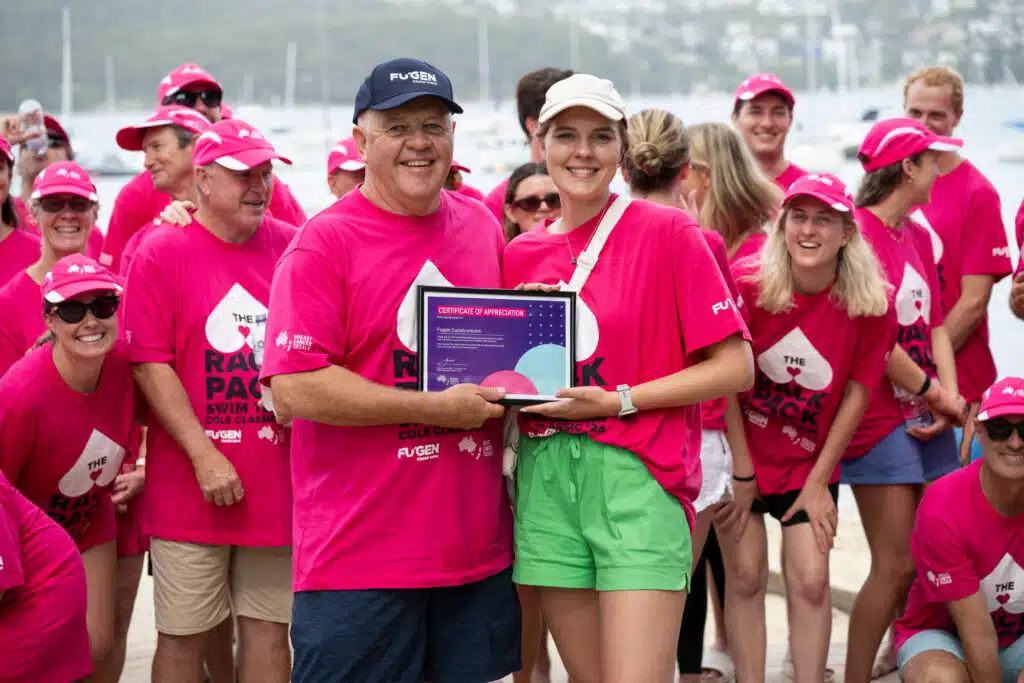
The Fugen Rack Pack raised an incredible $78,907 for BCT, a testament to the commitment, generosity, and comradery of their community. We cannot thank them enough for their tremendous effort and the impact they will have on the lives of those facing breast cancer.

breast cancer trials cole classic team jow 240204 0859 | 6

Pictured: The Fugen ‘Rack Pack’ Team.

“My name’s Megan from Breast Cancer Trials. For those of you who don’t know, Breast Cancer Trials is one of the leading breast cancer research organisations in the world. We’re dedicated to finding new treatments and better research strategies to save lives from breast cancer.”

“Over the past 20 years, deaths from breast cancer have actually fallen 30 percent and that’s because of our research program. But unfortunately, we still have a long way to go. Today, 57 people will be told they have breast cancer.”

“That’s why every single one of you is so crucial and important. The $70,000 you have raised for Breast Cancer Trials is going to make a huge difference to our research program, so from the bottom of our hearts, thank you all, your friends and family, and everyone who donated. This is a fantastic effort.”

Our life-saving breast cancer research is only possible thanks to the continued generosity of our supporters. Please help continue this vital work by making a donation today.  Find out more about how you can become a Pink Champion!

GIVE TO RESEARCH HELPING WOMEN LIKE MADELAINE

Latest Articles

lotjpa yapaneyepuk (talk together): bridging communities and cancer research
4casting the future: innovations in triple negative breast cancer 
split-banner-image

ASCO 2024: BREAST CANCER RESEARCH SUMMARY

A summary of the key breast cancer research presented at the 2024 American Society of Clinical Oncology (ASCO) Annual Meeting.

American Society of Clinical Oncology (ASCO 2024)

The American Society of Clinical Oncology (ASCO) annual meeting is one of the world’s largest and most renowned cancer conferences, bringing together leading cancer researchers, including those from Breast Cancer Trials, to discuss the latest advancements in treatments, clinical trials research and cancer care.

The following is a summary of the key breast cancer clinical trials research results presented at ASCO 2024.

CHARIOT Clinical Trial

The CHARIOT clinical trial is a pioneering study from Australia developed by BCT researchers. It looked at a new way to treat early-stage triple negative breast cancer resistant to initial treatment with chemotherapy.

The trial tested a combination of two immunotherapy drugs (nivolumab and ipilimumab) with a standard chemotherapy drug (paclitaxel) before surgery. The aim was to see if this combination could safely stimulate the body’s immune system to destroy the cancer cells.

The trial also investigated if continuing with one of the immunotherapy drugs (nivolumab) after surgery could keep the immune system active to wipe out any remaining cancer cells. 34 patients from eight different institutions in Australia participated in this trial, which was led by BCT Board Director Professor Sherene Loi.

Researchers found that patients who had no signs of cancer in their breast and lymph nodes after surgery were less likely to have their cancer come back and had a better chance of survival. Notably, all the patients whose cancer showed an increased presence of a protein called PD-L1, or had a high number of certain immune cells (TILs), were alive and free from breast cancer three years later. This comes with a significant risk of mild to moderate lung inflammation from immunotherapy.

This suggests that the treatment approach tested in the CHARIOT trial could be a promising option for patients with this type of cancer, potentially leading to better outcomes and longer survival. However, more research and follow-up studies are needed to confirm these results and determine the long-term effectiveness and safety of this treatment approach.

Explore the CHARIOT clinical trial results here.

Destiny Breast 06

The Destiny Breast 06 trial is a groundbreaking study that brings new hope for patients with hormone-positive advanced breast cancer. This study looks at a specific group of these patients with low or very low levels of a protein called HER2. The trial is focused on testing a drug called trastuzumab deruxtecan (T-DXd), which is designed to specifically target cancer cells and cause less damage to healthy cell, on patients whose cancer is not responding to standard hormone therapy.

The results of the trial were promising. Patients who were treated with T-DXd saw their tumors shrink significantly and had more time before their cancer progressed compared to those receiving standard chemotherapy.

While T-DXd was effective, it was more likely to cause side effects compared to standard chemotherapy. Notably, moderate to severe lung inflammation can occur and needs to be monitored for closely.

These findings represent a significant step forward in the treatment for hormone positive, advanced breast cancer as these patients could never be treated with HER2-targeted therapy in the past.

ctDNA Results for MonarchE

The MonarchE trial looked at how a drug called abemaciclib, when used with standard hormone therapy, could help patients with early-stage breast cancer who are at high risk of the disease coming back.

One of the ways the researchers checked how well the treatment was working was by using a blood test called circulating tumour DNA (ctDNA) testing. This test finds DNA from cancer cells that have entered the bloodstream, allowing doctors to track the presence and quantity of breast cancer cells in the body.

The ctDNA results from the MonarchE trial were presented by Professor Sherene Loi. It showed that patients who had the combination of abemaciclib and hormone therapy had less ctDNA in their blood compared to those who had hormone therapy alone. This suggests that the combination treatment was more effective in reducing the amount of cancer cells in the body.

The use of ctDNA testing may be able to diagnose the return of cancer earlier in high risk breast cancer patients after surgery. However, more research is needed before we can show that ctDNA testing can guide treatment decisions if signs of cancer DNA is identified.

Breast Cancer Trials is using ctDNA testing in the CAPTURE clinical trial.

Exercise for Cancer Related Fatigue After Early-Stage Breast Cancer Chemotherapy

This study looked at how exercise can help with tiredness (also known as ‘cancer-related fatigue’) in patients who have finished chemotherapy for early-stage breast cancer. The researchers wanted to find out the best ‘dose’ of exercise to reduce this tiredness. This could include things like how often, how long, and how intense the exercise sessions should be.

Before starting chemotherapy, patients with breast cancer were walking for about 40-60 minutes a week at a slow pace, or 20-30 minutes a week at a faster pace.

The researchers found that patients who increased their walking to 111-162 minutes per week at a slow pace, or 54-108 minutes at a faster pace, were 43% more likely to see a big drop in their tiredness. This was true both before chemotherapy and one month after chemotherapy.

These results are important for designing exercise programs to improve the quality of life for breast cancer survivors who feel tired after chemotherapy. Knowing the best ‘dose’ of exercise can help doctors give exercise advice that’s tailored to each patient’s needs.

The RxPONDER Study

Menopause status can inform cancer treatment selection, but knowing when a woman is in menopause can be difficult to determine.

Anti-mullerian hormone (AMH) is a hormone produced by the ovaries that can indicate ovarian reserve and function, with lower levels found in post-menopausal women.

Researchers analysed data from the previously published RxPONDER study and found that premenopausal women with invasive breast cancer who had low levels of AMH, benefitted less from chemotherapy in addition to endocrine treatment, compared to women with medium or high levels of AMH.

Researchers found that AMH was a stronger predictor of chemotherapy response than self-reported menopause status, age and serum levels of other hormones associated with ovarian functioning.

This information could potentially refine treatment decisions, helping to identify which premenopausal women can be spared from unnecessary chemotherapy.

QoL Data from the INAVO-120 Trial

Updated results from the phase three INAVO-120 trial, showed that inavolisib plus palbociclib and fulvestrant improved progression free survival of patients with PIK3CA-mutated, hormone-receptor (HR) positive, HER2-negative metastatic breast cancer.

This triple combination treatment is a promising new treatment option for patients, which halved the risk of disease progression or death, and the time to next treatment, compared to placebo, palbociclib and fulvestrant.

Patient-reported outcomes data suggest patients receiving inavolisib in addition to fulvestrant and palbociclib experienced a longer median time to worsening in pain severity and maintained day-to-day functioning and HRQOL [health-related quality of life] while on treatment with little increased treatment burden.

Impact of Endocrine Therapy in ER-Low Breast Cancer

New research indicates that there may be a survival disadvantage if oncologists omit adjuvant endocrine therapy for patients with a diagnosis of breast cancer, who have low levels of estrogen receptor (ER) expression or ER levels 1-10%.

The retrospective study used data from 354,378 patients with stage I to III ER-positive breast cancer identified in the National Cancer Database (NCDB) in the United States. The NCDB began listing ER status as a continuous variable in 2018. So this study included patients registered in the database from 2018 to 2020.

Overall, 10,362 or 3% of ER-positive breast cancers were classified as ER-low. Of these, 68% were progesterone receptor (PR) negative and 67% were HER2 negative. The majority (77%) of patients were treated with chemotherapy, and these patients formed the study cohort.

Adjuvant ET was omitted in 41% of patients with ER-low status. Researchers found that in this cohort, there was a 25% increased risk for death associated with omission of endocrine therapy despite receiving chemotherapy.

The GEICAM/2003-11 Trial

Triple negative breast cancer (TNBC) has a higher risk of relapse than other breast cancers. Patients with early-stage TNBC are typically treated with surgery and chemotherapy, and sometimes radiotherapy.

Despite effective treatments with neoadjuvant and adjuvant chemotherapies with anthracyclines and taxanes, the recurrence rate for these patients is high. Up to 10% of those with stage I disease will relapse, as will 15-20% of patients with stage II disease, and 25-50% of those with stage III disease. With such high recurrence rates, patients and doctors need better treatment options.

The GEICAM/2003-11 clinical trial explored whether extending treatment with six months of capecitabine after completing standard chemotherapy, improved disease free survival of patients with early TNBC.

This study failed to show a statistically significant increase in disease free survival by adding capecitabine to standard chemotherapy in patients with early TNBC. However, extended treatment with adjuvant capecitabine did significantly improve both disease free and overall survival in a subgroup of patients with a non-basal like phenotype.

Patients are not currently differentiated in basal-like and non-basal like phenotypes and all TNBC is treated the same way. So researchers are now planning to look at the immunohistochemical and genomic characteristics of the patients, to help identify which subgroups of patients with TNBC will benefit from the addition of capecitabine.

YOUR DONATION CAN HELP UNCOVER BETTER TREATMENT OPTIONS

Latest Articles

lotjpa yapaneyepuk (talk together): bridging communities and cancer research
4casting the future: innovations in triple negative breast cancer 
split-banner-image

NAVEENA’S STORY: TRIPLE NEGATIVE BREAST CANCER AND NAVIGATING TREATMENT SIDE EFFECTS

We spoke with Naveena about her breast cancer diagnosis, the long-terms side effects from her treatment, and how she is working to make a difference to the lives of those who have been diagnosed with breast cancer.

Naveena Nekkalapudi is a member of the Breast Cancer Trials Consumer Advisory Panel, where members provide a patient’s perspective in the development of trials and the conduct of our research program. Naveena was diagnosed with stage 3, grade 3, triple negative breast cancer on Christmas Eve in 2014, after finding a lump in her breast during a self-examination.

Due to the long-term side effects from her treatment, Naveena is unable to return to full time work. However, she is still working part time and trying to make a difference to the lives of other people who have been diagnosed with breast cancer.

“Life before breast cancer was very different. I worked in several industries, and I was a bit of a workaholic. So, I started life in the dairy industry because I’m a dairy scientist by trade. I then worked for the public trustee, another organization, funds management, and finally for a health insurer.”

“I was the head of strategy there when I got diagnosed. And I was unable to return to work because the treatment I received did a lot of damage. So now I work part time, but I do a lot of stuff in the health system space.”

“I’m trying to make a difference for people who’ve been diagnosed after me, and I have all this skill set but I can’t work formally anymore so I want to use that skill set along with my lived experience to actually make a difference.”

Listen to the Podcast

We spoke with Naveena about her breast cancer diagnosis, the long-terms side effects from her treatment, and how she is working to make a difference to the lives of those who have been diagnosed with breast cancer.

How did you find out that you had breast cancer?

“So, I’d found a lump, but I put it down to being a cyst because there was an FM radio station that used to talk about checking your breasts on the first day of the month. This was after Kylie Minogue was diagnosed.”

“And every so often I would do it, and I found a lump. But then I googled it, which was a mistake now, in hindsight. And it said that it’s most likely a cyst, and to check it at different times of the month because of hormonal changes in your body.”

“So, I checked it a couple of weeks later and I couldn’t feel it. So, I just put it down to being a cyst and ignored it. Then over time, it started sticking around a bit more. It wasn’t coming and going like it used to. And because I’d made it a cyst in my brain, I didn’t worry about it. But then I felt my lymph node in my armpit, and thought that’s a bit weird, but I’m feeling great at the moment, maybe I just have a mild infection. It’s nothing, it’ll go away.”

“And it kept growing, and I developed this cough. Which later turned out to be nothing. But I thought a cough and inflamed lymph node must be something, so I thought I should go to the GP. Went to the GP and I explained how I had a cough and inflamed lymph node, but also this lump that used to come and go, but it’s sticking around.”

“My GP had a feel and said that she thought the lump and the lymph node might be connected. And that was the first inkling that there might be an issue. And then she gave me a referral for a mammogram and an ultrasound, and I had that done on Christmas Eve because I just wanted to get it out of the way, because I was convinced that it wasn’t going to be anything anyway.”

“So, half an hour after I got home, I got a phone call from my GP apologizing for breaking the news over the phone, but basically saying it’s bad news. It’s a tumor, and I just remember the white noise rushing past my ears. I was just thinking, ‘what?”

“I remember asking if it was benign or malignant, and I was trying to kind of try and steer it down the ‘it’s nothing major’ path. But she said, “I think it’s malignant and you’re going to have a pretty crappy year next year.”

“And I knew it had spread because I had felt the swollen lymph node. That was the reason why I was kind of extra worried because I thought it was spreading, and I knew the lump had been there for a while, because I’d ignored it, knowing it was there. So, it took two weeks to see a specialist, because it was a Christmas break.”

“And the two people I thought of straight away were Jane McGrath and Belinda Emmett, who were famous Australians who had died from breast cancer.”

“And then I had to give myself a mental slap and go how many people get diagnosed a year around the world? It must be in the millions. And they’re all fine, but you’re thinking about the two people who died, and that made the news because they died. I’ve got to calm down. I know the Australian health system is good, and we found it, so let’s just deal with it.”

“Every time I felt pain somewhere, I thought it was spreading, and it’s a tumor in your knee now, and it’s a tumor in your brain now. But because I had no experience with cancer, to me it was a death sentence.”

What was your biggest fear during this time?

“The first thing that went through my head was, I’m going to die. Because I thought it had been around for a while, so it had some time to spread, and it might be terminal.”

“I’m a carer for my parents, and I’d just bought an eight-week-old puppy, two weeks prior to that. And I just kept thinking I’m not going to see my puppy grow up. Who’s going to look after my parents? And all sorts of things, it was very melodramatic now looking back. But it was all going on inside my brain.”

“I didn’t show any emotions externally because I didn’t want to alert people to it for a couple of reasons. One, I wanted them to have a good Christmas and New Year’s because who knew what was coming and they might have bad ones for the next few years, if not forever, if I died or something.”

“So, I thought let them at least sleep for as long as I can let them have peace. But once I have to deal with it, they’ll know. The other reason being if someone said to you, I’ve got cancer, you’ll be saying how bad is it? What’s the treatment plan? Will you be okay? And I had no information.”

“And so, I thought rather than all of us sitting there not knowing, let me just deal with it and I can then I can work on my communication plan to all my stakeholders about what comes next.”

How did your family react when you told them?

“They were devastated. My poor family. My brother, who’s a GP, came down from Brisbane, because I live in Melbourne, and he helped me break the news to my parents. And we broke it to them on the Saturday, and I was having surgery on the Monday. And, in hindsight, I wouldn’t do anything differently because in a way, they’re just swept along on the journey. It doesn’t give them time to think at that stage.”

“Of course, once the surgery is done and you have some downtime before you start the next treatment, which is chemotherapy, I’m sure they were very upset. It’s hard, the whole process, but for me I would rather have cancer again than have to break it to them again because that was really, really awful.”

“So, my type of breast cancer at the time only had three options of treatment. One being surgery, the other being chemotherapy and then radiotherapy. The other subtypes have things like endocrine therapy and so on.”

“So, I started with surgery. They’ve changed it around now and I think now is a better way of doing it. But at the time, surgery went first. And so, they removed the lump, and they removed all the lymph nodes in my armpit because they thought four or five of them were affected.”

“It turned out only one was affected, but I lost all my lymph nodes, and that means that I’m susceptible to things like lymphedema. I then had chemotherapy for six months, and then radiotherapy, which was 30 rounds, which works out to be six weeks. It’s every day, Monday to Friday.”

“With the surgery, the first issue I faced was scar tissue. They give you exercises at the hospital, and there’s a physiotherapist who comes around and says, here’s a list of exercises. Do them, but don’t push yourself if it hurts. So, I didn’t push myself because it was hurting. And what it meant was that I had this thick almost guitar string, from under my breast up through my shoulder all the way down to my wrist, which was limiting my movement.”

“I couldn’t lift my arm past my shoulder. And apparently that’s called cording, and I had to go and see a special physiotherapist to break it. And they break it by basically digging their fingers into your flesh, where the scar tissue is, and pushing down and massaging it, and it’s very painful.”

“In terms of chemotherapy, most people think the extent of it is hair loss and nausea, but you actually don’t get nausea anymore because they give you steroids, but that means you’re hungry and you put on weight. It’s the opposite problem to what you think it is. And your family members overfeed you because they think you’re dying, and that’s the way of them showing you love.”

“But also, there were things like when your hair falls out, your scalp hurts. You don’t realize that, but it’s painful, because your scalp becomes very sensitive. You get ulcers in your mouth, you can either have constipation and or diarrhea, you get joint pain, your fatigue is bad. And with the radiotherapy, you get burnt basically, and some people end up with blisters. I fortunately didn’t, but you get this layer of skin that’s basically dried up and burnt and it itches, and it hurts at the same time, which is a weird feeling.”

“And there’s other people who have extra therapies, like endocrine therapy and Herceptin and so on, and they come with their own side effects as well. But in my case, those are the things that I had, and with the side effects, the other problem is, you think you can put up with it because it’ll only last as long as the treatment lasts, and then you can move on. But it doesn’t. It keeps going. And somebody said to me, it takes you two years to feel human again. And they’re mostly right. It’s taken me longer, but it’s quite a long process of recovery.”

“So, I look at my life now and I used to be a workaholic. I probably still am in some ways, but I used to do stuff for my head and now I do stuff for my heart. And trying to make somebody else’s life better gives me purpose, and it makes me utilise the experience I gained while I was employed, with the experience I’ve gained through the cancer treatment process.”

How are you feeling now?

“So, in my case one of the chemotherapies damaged my nerves, so I’ve ended up with chronic pain in all my major joints, which is why I’m unable to work full time anymore. But what I’ve done is I’ve used that as motivation to try and improve the quality of life of other cancer patients because there’s ways of actually being more targeted now.”

“There are some breast cancer patients for whom chemotherapy is of no use. And so, my advocacy around that is, if you don’t have to use it, one, it saves costs, but it’s actually saving them a lot of agony and pain and long-term side effects and a reduced quality of life.”

Before your diagnosis, what did you think about breast cancer?

“There was no cancer in our family, so I didn’t really know much about it other than there being a bunch of famous people who got diagnosed, and of course you know it’s in the breast. And you see people lose their hair and look unwell.”

“But then the moment treatment finishes, voila, they’re back to being normal again. But the depth of information and knowledge you gain when you’re going through it is endless, and you realise that breast cancer is different to bowel cancer, which is different to lung cancer.”

“They’re all very different in how you feel, and they’re all very different in the treatment process. There are also different subtypes of breast cancer, which have different therapy types. You go through the treatment and then you realise that unlike other chronic diseases, the breast cancer treatment or cancer treatment actually makes you feel worse.”

“So, you need a long recovery time at the end of it. I still remember I was filling out the form at work to get time off, and I filled it out and I was like ‘okay I’m going to have six months of chemotherapy, six-weeks of radiotherapy, and I think I’ll finish up mid-September. So, I’ll take a couple of weeks off, and then I’ll be back in October.”

“And Human Resources had filled out the same form at work, and the human resources person had given me time off till February the following year. And I’d forgotten that you need time to recovery from the treatment, and I’d forgotten about how bad the treatment makes you feel.”

“I think the other thing I learned is before I went through the treatment, I thought I would go back to who I was. I would take time off, have my treatment, finish treatment, and then go back to the person I used to be. And the thing is, nobody does. You’re changed, both mentally and physically.”

“So, there’s so much information and experience that I’ve gained going through it. Someone once said to me, they napalm you and see what grows back, and they’re right. You feel like they’ve basically slammed you, and you come crawling back and try and rejuvenate to being who you used to be.”

Why is it important to try and find kinder treatments with fewer side effects for breast cancer patients?

“I think it’s important because so far I think the focus of treatment has been to save the person’s life, which is great, we really appreciate that and the patient is all for having their life saved, but what happens is you then have to live with the consequences of the treatment, and the side effects that go on for life.”

“And once upon a time we had a very blunt instrument of surgery to remove the entire breast. And then we started looking at other ways of treating breast cancer and stopping it coming back. So, we added radiotherapy and chemotherapy, and now we’ve added endocrine therapies and immunotherapies and so on.”

“So, we’re getting better at realizing what works, and getting better at finessing, but we’re not there yet in the sense of applying it to the wider population. And so, I think it’s necessary to start being more finessed in how we treat patients because some of us will live for 30, 40, 50 more years with the consequences of the treatment that we’re given.”

If you could share a message to the thousands of people who donate to Breast Cancer Trials, what would you say?

“Firstly, I want to say thank you to them because the money that they donate goes towards cancer research, and it saves lives. Clinical trials are critical because we need to get better at finessing things, and we also haven’t dealt with the problem entirely.”

“Breast cancer has a 92 percent survival rate, but it differs for the different subtypes. If you take it on average, there’s still 8 percent of people dying. One in seven women get diagnosed with breast cancer. And it could be you, or your family member, or a friend. And it takes a toll on the community.”

Putting money into clinical trials research helps the end outcome, and it helps improve outcomes for people who’ve got breast cancer. I would also love it if we had no more deaths from breast cancer. I know it’s a pie in the sky kind of ambition, but while people are working on that, my focus is very much on improving quality of life outcomes for people who’ve been diagnosed with breast cancer, and getting more finessed on how we deal with it.”

“And so that’s why I joined Breast Cancer Trials as a consumer on their Consumer Advisory Panel because I want researchers to be aware of the issues that people who’ve been treated for cancer face.”

Our life-saving breast cancer research is only possible thanks to the continued generosity of our supporters. Please help continue this vital work by making a donation today.  

GIVE TO RESEARCH HELPING WOMEN LIKE MADELAINE

Latest Articles

lotjpa yapaneyepuk (talk together): bridging communities and cancer research
4casting the future: innovations in triple negative breast cancer 
split-banner-image

MALE BREAST CANCER

Nearly half of male breast cancer cases are diagnosed at stage 3. Find out more about the signs, symptoms, and stigmas surrounding breast cancer in men.

Male Breast Cancer

It’s a common breast cancer myth that men can’t get breast cancer. Breast cancer in men accounts for just under 1% of all breast cancers. In this article, we provide an overview and insights into the signs of male breast cancer, survival rate, statistics in Australia, stages of the disease and male breast cancer self exam techniques.

Male Breast Cancer Statistics in Australia

  • The estimated number of new cases of breast cancer diagnosed in 2025 was 20,336, with 20,129 being females and 207 being males.
  • The estimated number of deaths from breast cancer in 2025, for males alone, was 40.
  • In Australia, male breast cancer is a rare disease accounting for less than 1% of all breast cancers.
  • In 2022, it was estimated that a male has a 1 in 833 or 0.1% risk of being diagnosed with breast cancer by the age of 85.
  • In 2017-2021, the average 5-year male breast cancer survival rate was approximately 87%.

Male Breast Cancer Symptoms

Signs of male breast cancer are similar to those for women, and can include:

  • A painless lump or thickening in the breast tissue.
  • Changes to the skin covering the breast, such as dimpling, puckering, redness, or scaling.
  • Changes to the nipple, such as discharge, redness, scaling, or a nipple that begins to turn inward.

To help explain how breast cancer occurs and is treated in men, we sat down with Professor Rik Thompson, who is a Professor of Breast Cancer Research working in the Faculty of Health at QUT. The most common breast cancer found in men is invasive ductal carcinoma, which typically presents as a lump, however, Professor Thompson says there are a number of other breast changes that men should be aware of.

“Normal male breast tissue moves around, whereas breast cancer tends to be a firmer, lumpier texture. You might have some tissue distortion, skin distortion or nipple distortion. It’s probably an asymmetry that would also be a bit of a red flag. If it feels different on one side than on the other, and pain also, it can be painful.”

Male Diagnoses

Men generally present with breast cancer at an older age compared to women. It presents at a later stage because men do not participate in routine breast screening (because of the rarity, there is no benefit to screening men), and there is a lower awareness of breast cancer in men. Histologically, male breast cancer is often of grade 2, hormone receptor-positive, and HER2-negative.

Male Breast Cancer Treatment Options

The treatment options for male breast cancer are similar to those for breast cancer in women. They may include surgery (mastectomy or lumpectomy), radiation therapy, chemotherapy, hormone therapy, targeted therapy, or a combination of these approaches. Treatment depends on various factors such as the stage of cancer and individual patient’s characteristics.

Male Breast Cancer Stages

The stages of male breast cancer are similar to those of breast cancer in women. They range from stage 0 (non-invasive) to stage 4 (metastatic). The stage of cancer indicates its extent and helps guide treatment decisions.

Survival Rate

The survival rates for male breast cancer can vary based on several factors. These include the stage of the cancer, a person’s age and general health, and how well the treatment plan works. If the cancer is located only in the breast, the average 5-year male breast cancer survival rate is approximately 87%.

Common Misconceptions about Male Breast Cancer

There are several common misconceptions about male breast cancer that can contribute to a lack of awareness and understanding.

  1. Myth – Only women get breast cancer: While it is true that breast cancer is more common in women, men can also develop this disease. In Australia, about one in 668 men will be diagnosed with breast cancer in their lifetime.
  2. Myth – Breast cancer is caused by a breast injury: Injuries to the breast do not cause cancer. Occasionally, a breast cancer diagnosis may follow an injury because the injury draws attention to the location, but the injury itself does not cause breast cancer.
  3. Myth – Breast size determines the risk of breast cancer: There is no connection between breast size and the risk of developing breast cancer.
  4. Myth – Breast pain is always a sign of breast cancer: Most cases of breast pain are unrelated to cancer, and breast cancer that is localized to the breast is typically painless.

Men do have breast tissue, mostly located behind the nipple. Professor Rik Thompson says that more males have breast tissue than we assume.

“About 60% of males have some breast tissue. So as a neonate (newborn) 60% of males still have some estrogen and so there’s still some breast tissue there. It drops off after adolescence because males start making enough testosterone to combat that bit of estrogen that’s keeping it going.”

“But as we age again, we start to get more breast tissue as well.”

By educating ourselves and others, we can help to reduce stigma and ensure that everyone has access to up-to-date and accurate information.

Listen to this podcast with Professor Rik Thompson, who explains how breast cancer occurs and is treated in men.

Listen to the Podcast

It’s a common misconception that men can’t get breast cancer, however just under 1% of all breast cancers will occur in men. Professor of Breast Cancer Research and a Breast Cancer Trials Board Member Professor Rik Thompson explains how breast cancer occurs and is treated in men.

The Stigma Surrounding Male Breast Cancer

Men who are diagnosed with breast cancer often face unique challenges due to the rarity of the disease in men. One way to combat the stigma surrounding male breast cancer is through education and awareness campaigns. Encouraging open conversations about male breast cancer can help reduce stigmatisation, judgment, and negativity, ensuring that all individuals affected by this disease can access the support they need.

Early detection and timely treatment are crucial for improving patient outcomes. If you or someone you know is experiencing any symptoms or concerns related to breast cancer, it is important to consult with healthcare professionals for personalized guidance.

Research Difficulties for Male Breast Cancer

Professor Thompson said as male breast cancers account for less than 1% of all breast cancers, it is harder to study.

“There’s a lot of anecdotal research and because of that, by treating it in the same way that we would treat women for female breast cancer, I think we’ve established the practice around male breast cancer.”

“Generally, the indications are that it’s [intrinsically] very much the same disease as in women.”

“Breast cancer is a bit more aggressive in males, because it’s detected late, it is more advanced and so, the disease progression characteristics are a bit more advanced.”

“I think it’s like the classic men’s tunnel vision around prostate cancer, just worse. Men might expect that they’ve got a prostate, not all would, but they just don’t think that we’ve got breasts.”

While breast cancer is uncommon in men, it’s important for men who find a change in their breasts to see their doctor without delay.

Support Breast Cancer Research

As with female breast cancer, early detection and treatment are the best way to survive the disease. Breast Cancer Trials is looking for better detection, treatment and cures for breast cancer. Donate to research today to help save a life.

Support Us

Help us to change lives through breast cancer clinical trials research

profile image

Professor Rik Thompson

Professor Rik Thompson is the Associate Director and a Professor of Breast Cancer Research at the Institute of Health and Biomedical Innovation and School of Biomedical Science at Queensland’s University of Technology.

Latest Articles

lotjpa yapaneyepuk (talk together): bridging communities and cancer research
4casting the future: innovations in triple negative breast cancer 
split-banner-image

INFLAMMATORY BREAST CANCER

From symptoms to treatment options and how it differs from other types of breast cancer – understand Inflammatory Breast Cancer.

What is Inflammatory Breast Cancer?

Inflammatory breast cancer (IBC) accounts for less than 5% of all breast cancer diagnoses. It is a form of invasive breast cancer that affects the lymphatic vessels in the skin of the breast.

Rather than forming as a lump, the breast becomes red and swollen, and this is commonly confused with an infection. This is caused by the cancer spreading along and blocking the lymphatic vessels, which work to remove fluid and other waste from the tissues of the body.

It is important to understand that IBC may not result in a classic rash-like appearance, which makes it important for individuals to be aware of small changes to their breasts that may not align with the typical appearance of a rash-like skin condition.

Understanding Inflammatory Breast Cancer: Symptoms and Signs

IBC is a rare and aggressive form of breast cancer that differs significantly from more common presentations of breast cancer. This type of breast cancer is called ‘inflammatory’ because the breast often looks swollen, red, or inflamed. IBC does not manifest solely as a palpable lump, but rather presents itself through distinct skin changes.

What does Inflammatory Breast Cancer look like?

  • Visible skin changes.
  • An inverted nipple (a nipple that points inwards).
  • Changes in skin colour (shades of red, pink, or purple).
  • Swelling, bruising, and thickening of the breast.
  • Dimpled or pitted breast texture, resembling that of an orange peel.
  • Itching, pain, and other abnormal sensations.
  • Breast swelling, in which one breast is suddenly larger than the other.
  • Breast feels warm to the touch.
  • A rash that covers at least one-third of the breast and progresses rapidly over a few weeks.

IBC can appear different in each individual, and may not always manifest as a typical rash. In some cases, the skin pores of the breast become distinctly visible, appearing exaggerated due to swelling.

Inflammatory Breast Cancer vs. Breast Infection

IBC can be challenging to identify because it doesn’t often cause a lump like more common forms of breast cancer. Instead, the first signs are related to inflammation (redness, swelling, pain) in your affected breast. These symptoms make it easy to confuse IBC for a less serious condition, like an infection.

Many symptoms associated with IBC are similar to a breast infection or inflammation such as mastitis, including redness, swelling and warmth. Because a breast infection occurs more frequently than IBC, your doctor may initially prescribe antibiotics if they suspect you might have an infection.

However, IBC progresses rapidly, often involving most of the breast in a short time, while infections often have a more localised presentation. If your symptoms worsen, and the infection continues to spread despite antibiotics, your doctor may consider more serious causes including IBC, and further testing may be recommended to confirm a diagnosis.

How fast does Inflammatory Breast Cancer spread?

IBC is considered a fast-growing (aggressive) cancer. It only takes a few weeks or months to progress. The way the breast looks usually changes within three to six months, but the rash can spread in just a few weeks. Unfortunately, because of the aggressive nature of this cancer most people are only diagnosed in the later, more serious stages of the disease.

How is Inflammatory Breast Cancer Diagnosed?

Diagnosis of IBC is often delayed because the symptoms can be mistaken for less serious conditions. By the time patients receive testing for breast cancer, they have often already taken multiple courses of antibiotics without improvement. This highlights the importance of prompt evaluation if symptoms persist. Some ways that IBC could be diagnosed include:

  • Breast Biopsy: If breast cancer is suspected, a doctor uses a needle to remove some of the breast tissue for examination by a pathologist under a microscope.
  • Skin Punch Biopsy: A small circular cutting tool is used to remove a small core of skin, including deeper layers. The sample might include tissue from layers called the epidermis, the dermis, and the top layer of fat under the skin.
  • Mammography: A low-dose x-ray that can find changes that are too small to be felt during a physical examination. You should let staff know if you have breast implants before you have the mammogram.
  • Breast Ultrasound: If the breast changes need further evaluation you may have an ultrasound. This is a scan using soundwaves to take a picture of the inside of your breast.
  • Breast MRI: An MRI (magnetic resonance imaging) is a non-invasive procedure that uses magnetic fields and radio waves to take detailed cross-sectional pictures of the body. Often dye will be injected to give greater clarity to the pictures.

What Causes Inflammatory Breast Cancer?

The exact cause of IBC is not fully understood, however most cases are considered to be invasive ductal carcinoma, which is a broad term used to classify cancer that began growing in a milk duct and has invaded the fibrous or fatty tissue of the breast outside the duct.

IBC develops when cancer cells block lymph vessels. Lymph vessels are hollow tubes in your lymphatic system that allow lymph fluid to drain out of your breast. The blockage causes your breast to become red, swollen and inflamed. In most cases of IBC, cancer cells spread outward (metastasise) from your lymph vessels.

Factors such as age, genetic mutations (for example BRCA1 and BRCA2), and obesity may contribute to one’s risk of IBC.

It is important to recognise and understand changes in your own breasts and discuss any concerns you might have with your doctor. Remember that early detection can save lives. As IBC is a rare disease, there are several other possible explanations or causes for breast rash including:

  • Mastitis

    Mastitis (inflammation of the breast tissue) can develop if localised breast inflammation is not treated promptly. If you have mastitis, you will usually feel unwell and may have a sore, firm, or red area on your breast. There may or may not be an infection.

  • Paget’s Disease

    Paget’s disease of the nipple, also known as Paget’s disease of the breast, is a rare form of breast cancer that affects the nipple and the area around the nipple (the areola). It is commonly associated with an invasive cancer elsewhere in the breast. The main sign of Paget’s disease of the nipple is a change in the nipple and/or areola.

  • Breast or Nipple Dermatitis

    Skin conditions such as eczema or dermatitis may occur on the breast, nipple and the areola. These problems are more common in women who have allergies, are pregnant, or who are breastfeeding. Dermatitis is caused by inflammation of the skin by products such as shampoos, soap, washing detergents or chemicals.

    With any of these causes, a rash is seen on the nipple or areola which may be dry or weepy. The rash is usually itchy and may be on one or both breasts. There may be an associated burning pain especially if breastfeeding. In breastfeeding women, the symptoms often occur around the time of infant teething or the introduction of solids.

  • Fungal Infection of the Skin

    This often affects the skin under the breast, and responds to antifungal cream or tablets.

  • Breast Abscess

    This is a collection of infected fluid in the breast, that can cause redness of the skin.

Inflammatory Breast Cancer Treatments

IBC is an aggressive form of breast cancer which progresses rapidly. At diagnosis, it is considered to be either at stage three or four of the disease, depending on whether cancer cells have spread only to nearby lymph nodes, or to other parts of the body. IBC cannot be classified at stage one or two of the disease, as IBC means the disease has spread to the skin of the breast.

Unfortunately, the prognosis for patients diagnosed with IBC is not as good as it is for other types of breast cancer. However, every diagnosis is different, and each prognosis will depend on many things such as your age, overall health, stage of disease, disease type and how your body will respond to treatment.

Donate to Breast Cancer Trials

Breast cancer research relies on contributions from individuals and organisations who are dedicated to advancing our understanding of the disease and developing more effective treatments.

Your donation will help contribute to the progress of scientific discoveries that can lead to improved therapies, prevention methods and enhanced patient care for this aggressive form of breast cancer.

Click here for more information or to make a donation.

Support Us

Help us to change lives through breast cancer clinical trials research

Latest Articles

lotjpa yapaneyepuk (talk together): bridging communities and cancer research
4casting the future: innovations in triple negative breast cancer 
split-banner-image

NAVIGATING A SHOCK BREAST CANCER DIAGNOSIS WITH A YOUNG FAMILY

We spoke with Naomi about her breast cancer diagnosis, navigating breast cancer with a young family, and the importance of supporting clinical trials research.

Being Diagnosed with Breast Cancer

Naomi Richards is a wife and mum of three daughters, Mila, Lottie, and Eden, living in Wagga Wagga. In 2023, Naomi felt a lump in her left breast, and after undergoing days of testing, including a mammogram and an ultrasound, she was diagnosed with breast cancer on 8 March 2023, which also happens to be International Women’s Day.

We spoke with Naomi about her shock diagnosis, navigating breast cancer with a young family, and the importance of supporting breast cancer clinical trials research.

“Before my breast cancer diagnosis, life was what I would call very normal. We were a normal, busy, hectic, happy family, with no stress, no health issues, and not a worry in the world. I was in the shower one night and I was washing under my arm when I felt a lump on the left side of my left breast.”

“I knew straight away that something wasn’t right, so I made an appointment with my wonderful GP, who then referred me on for a mammogram and an ultrasound. So, that was the start of about 10 days of testing, and then unfortunately on the 8th of March, which was International Women’s Day, I was diagnosed with breast cancer.”

“So, while all my friends and family were celebrating being a woman, and I was seeing all these wonderful Facebook posts and Instagram posts about how proud people were to be women, I was dreading every moment of being a woman. I was so scared and petrified and nervous and worried and was experiencing all of those huge emotions. It was just a really awful day.”

How did you approach telling your young children?

A lot of women talk about the decisions around telling their children, if they have any, and whether or not this is something they should do. We spoke with Naomi about the process of telling her three daughters about her breast cancer diagnosis.

“My initial reaction when I was first diagnosed was to keep it a secret. I’m not sure what I was thinking because there’s no way that you could keep it a secret. So, after a chat with my fabulous GP who I wouldn’t be here without, we decided to tell the girls what was happening. But we were really careful in what we told them, and we ensured that what we told them was age appropriate.”

“Lottie and Eden, who are seven and nine, they were told not as much as what we told Mila, who’s twelve. We kept it really simple; we only told them what they needed to know, and we didn’t give them an overload of information.”

“My advice to other women or other mums that are going through this would be go with what feels right for you. We had lots of people telling us different things, what to do, how to do it, when to do it. But we just sat down with the girls, and we just told them what felt right from us at the time.”

“The girls got home from school that day and we sat them down immediately. There was no discussion. It was just, let’s have a chat.”

Listen to the Podcast

We spoke with Naomi about her shock diagnosis, navigating breast cancer with a young family, and the importance of supporting breast cancer clinical trials research.

What was treatment like for you?

“Going through treatment, to be honest, it wasn’t as bad as what I thought. When you talk about cancer and chemotherapy, you only hear the bad stories. You don’t hear the good stories. It’s kind of like childbirth, you only hear the horror stories.”

“I was really fortunate to tolerate the chemotherapy quite well. Apart from feeling a little queasy, I didn’t have really any other nausea or things like that. Some side effects that I had from the chemotherapy was, sadly, I had lost all my hair, which was such a confronting time for me.”

“In the big picture, it probably shouldn’t feel like a really hard part of the journey, but being a female who always likes to look nice, yeah, losing my hair was a huge moment. And it was for the girls as well. They love their hair, and they could see how difficult it was. They actually came with me when my hairdresser shaved my head, and it was a pretty tough day for them as well.”

“The day that I finished radiation was such an uplifting moment. It meant that I was the end of my significant treatment. Although I am on a hormone replacement therapy tablet, it’s just a tablet a day. It’s nothing, there’s nothing to it. But the day that I finished radiation, I sat in the car and cried happy tears instead of sad tears.”

“I feel so good. I really feel great. I am back feeling like my normal self. I am free of all the side effects that come with treatment. My fingernails have grown back. My hair is growing back. And from what the doctors tell me, everything looks great.”

Did you have a family history of breast cancer?

“Before my diagnosis, I did think about breast cancer more so than probably the average person, I suppose, because we do have a family history of it. I’ve just got my genetic testing back, only last week and the results were fantastic, because there was no sign of family history.”

“It just meant that I was very unlucky to have breast cancer, and even though there is still a chance that there could be a genetic mutation, it’s good news so far, especially looking towards the next generation for our girls.”

“My perception of breast cancer has significantly changed. I think, even though breast cancer has been in our family before I never thought it would happen to me. I felt invincible. I just thought it would happen to someone else. But my diagnosis was such a wakeup call and a slap in the face moment, I suppose.”

“It was really a ‘wow this is huge, and it’s happened to me’ moment, and let’s deal with it. And Breast cancer trials to me means an organisation that is vital in providing research to find better outcomes for breast cancer patients.”

“The trials that they are performing means that hopefully one day we can have a breast cancer free world, which is what everybody wants and especially what I want for our girls. My hope for the future is simply a breast cancer free world. Nobody deserves to have to go through the diagnosis, or the treatment, or any part of it. And if we have a breast cancer free world, I know that my girls will be happy and healthy.’

What words of encouragement could you offer someone who was navigating a breast cancer diagnosis?

“I know everybody’s journey, everybody’s diagnosis, and everybody’s feelings are all so different, but I would say just listen to the professionals, listen to your doctor, listen to your surgeon, listen to the oncology team, and just do what they advise. Stay positive. I manifested a lot, I just dreamt of being well, and now I am.”

“So, stay as positive as you can, I know it’s so difficult and don’t worry I still have meltdowns and ‘why me’ moments, but all in all if you can just try and stay positive, I think that helps a lot.”

GIVE TO RESEARCH HELPING WOMEN LIKE MADELAINE

Latest Articles

lotjpa yapaneyepuk (talk together): bridging communities and cancer research
4casting the future: innovations in triple negative breast cancer 
split-banner-image

FUNGATING BREAST CANCER

Understanding fungating breast cancer (also known as ulcerating cancer wounds), such as symptoms, causes, stages, and treatments, along with valuable support resources for those affected.

Fungating Breast Tumour

What is a Fungating Tumour

A fungating breast tumour is an advanced form of cancer that leads to the development of ulcers or infection on the skin of the breast or its vicinity. This type of tumour emerges when the cancerous mass breaks through the skin, resulting in the formation of a wound or ulcer characterized by leakage, an unpleasant odour and pain.

Fungating tumours are rare , and if they do develop, they are more likely to occur with skin cancer, breast cancer, or head and neck cancer, as these cancers can occur close to the skin. Approximately 2-5% of locally advanced breast cancers develop into a fungating breast wound.

Causes of Fungating Breast Cancer

Larger breast tumours can grow to a point where they break through the skin and form an ulcer. In some cases, the tumour can initially grow undetected and present with ulceration. However, most times the tumour is neglected and grows to this point.

If left untreated for months or years, this can grow upwards giving the characteristic appearance of a fungating breast tumor. Fungating tumours can occur in two different ways, including:

Primary Tumour:

Primary tumours develop from cancerous breast cells. When a primary tumour becomes ulcerative, it means the breast cancer cells have penetrated the skin and caused the lesions or ulcers to occur.

Secondary Tumour:

Secondary tumours spread from another site of cancer other than the breast. The cancer cells originate in a different organ and spread through the blood and lymphatic system into the breast. This is a rare occurrence.

What Stage of Breast Cancer is Fungating?

In breast cancer, TNM staging is commonly used. Fungating tumours are commonly found in more advanced stages of breast cancer, including stages 3 or 4. At these stages, the cancer has often spread to nearby tissues or distant organs and is harder to treat. However, there can be some exceptions to this.

  • Stage 3: The cancer is often larger and can be found in more lymph nodes and/or invasion of the chest wall or skin around the breast, but the cancer has not spread to the bones or organs.
  • Stage 4: Breast cancer can now be found in other parts of the body, having spread through lymphatic channels or the bloodstream, from the breast and lymph nodes. The most common sites are bones, lungs, liver, and brain. The cancer is now considered metastatic or advanced.

What are the Symptoms of Fungating Breast Cancer?

A fungating tumour can start as a shiny, red lump on the skin. If the lump begins to break down, this can look like a sore, and the wound might get bigger if left untreated. In more serious cases the tumour can spread into the surrounding skin, or grow deeper into structures of the chest wall, such as muscle and bones, and form holes.

Fungating tumours can cause a variety of symptoms, in addition to any symptoms that the underlying cancer may cause. These can include:

Unpleasant Smell

A distinctive symptom of fungating breast cancer is the presence of an unpleasant odour coming from the open wounds or ulcers.

Visible Tumour Growth

Fungating breast tumours cause significant changes in the appearance of the breast, and patients may visibly notice the tumour growth outside of the skin’s surface.

Pain, Discomfort and Bleeding

The presence of open wounds, infiltration of surrounding tissues, and nerve damage from the advanced tumour can contribute to persistent pain. These tumours can lead to the development of open wounds that leak fluid or blood as a result of damaged skin from the tumour growth.

This can further contribute to the overall physical and emotional burden experienced by individuals with fungating breast cancer. Therefore, treatment is often focussed on alleviating pain and bleeding to improve quality of life. Patients can experience some physical and psychosocial side effects due to the complications associated with fungating breast cancer. Receiving social and psychosocial support is an essential component of treatment.

fungating breast cancer infographic | 7

Who Does Fungating Breast Cancer Affect?

Fungating breast cancer primarily impacts those with more advanced stages of breast cancer. Patients who have not received timely medical intervention, or who have experienced disease progression despite undergoing treatment, are at a higher risk of fungating breast cancer.

Life Expectancy with Fungating Breast Cancer

A patient’s life expectancy can vary depending on factors such as:

  • the stage or type of cancer
  • a patient’s overall health
  • the effectiveness of available treatments

It is not always possible to prevent a fungating tumour from occurring. However, early detection and treatment of a tumour may help. In general, the larger the tumour grows, the more likely it is to penetrate the skin and cause ulceration. However, even small tumours can cause ulceration. A person should consider getting regular screenings and talking with their doctor about any unusual lumps.

Unfortunately, fungating breast cancer often occurs in larger, more advanced stages of breast cancer, which may negatively impact overall life expectancy. Your treating doctor or cancer specialist will discuss treatment options with you, and in some cases, the potential for palliative care can influence outcomes.

Treatments and Care for Fungating Wounds

Treating breast cancer often involves a multimodality approach, and managing fungating breast cancer involves addressing the symptoms and providing supportive care to enhance the individual’s quality of life. Treatment options can include:

  • Surgery

    It may be possible to undergo surgery to treat your fungating wound. But it will depend on the size and position of the tumour. It is important to note that this is not possible for everyone, as fungating tumours can damage blood vessels which can make surgery difficult to do.

  • Chemotherapy

    Chemotherapy is used to help shrink the tumour and reduce any symptoms. Chemotherapy is sometimes used in combination with targeted cancer drugs.

  • Radiotherapy

    Doctors often use radiotherapy to treat fungating (ulcerating) tumours. Ulceration could seem worse in the beginning when you have radiotherapy. This is because the cancer cells die off. You might have a mild skin reaction to the radiotherapy, which causes redness and dry, flaky skin.

  • Hormone Therapy

    Your doctor might recommend hormone treatment if your primary cancer responds to hormones. For example, if you have oestrogen-receptor-positive breast cancer. Hormone therapy can help to shrink the ulcerating tumour and slow down its growth.

Another key component to the treatment of fungating breast cancer is appropriate wound management. This can include:

  • Wound Care: Specialised wound care is crucial in managing the open wounds associated with fungating breast cancer. This may involve regular cleaning, dressing changes, and addressing infection to minimise discomfort and odour. Additionally, you may be provided with ointments for home use.
  • Pain Management: Pain management strategies, including medications and other interventions, are essential to alleviate the persistent pain associated with fungating breast cancer.
  • Palliative Care: Palliative care plays a significant role in enhancing the overall well-being of individuals with fungating breast cancer. It focuses on relieving symptoms, improving quality of life, and providing emotional support for both patients and their families. If you have any questions about palliative care or are looking for more information for yourself or a loved one, we recommend discussing this with your doctor or GP. Please note that palliative care involvement is only if the cancer is considered incurable.

Support for Fungating Breast Tumour Patients

Individuals who are living with this type of disease are not alone. It is normal to feel scared or stressed after receiving a breast cancer diagnosis, and it can often be difficult to process the strong emotions that this disease can cause. Many people require extra support from family, friends, or loved ones to help them through this difficult time.

Medical Support

Effective communication and collaboration with your medical team, including oncologists, nurses, and palliative care specialists is essential to ensure comprehensive care, symptom management, and ongoing support for both the patient and their caregivers.

Psychological Support

Counselling and psychological support can help individuals cope with the emotional burden of fungating breast cancer, as well as provide strategies to support the patient and their family during this difficult time. This support may involve individual or group therapy to address emotions such as anxiety, depression, fear, anger, denial, repulsion, low self-esteem and isolation, all of which are valid and common emotions for patients.

Community Resources

Connecting with local cancer support groups and organisations, and utilising support resources can help to provide valuable information and a sense of community for individuals dealing with fungating breast cancer. These groups may offer practical assistance, expert knowledge, and a platform for sharing experiences.

Family and Friends

The best support you are likely to receive is from your close family and friends. Some people might choose not to share too much with relatives and friends. However sharing your feelings can bring relief to you as well as your loved ones, and it’s important to communicate openly and honestly so that those around you can offer support during this difficult time.

Donate to Breast Cancer Trials

Your donation can make a significant impact in funding crucial clinical trials, exploring innovative treatments, and ultimately improving outcomes for individuals affected by breast cancer.

Support the Breast Cancer Trials research program, and save lives.

Latest Articles

lotjpa yapaneyepuk (talk together): bridging communities and cancer research
4casting the future: innovations in triple negative breast cancer 

INVESTIGATING THE BENEFITS OF A PRONE VS SUPINE POSITION DURING RADIATION

As part of Breast Cancer Trials Clinical Fellowship program, Jenna Dean is investigating the benefits of a prone vs supine treatment position with the MR Linac, a magnetic imaging machine.

Jenna Dean is a radiation therapist at the Olivia Newton-John Cancer Wellness and Research Centre with an interest in patient-centred care, research, breast planning, and particle therapy.

This is the third year of the Breast Cancer Trials Clinical Fellowship program and Jenna has been successful in receiving a fellowship in 2024.

Her project is called OPRAH MRL and will investigate the benefits and limitations of lying on your stomach versus lying on your back during treatment with the MR Linac, a magnetic resonance imaging system integrated with a radiotherapy treatment machine, to see which patients will benefit more from either treatment position.

We spoke with Jenna about her project and what she was hoping to achieve through this research.

“So, I’m working on my own research but I’m also helping my colleagues in our department to build their research capacity because a large part of what we do, particularly when it comes to improving what we do for our patients, comes from the research that we do within our department.”

“So it’s really important that we all know how to conduct research properly, that we understand why we’re doing it and what we’re setting out to achieve, but also that we learn a lot from it, so that when we get those outcomes from the research that we do, we can apply it in a safe way to make things better for our patients.”

“Early breast cancer is the most common presentation at cancer diagnosis in Australia. I think last year they were predicting around 20,000 Australian women would get diagnosed with early-stage breast cancer. For most of these patients, they can have a combination of treatments, but most commonly they’ll have a surgical procedure where they’ll have the lump removed and then they will have treatment with radiation therapy a few weeks later.”

“For a lot of patients there’s a lot of the unknowns. So certainly, before I got into the profession, I didn’t know what radiation therapy was, so there’s some uncertainty there. There’s a lack of information for people from credible sources, which I think is really important, and there’s a lot happening in that space to improve that scene.”

“For a lot of patients, to have a course of radiation therapy, you can be coming in for treatment for up to three weeks. So that’s three weeks where you’ve either got to juggle work, or kids, or school runs, or just being away from home, and not being able to work your usual hours, so there’s a lot to consider there, and it’s also just that it’s tiring to go in for lots and lots of appointments.”

“So, we know that for breast cancer patients, particularly early breast cancer patients, that it is safe and effective to treat them in five treatments instead of over three weeks. We know that we can treat the whole breast with a patient lying on their back or lying on their tummy. And the reasons that we do that is it changes some of the anatomy inside around a little bit by treating them on their back.

“For some patients that’s more comfortable, but for other patients, if we can treat them on their tummy, then we can change the position of the breast and move it away from things like your lung and heart and still get a high dose where we want it but minimize the dose to the other position.”

“Now, both positions are perfectly safe, and we do everything we can to limit the doses to the structures that we don’t want the dose to go to. But logically when you look at the anatomy, changing that position can change how we approach things.”

“So, what I’m setting out to do in this project is to set a lot of patients up in both positions and actually have a look at what the anatomy is doing and then see if we can identify patients that would be better in one position or the other without putting them through both scans.”

Listen to the Podcast

As part of Breast Cancer Trials Clinical Fellowship program, Jenna Dean is investigating the benefits of a prone vs supine treatment position with the MR Linac, a magnetic imaging machine. 

What is Accelerated Partial Breast Irradiation?

“Accelerated partial breast irradiation, as it sort of implies, is delivering it faster. So that part of the treatment is that we deliver a bigger dose per treatment. So, for traditional radiotherapy, we will always deliver it over a number of doses. It’s a bit like a course of antibiotics. So, you take the whole course of treatment, and it builds up to the dose that we want as a total.”

“For the accelerated part, we’re going to give an equivalent dose, but we just give it in a smaller number of treatments, and we have a gap in between, so that the body still has a chance to recover and work the same way as it does with normal radiation.”

“For early breast cancer, we can treat the whole breast, or we can just treat part of the breast. And the reason that we’re moving closer towards treating part of the breast, is it then means that some of those longer-term side effects from treatment, like the cosmetic outcomes and some of the changes to your breast tissue are not as prevalent if we’re only treating part of the breast because the radiation only affects the area that it’s actually treating.”

“So, we do a faster course to a smaller area, and then in a shorter number of treatments. So traditionally you’d look at sort of 15 treatments over 3 weeks, but with the accelerated partial breast you’re looking at 5 treatments over a week or a week and a half.”

“With the way that the magnetic scanners work, the images are most precise in the middle. So when we set up a patient, because of the nature of the anatomy of the breast being sort of off to one side or the other, it’s not as close to the middle of that imaging field of view that we’d like to see, so where we look at the picture. So, because of that the changes in positions for these, like partial breast patients, could be affected by which position the patient is in.”

“So, if for example a woman is laying on her back, then the breast might fall out towards the side, and that moves it further away from that imaging centre. And in opposition to that, if we’ve got the patient on their tummy, hopefully that brings the breast closer to the middle of the imaging view. And it then hopefully it will result in fewer adjustment to that image.”

“Now, there’s lots of algorithms and fancy things we can do to the images to correct for this. But again, ideally, the more we can minimize it when we’re actually collecting the images, then the more assured we can be that we’re getting an accurate representation of what we’re looking at.”

What is the Difference between a Supine and Prone Position?

“So, in a supine position, the patient’s laying on their back with their arms up above their head, and fairly flat. But in the MR space, we also then need to use another part to take the picture, which means we’ve got a big panel that’s referred to as a coil that comes quite close to the patient’s face.”

“For some patients that can actually be quite confronting and a little bit scary. So, lying on your back, you’ve got arms supported, but it’s the best way for us to get access to treating that breast and not treating anything that we don’t want to treat. If we were to treat somebody prone, that’s putting them on their tummy. We’ve got a specially designed board that allows us to have the breast we’d like to treat sort of hanging in a space, so it moves down towards the treatment machine.”

“The other one’s sort of up and off to the side so it’s well and truly out of the road. And it’s a bit like lying on a massage table. You’ve got your face in a little hole so you can see there’s still air there, and again, you’ve got both arms up, but it’s kind of like you’re just sort of lying on a massage table with your arms up. But again, it just sort of flips all of your anatomy over.”

“So, my project is looking at the differences with that, as well as sort of the changes or potential changes to the image with the field of view and where the anatomy sits in that space. We also know that by treating part of the breast for some patients with their tumours, depending on which part of the breast it’s in, for some patients we hypothesize that it’s going to be better to have them treated on their tummy because having the breast moved away from the chest wall is going to help us get access to that tumour there.”

“But for other patients, if it’s up really high on the breast or really close to their middle, then that position can actually be quite challenging. So, the idea is to get each of the patients to lie in each position and see which one would be better for them based on where their tumour was because they’ve had surgery before they come to us, and then where it then sits in relation to their other anatomy.”

“So, we’re going to take lots of measurements and try to work out which position would be better, if a patient has a breast tumour for example towards their middle on one side, or out on the outside. Hopefully we can use that information to work out whether dose wise or comfort wise they would be better in either position.

“So, we do intend to ask everybody who participates in the study whether they preferred one position over the other, and also get them to let us know why. So again, we can sort of include their feedback because the board was developed so that we could actually set up this study. There wasn’t a version available prior to this. So, we’ve sort of based it on what we think and our clinical experience, but to also get some patients actually using the board and telling us what they like about it, telling us what could make it more comfortable.”

“So those original scans, we are sort of looking at 15 to 20 minutes in each position. The treatment takes a little bit longer because the beauty of treating them on the MR machine is we can take an MR picture. We can see exactly where everything is without giving them any radiation. We then have it set up in our system that we can see what’s changed, and if we need to, we can make some adjustments to the treatment plan before we deliver their treatment on the day.”

“I think it’s a really important aspect of this because the more we can make treatment better for them, the nicer we can make a less pleasant experience at times. So, for treatment, it’s usually a bit longer if we treat them on the MRI machine, but it’s up to about half an hour, depending on how we go.”

What are the Research Methods for this Project?

“So, this one’s a pilot study from our perspective. We want to see if it’s feasible and we can treat patients with the board because some of the studies in Europe had sort of suggested that treating patients in that position on their tummy wasn’t actually possible just because of the size limitations with the MR Linac.”

“We’re hoping to show that we can actually deliver it that way and offer it to suitable patients that would benefit from it. We are hoping to accrue 30 patients, and we got our first patient a couple of weeks ago and we’ve got another couple in the works, so it’s exciting that we’re actually getting somewhere, and things are underway.”

“We’re hoping to prove that it is feasible to treat patients in either the supine or prone position on the MR Linac and we then want to use that towards some other studies that we’re looking at, because we wanted to make sure that we could treat patients with APBI safely and effectively on the MR Linac with a sort of standard treatment regime.”

“From there we can then use this knowledge to look at more novel techniques as it goes forward. So, looking at sort of some higher doses in less fractions, or higher doses in less treatments.”

How Important are Donations in Advancing Treatments and Scientific Knowledge?

“Donations are extremely important. I think we are all aware that unfortunately as much as we’d love to just be able to do research, there are costs involved. It involves time, you need equipment, you need people with specialist knowledge and skills, and nobody actually does any of this alone, so I think all of that in combination to be able to get the opportunities like this one are really important.”

“It now means that I have specific time that I can set aside to focus on working on this project. I think a lot of the other challenges in research are that people undertake things and then other work gets in the way or time gets away from you because they don’t have the time or the resources to translate what they’ve learned into some findings and then presenting and sharing that work. So having the platform and the opportunities to get in, to do the research, to actually follow it through and make sure that it happens and then share those outcomes is really important.”

Our life-saving breast cancer research is only possible thanks to the continued generosity of our supporters. Please help continue this vital work by making a donation today.  

Support Us

Help us to change lives through breast cancer clinical trials research

Latest Articles

lotjpa yapaneyepuk (talk together): bridging communities and cancer research
4casting the future: innovations in triple negative breast cancer 

DEVELOPING NEW TREATMENTS FOR INVASIVE LOBULAR CARCINOMA

As part of Breast Cancer Trials Clinical Fellowship program, Dr Anna Sokolova is investigating the expression of the ROS1 protein being an important target in invasive lobular carcinoma tumors.

Invasive lobular carcinoma is a type of breast cancer that begins in the milk glands of the breast and has spread beyond the lobules, potentially spreading to the lymph nodes and other parts of the body.

As part of a Breast Cancer Trials Clinical Fellowship project, Dr Anna Sokolova is investigating the expression of the ROS1 protein being an important target in invasive lobular carcinoma tumors, to determine if ROS1 can predict patients that will respond best to targeted treatments.

“So, invasive lobular carcinoma is a special breast cancer subtype. It’s the second most common breast cancer subtype, and it accounts for around 10-15% of all breast cancer cases. So that is around 2,400 new breast cancer diagnoses per year in Australia.”

“Invasive lobular carcinoma is also unique in terms of its pathology and clinical behavior. And patients with invasive lobular carcinoma show worse long term prognostic outcomes compared to patients who are diagnosed with the most common breast cancer subtype.”

What are the current treatment options for this type of breast cancer?

“So, in terms of treatment, patients with invasive lobular breast cancer do not have a specific targeted treatment strategy that is unique to their clinical needs. So, patients with invasive lobular breast cancer are treated in the same way as other breast cancer patients using standard treatment protocols that include surgery, radiotherapy, and chemotherapy.”

“So, there is emerging evidence that a protein called ROS1 is an important target in invasive lobular breast cancer. And there are two recently established clinical trials in Europe that are assessing the efficacy of ROS1 targeted treatment in managing patients with invasive lobular breast cancer.”

“My clinical fellowship is investigating the expression of the ROS1 protein in these tumours and trying to determine whether ROS1 is a useful biomarker that can help to predict which patients will respond to this targeted treatment.”

“So lobular breast cancer patients are not well represented in clinical trials, and they do not have specific treatment options available. So, there is an unmet need for this patient group to have trials that are specifically devoted to their disease process.”

Listen to the Podcast

As part of Breast Cancer Trials Clinical Fellowship program, Dr Anna Sokolova is investigating the expression of the ROS1 protein being an important target in invasive lobular carcinoma tumors.

What benefits do you hope will come for patients in Australia and New Zealand?

“There are two clinical trials that are currently being established in Europe and there’s potential to expand these clinical trials to Australian and New Zealand patients in the future.”

“I hope that this research will identify a clinically useful biomarker that will help to identify patients who may benefit from new targeted treatment approaches in invasive lobular breast cancer. So, there are two early clinical trials that have been established overseas looking at ROS1 targeted treatment in these patients.”

“Depending on the results of these trials, they may be offered overseas to other countries and that may include Australia and New Zealand patients.”

How important is pathology in breast cancer trials research?

“I think pathology is extremely important in breast cancer trials research. It is a multidisciplinary approach, but pathology has a lot to offer in terms of identifying biomarkers, assessing tissue samples, driving the laboratory aspect of clinical research, and giving a different perspective on clinical outcomes.”

Support Us

Help us to change lives through breast cancer clinical trials research

Latest Articles

lotjpa yapaneyepuk (talk together): bridging communities and cancer research
4casting the future: innovations in triple negative breast cancer