HORMONE REPLACEMENT THERAPY (HRT), MENOPAUSE AND BREAST CANCER: WHAT HAPPENS AFTER DIAGNOSIS?
If you’re using hormone replacement therapy (HRT) and are diagnosed with breast cancer, you may need to stop treatment. Learn why, what to expect, and ways to manage menopause symptoms.
Receiving a breast cancer diagnosis can be overwhelming. If you’re already managing menopause and relying on hormone replacement therapy (HRT) to relieve symptoms such as hot flushes, night sweats, poor sleep or vaginal dryness, being told you may need to stop HRT can add another layer of uncertainty.
Many women have questions about HRT and breast cancer, including whether they need to stop HRT immediately, why their doctor has recommended this, and what options are available to manage menopause symptoms safely after diagnosis.
The good news is that support is available. While stopping HRT may cause menopause symptoms to return or worsen, there are a range of evidence-based strategies that can help improve your quality of life during and after breast cancer treatment.
Understanding why treatment recommendations change, what to expect after stopping HRT, and the options available to help manage menopause symptoms can help you feel more informed and confident as you navigate treatment.
What is hormone replacement therapy (HRT)?
Hormone replacement therapy (HRT), sometimes called menopausal hormone therapy (MHT), is a treatment used to help relieve menopause symptoms caused by falling hormone levels, particularly oestrogen.
Many women use HRT to improve their quality of life during menopause. Depending on your symptoms and medical history, it may include oestrogen alone or a combination of oestrogen and progesterone.
HRT can help reduce symptoms such as:
- Hot flushes
- Night sweats
- Sleep disturbances
- Mood changes
- Vaginal dryness
- Pain during sex
- Joint aches
For many women, these symptoms can significantly affect work, relationships and everyday wellbeing.
What happens if you’re diagnosed with breast cancer while taking HRT?
If you’re diagnosed with breast cancer while taking HRT, your treatment team may recommend stopping HRT. Whether this is necessary depends on several factors, including the type of breast cancer you have, your medical history and your individual treatment plan.
For many women, particularly those diagnosed with hormone receptor-positive breast cancer, doctors may recommend stopping HRT after breast cancer diagnosis.
Why do doctors recommend stopping HRT?
Some breast cancers grow in response to hormones such as oestrogen or progesterone, including hormone receptor-positive breast cancers.
Because HRT contains hormones that may stimulate the growth of these cancers, your healthcare team may recommend that you stop taking HRT. This recommendation can come as a shock, particularly if HRT has been helping you manage difficult menopause symptoms for many years. However, your treatment team will always consider your individual situation before making recommendations.
Some complementary medicines for the treatment of menopause like red clover and dong quai may also be recommended to be ceased. This is because they have oestrogen like effects in the body that could stimulate the growth of breast cancer cells. It is important to always discuss your medications and supplements with your doctor following a diagnosis of breast cancer.
Not everyone will receive the same advice. Some women with hormone receptor-negative breast cancer or particular medical circumstances may have different treatment considerations.
Decisions should always be individual
There isn’t a one-size-fits-all answer when it comes to menopause hormone therapy and breast cancer.
These decisions should always be made in consultation with your healthcare team, who can explain the risks and benefits based on your individual situation.
It’s important not to stop or restart HRT without discussing it with your healthcare team.
Why can menopause symptoms suddenly become worse?
Many women are surprised by how quickly their menopause symptoms return after stopping HRT.
Unlike natural menopause, where hormone levels decline gradually over several years, stopping HRT can cause a sudden drop in hormone levels. Some women describe this as “going cold turkey” – an informal phrase used to describe stopping a treatment abruptly. While it isn’t a medical term, it reflects how quickly symptoms can return.
Because your body no longer receives replacement hormones, symptoms may reappear within days or weeks. They can also feel more intense than you remember before starting HRT. This sudden hormonal change can be especially challenging when you’re also coping with a new breast cancer diagnosis and beginning treatment.
Common Menopause Symptoms After Stopping HRT
Stopping HRT can cause menopause symptoms to return quickly, and for some women they may feel more intense than they were before starting treatment. Every woman’s experience is different. Some may notice only a few mild symptoms, while others find that menopausal symptoms have a significant impact on their daily life.
Common menopause symptoms after stopping HRT include:
Hot flushes and night sweats
Hot flushes and night sweats are among the most common symptoms women experience after stopping HRT. They may occur several times a day or night and can disrupt sleep, affect concentration and make everyday activities more challenging.
Sleep disruption
Hot flushes, night sweats and hormonal changes can all interfere with sleep. Poor sleep may leave you feeling tired during the day and make it harder to cope with other menopausal symptoms as well as the physical and emotional demands of breast cancer treatment.
Mood changes and anxiety
Changes in hormone levels can affect your mood. Some women experience increased anxiety, irritability or low mood after stopping HRT, particularly while adjusting to a breast cancer diagnosis and treatment.
Brain fog
Difficulty concentrating, forgetfulness or feeling mentally “foggy” are common menopause symptoms. These changes may also be influenced by stress, lack of sleep and some breast cancer treatments.
Vaginal dryness and reduced libido
Lower oestrogen levels can reduce the natural moisture and elasticity of the vaginal tissues, leading to dryness, irritation or discomfort. Many women also notice changes in their sex drive. These symptoms can affect confidence, intimacy and relationships, but there are treatments and supportive strategies that may help.
Joint pain and fatigue
Some women experience aching joints, muscle stiffness or persistent fatigue after stopping HRT. These symptoms can also occur during breast cancer treatment, making it important to discuss any new or worsening symptoms with your healthcare team.
Many of these symptoms overlap with treatment-induced menopause, which can occur as a result of chemotherapy, ovarian suppression, surgical removal of the ovaries or endocrine therapy. To learn more about recognising and managing these symptoms, read our guide to Menopause and Breast Cancer: Symptoms, Side Effects and Managing Treatment-Induced Menopause.
Managing Menopause Symptoms Without HRT
Whilst HRT is a very effective treatment for many menopausal symptoms, being told to stop HRT doesn’t mean you have to simply live with difficult menopause symptoms. There are a range of evidence-based approaches that can help improve your comfort and quality of life during and after breast cancer treatment.
The most appropriate options will depend on your symptoms, your breast cancer diagnosis and treatment and your overall health, so it’s important to discuss them with your healthcare team.
Lifestyle changes
Simple lifestyle changes may help improve menopause symptoms and make them more manageable. Keeping your bedroom cool, dressing in layers, identifying triggers such as alcohol or spicy foods, and practising relaxation techniques can all make a difference. Our Supportive Care in Breast Cancer Q&A also explores practical strategies for managing treatment side effects and improving quality of life.
Regular exercise
Regular physical activity has been shown to improve overall wellbeing and help reduce fatigue, improve sleep, address hot flushes and joint pain, and boost mood. It also supports weight management, cardiovascular health and bone density while reducing the risk of chronic disease. Learn more in our guide to Exercise for Breast Cancer Patients or watch our The Role and Impact of Diet and Exercise in Breast Cancer Q&A, where experts discuss the benefits of staying active during and after treatment.
Prioritising good sleep
Establishing a regular sleep routine, limiting caffeine later in the day and reducing screen time before bed may help improve sleep quality, particularly if hot flushes or night sweats are disrupting your rest. Exercise, yoga and hypnosis can also help improve sleep.
Vaginal moisturisers and lubricants
For women experiencing vaginal dryness, non-hormonal vaginal moisturisers and lubricants can help improve comfort during everyday activities and intimacy. Your healthcare team can recommend products that may be suitable for you.
Non-hormonal medications
Some prescription medications that do not contain hormones may help manage symptoms such as hot flushes. These include a class of medications called NK3 receptor antagonists such as fezolinetant, as well as epilepsy treatments and antidepressants. These are not suitable for everyone, so discuss the potential benefits and side effects with your treating team.
Psychological support
Managing mood changes during menopause is important for overall wellbeing and quality of life. It may also help with other menopause symptoms, such as hot flushes, which can be made worse by stress. A breast cancer diagnosis and treatment can bring additional emotional challenges during this time.
Counselling, psychology services, peer support and supportive care programs can all play an important role. Some psychological treatments such as cognitive behavioural therapy can help women cope with the impact of menopausal symptoms whilst also increasing wellbeing. You can learn more about the services available in our Supportive Care resource and The Psychological Impact of Breast Cancer, which explores the emotional effects of diagnosis and treatment.
If your menopause symptoms are affecting your quality of life, don’t try to manage them alone. Speak with your healthcare team about your symptoms. They can work with you to develop a personalised management plan and recommend evidence-based options that are appropriate for your individual circumstances.
What’s the Difference Between HRT and Hormone Therapy for Breast Cancer?
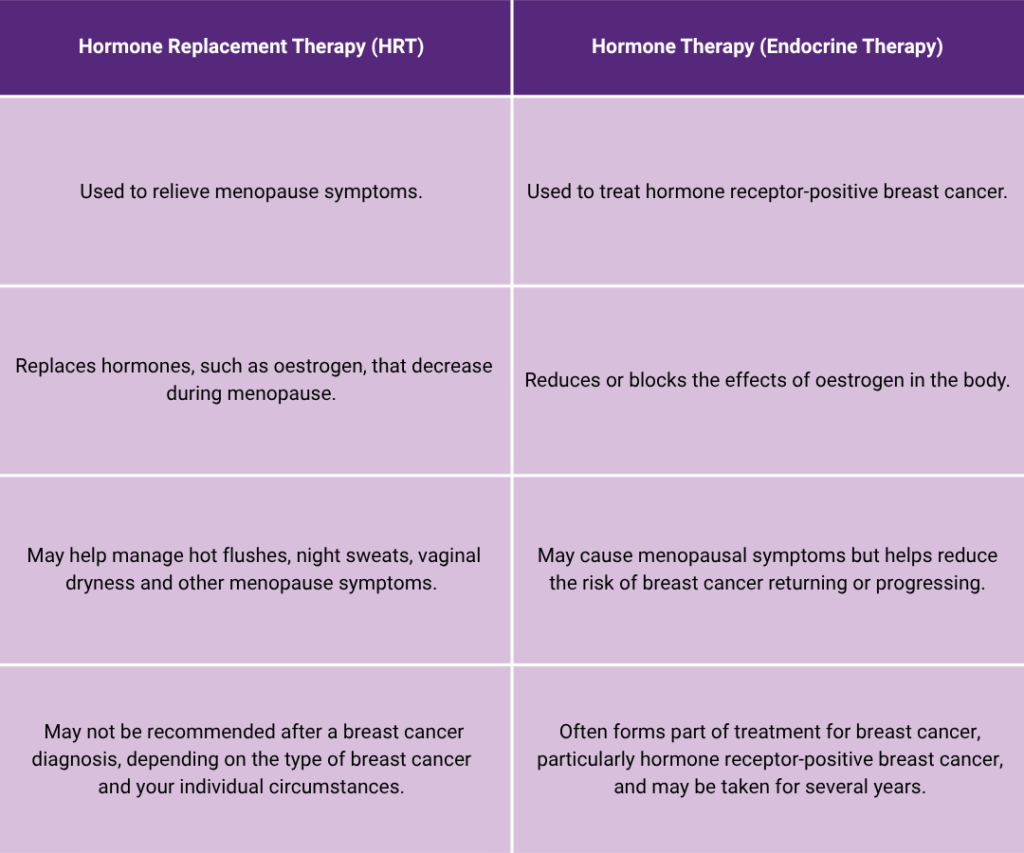
Although they sound similar, hormone replacement therapy (HRT) and hormone therapy for breast cancer are two very different treatments with different purposes.
Hormone replacement therapy (HRT) is used to help relieve menopause symptoms by replacing hormones, such as oestrogen, that naturally decline during menopause.
Hormone therapy for breast cancer, also known as endocrine therapy, works in the opposite way. Rather than replacing hormones, it blocks or lowers the effects of oestrogen in the body to help slow or stop the growth of hormone receptor-positive breast cancers.
This difference is why women diagnosed with hormone receptor-positive breast cancer are often advised to stop HRT before starting breast cancer treatment.
Can I Ever Use HRT Again After Breast Cancer?
Whether HRT can be used again depends on your individual circumstances and should always be discussed with your healthcare team.
HRT may be considered based on several factors, including:
- The type and stage of breast cancer you were diagnosed with
- Whether your cancer is hormone receptor-positive or hormone receptor-negative
- The severity of your menopause symptoms
- Your overall health and medical history
- The potential risks and benefits of HRT
- The efficacy of non-hormonal treatments
In some situations, particularly where symptoms are severe and significantly affecting quality of life, and non hormonal treatments have been unsuccessful, your treating team may discuss whether HRT is appropriate after carefully considering the potential risks and benefits. This is increasingly so for low dose vaginal oestrogen therapy for the treatment of vaginal dryness and urinary symptoms which has evidence of safety in breast cancer.
These decisions are highly individual and should always be made in consultation with your healthcare team.
If you’re struggling with menopause symptoms after stopping HRT, don’t restart treatment on your own. Speak with your healthcare team about the options available to help manage your symptoms safely and effectively.
Join our free Menopause and Breast Cancer Q&A
Have questions about menopause during or after breast cancer treatment?
Join our free online Menopause and Breast Cancer Q&A, where leading breast cancer specialists and women with lived experience will answer common questions about treatment-induced menopause, managing symptoms, HRT and the latest in research.
Register now to have your questions answered by the experts.
"*" indicates required fields
Frequently Asked Questions
-
Do I need to stop HRT if I’m diagnosed with breast cancer?
It depends on the type of breast cancer you have and your individual circumstances. Many women, particularly those with hormone receptor-positive breast cancer, are advised to stop HRT because the hormones it contains may stimulate cancer growth. Your healthcare team will discuss the safest approach for you.
-
What happens if you stop HRT suddenly?
Stopping HRT can cause a rapid drop in hormone levels, meaning menopause symptoms may return quickly and sometimes feel more intense than before. Common symptoms include hot flushes, night sweats, sleep disruption, mood changes and vaginal dryness.
-
Can you manage menopause symptoms without HRT after breast cancer?
Yes. Many women successfully manage menopause symptoms using non-hormonal approaches such as regular exercise, healthy eating, good sleep habits, vaginal moisturisers and lubricants, psychological support, and, where appropriate, non-hormonal medications. Your healthcare team can help develop a management plan that suits your needs.
-
Why do doctors recommend stopping HRT?
For some types of breast cancer, particularly hormone receptor-positive breast cancer, HRT may increase the amount of oestrogen available to cancer cells. Your healthcare team will advise whether it is safe to continue HRT as part of your breast cancer treatment plan.
-
Are there alternatives to HRT after breast cancer?
Yes. A range of evidence-based alternatives may help manage menopause symptoms, including lifestyle changes, exercise, nutrition, non-hormonal medications, vaginal moisturisers and lubricants, and supportive care. Your healthcare team can help determine which options are most appropriate for you.
-
Information Sources
- Suggested Strategies to Optimise Sleep | Fact Sheet | Australasian Menopause Society Hub
- Non-Hormonal Treatment Options for Menopausal Symptoms | Fact Sheet | Australasian Menopause Society Hub
- Menopause and Mental Health | Fact Sheet | Australasian Menopause Society Hub
- Vaginal estrogen use in breast cancer survivors: a systematic review and meta-analysis of recurrence and mortality risks – American Journal of Obstetrics & Gynecology