
CHEMOTHERAPY DURING PREGNANCY AND BREAST CANCER
Can you have chemotherapy while pregnant? Learn what Australian guidelines say about breast cancer treatment during pregnancy and risks to baby.
Being diagnosed with breast cancer during pregnancy, or gestational breast cancer, can feel overwhelming, raising many urgent questions about treatment and the health of your baby. One of the most common concerns is whether chemotherapy during pregnancy is possible or safe.
The reassuring news is that treatment decisions are carefully guided by medical evidence and Australian clinical guidelines. In many cases, chemotherapy can still be given during pregnancy, particularly in the later stages. When treating breast cancer in pregnancy, both cancer specialists and obstetric teams work closely to protect the health of both mother and baby. Understanding how chemotherapy is used during pregnancy can help you feel more informed and supported when making decisions about your care.
Breast Cancer During Pregnancy
During pregnancy, the body produces higher levels of hormones such as oestrogen, which stimulate breast development to allow breast feeding. The mother’s immune system also changes to allow the growth of the baby. These and other factors can lead to the development of breast cancer during pregnancy. Normal breast changes during pregnancy – such as swelling, tenderness and increased breast density – can also make cancer harder to detect early. As a result, some women may be diagnosed at a slightly later stage.
Even when diagnosed during pregnancy, many women can still receive effective cancer treatment. In some situations, chemotherapy may be recommended as part of treatment while pregnant, depending on the stage of breast cancer while pregnant, the type of breast cancer, and how far the pregnancy has progressed.
Is Chemotherapy Safe During Pregnancy?
A key question many people ask is: is chemotherapy safe during pregnancy?
The answer depends largely on the stage of pregnancy.
Medical guidelines state that chemotherapy is not recommended during the first trimester, because this is when the baby’s organs are developing. Exposure to chemotherapy drugs during this early stage may increase the risk of miscarriage or birth defects.
However, research and clinical experience show that most chemotherapy used in the treatment of breast cancer can often be safely given during the second trimester and third trimesters, when the baby’s major organs have already formed. At this stage, the risk of harm to the unborn baby is significantly lower.
This approach allows doctors to continue treating the cancer without waiting until after delivery.
Some other breast cancer treatments, such as trastuzumab, endocrine (hormonal) therapy such as tamoxifen and immunotherapy such as pembrolizumab, are not recommended for use at any stage during pregnancy due to risks to the baby. Doctors also carefully check which symptom control medications, like anti-nausea medications, can be safely given during pregnancy.
For more information about treatment guidelines during breast cancer, visit Cancer Australia.
What Trimester Can You Have Chemotherapy?
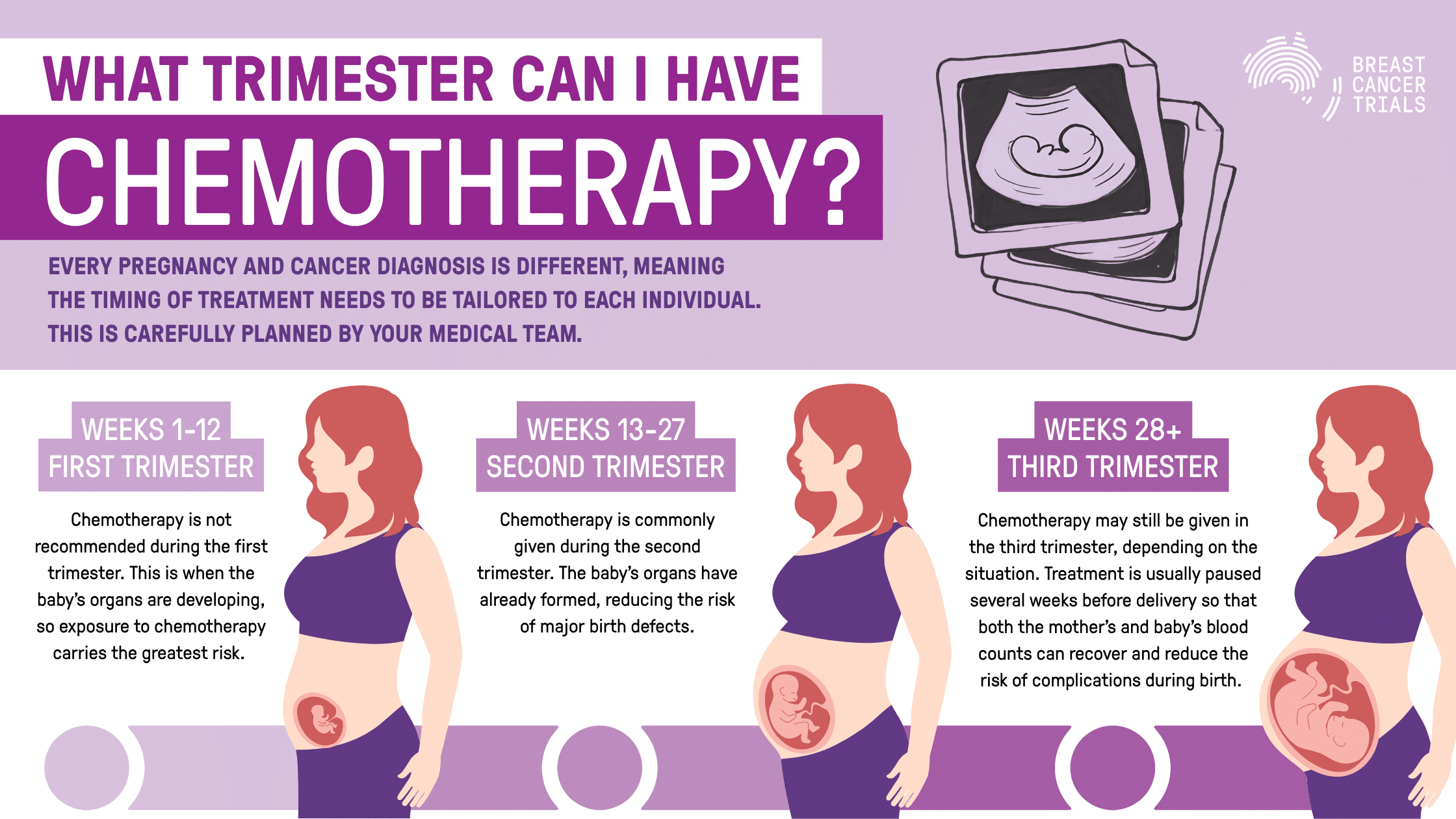
The timing of chemotherapy during pregnancy is carefully planned. In general:
Chemotherapy in first trimester (weeks 1–12):
- Chemotherapy is not recommended.
- This is when the baby’s organs are developing, so exposure to chemotherapy carries the greatest risk.
Chemotherapy in second trimester (weeks 13–27):
- Chemotherapy is commonly given during the second trimester.
- The baby’s organs have already formed, reducing the risk of major birth defects.
Chemotherapy in third trimester (weeks 28–birth):
- Chemotherapy may still be given in the third trimester, depending on the situation.
- Treatment is usually paused several weeks before delivery so that both mother’s and baby’s blood counts can recover and reduce the risk of complications during birth.
Every pregnancy and cancer diagnosis is different, so the timing of treatment is tailored to each individual.
How Does Chemotherapy Affect the Unborn Baby?
When chemotherapy is given during the first trimester, it can interfere with early organ development which may increase the risk of miscarriage or birth defects. This is why it is avoided during this stage of pregnancy.
When chemotherapy is given after the first trimester, research suggests that most babies are born healthy. However, some risks can still occur, including:
- Lower birth weight
- A higher chance of early (preterm) delivery
- Temporary effects like low blood cell counts related to timing of chemotherapy administration
Encouragingly, studies following children exposed to chemotherapy in the womb during the second or third trimester generally show normal growth and development.
To minimise risks, pregnancies are closely monitored by specialists throughout treatment.
Is Breast Cancer During Pregnancy More Aggressive?
Breast cancer diagnosed during pregnancy can be more aggressive than breast cancer diagnosed in non-pregnant women. It can also be more advanced at diagnosis because pregnancy-related breast changes can make tumours harder to detect. Whilst the same types of breast cancer affect both pregnant women and non-pregnant women, there are slightly higher rates of triple negative and HER2 positive breast cancers.
This is why any unusual breast changes during pregnancy – such as a lump, skin changes, or nipple discharge – should be assessed promptly.
Early assessment helps ensure that effective treatment can begin as soon as possible.
What Happens If You Need Chemotherapy While Pregnant?
If chemotherapy is recommended during pregnancy, care is usually managed by a multidisciplinary medical team. This may include:
- Medical oncologists
- Obstetricians experienced in high-risk pregnancies
- Breast surgeons
- Specialist nurses and midwives
Together, they create an individualised treatment plan that carefully balances cancer treatment with pregnancy care.
This typically includes:
- Careful timing of chemotherapy cycles
- Regular monitoring of the baby’s growth
- Coordination of cancer treatment with the expected delivery date
- Emotional and psychological support
For many women, this coordinated approach allows them to continue their pregnancy while receiving essential cancer treatment.
Other breast cancer treatments and pregnancy
There are other treatments that are a part of breast cancer management, including surgery and radiotherapy.
Surgery for breast cancer, including have an anaesthetic is considered low risk after the first trimester.
Radiotherapy poses a significant risk to the baby and is delayed until after the baby is delivered.
Frequently Asked Questions
Can you have chemotherapy while pregnant?
Yes, in many cases chemotherapy can be given during pregnancy, particularly during the second and third trimesters. It is generally avoided in the first trimester due to risks to the developing baby.
What trimester is chemotherapy safe during pregnancy?
Chemotherapy is usually considered safest during the second and third trimesters, when the baby’s organs have already developed.
How does chemotherapy affect the unborn baby?
When given after the first trimester, most babies are born healthy. Possible risks include lower birth weight or early delivery, but long-term development is generally normal.
Is breast cancer during pregnancy more aggressive?
Breast cancer diagnosed during pregnancy can be more aggressive. It can also be detected later because normal pregnancy changes can make tumours harder to detect. However, it is still very treatable with the care of a multidisciplinary team.
Can you breastfeed during chemotherapy?
No. Chemotherapy drugs can pass into breast milk and may harm the baby. Breastfeeding is not recommended while receiving chemotherapy.
What are the treatment options when pregnant?
Some treatments – such as endocrine (hormone) therapy, immunotherapy and certain targeted therapies – cannot be used during pregnancy. Chemotherapy may be used in later pregnancy if needed. Treatment plans are always personalised.
What if you want to become pregnant after breast cancer treatment?
If you are thinking about pregnancy after treatment, watch our recorded Q&A webinar on fertility and breast cancer. Research such as the POSITIVE clinical trial is helping doctors understand how women taking endocrine therapy may safely pause treatment in order to attempt pregnancy under medical supervision.
Sources:
https://www.cancer.gov/types/breast/breast-cancer-during-pregnancy
Join Our Free Q&A Webinars
Don’t miss an opportunity to stay informed about the latest in breast cancer research and care. Join our FREE Q&A webinars, where we cover important topics including whether more young women are being diagnosed with breast cancer.
Stay Connected with Breast Cancer Trials
Don’t miss an opportunity to stay informed about the latest in breast cancer research and care. Sign up to our researcher’s newsletter via the form below to stay up to date.