
Palbociclib Shows No Difference in Quality of Life in Early-Stage ER-Positive Breast Cancer
A study finding a lack of benefit from palbociclib in women with earlier stage oestrogen receptor-positive breast cancer, sheds important light on the drug’s place in breast cancer treatment.
Palbociclib is a CDK4/6 inhibitor, which compromises cancer cells’ ability to divide and multiply. It has been trialled successfully in people with metastatic oestrogen receptor-positive, HER2-positive breast cancer, in whom it was shown to significantly slow down cancer progression.
The PALLAS study investigated whether adding palbociclib to standard hormone-blocking endocrine therapy might improve the effectiveness of endocrine therapy and also maintain quality of life for women with early-stage breast cancer.
This analysis, published in ESMO Open in June 2025, looked at data from nearly 4700 women with ER-positive, HER2-negative stage 2-3 breast cancer to receive either standard hormone blocking therapy plus palbociclib, or hormone blocking therapy alone.
By the end of study however, researchers saw no significant differences between the two groups in invasive disease-free survival, nor in a range of quality of life measures including pain, fatigue, hot flashes, and hair loss.
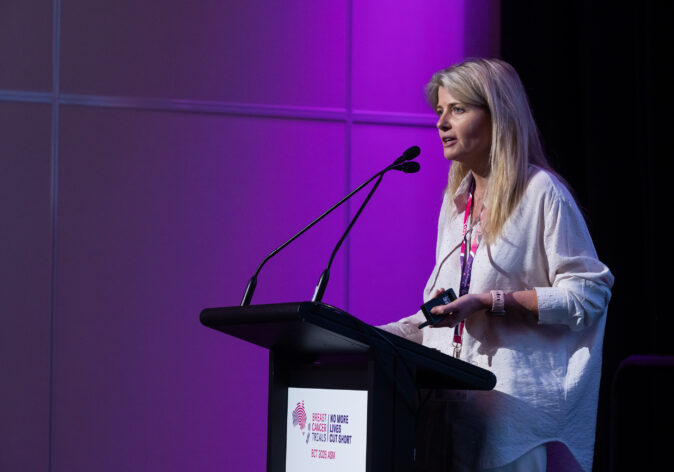
Medical oncologist Dr Nicholas Zdenkowski, Chair of the Breast Cancer Trials Scientific Advisory Committee – who was on the steering committee for the trial – said the lack of benefit from palbociclib stood in contrast to positive results for two other similar agents, ribociclib and abemaciclib.
“There’s been a lot of thought put into why there might be a difference with palbociclib versus the others,” he said, but as yet that question is unanswered.
While the overall results of PALLAS found no clinically significant improvements in symptoms and quality of life with palbociclib, there were trends that suggested some effects from the drug. Among women treated with palbociclib, the worsening of pain – particularly musculoskeletal pain – was delayed compared to those not on palbociclib, although those on the drug also experienced slightly more fatigue and hair loss.
“The pain that is being discussed here is of musculoskeletal or arthritis-type pain that we commonly see with the aromatase inhibitor treatment, which is one of the types of standard endocrine therapy that we use,” Dr Zdenkowski said. “So we’ve seen an attenuation of that, and it’s not because it’s reducing the anti-cancer effect of those drugs.”
Understanding why this class of drug might reduce some of the impact of endocrine therapy side effects could provide insight into how patients could stay on endocrine therapy longer, as these side effects are often a reason why patients stop treatment early.
“By identifying ways of either managing those side effects or potentially coming up with new treatments that have fewer side effects, if we can keep patients on it and optimise their quality of life, then they’ll have better outcomes,” Dr Zdenkowski said.
Publication:
Bjelic-Radisic V, Solkner L, Demichele A, Naughton M, Lemieux J, Zdenkowski N, Ruiz Borrego M, Mao J, Shinn E, Singer CF, Meisel J, Chan A, Iwata H, Mamounas T, Loible S, Gauthier E, Dueck A, Hlauschek D, Mayer E, Gnant MI, on behalf of the PALLAS groups and investigators (ABCST, AFT, BIG, PReCOG, GBG, NASBP). Relationship between physician-graded symptomatic adverse events and patient-reported quality of life (QOL): An analysis of the phase III PALLAS trial. ESMO Open. 2025; 10 (4 suppl) DOI: https://doi.org/10.1016/j.esmoop.2025.104879 Abstract 307P