
split-banner-image

HOW CLINICAL TRIALS BUILD ON PAST RESEARCH RESULTS

Breast cancer clinical trials are necessary to find out if new treatments are more effective that those currently accepted as the best available standard treatment. Professor Bruce Mann explains how each clinical trial builds on the knowledge gained from past research and how breast cancer surgery is a good example of the benefits that come from clinical trials.

How Do Research Results Help Create New Clinical Trials

Individual trials are important for two reasons: one is that the evolution of treatment has been incremental and each trial builds on the results of the previous trial. The other aspect is that this is very complex and we need to be very sure that what we believe is right, that it is the truth.

Often it’s important to do a trial to replicate previously published results and possibly to address any weaknesses that have become apparent in the previous study.

A good example of that is the ACOSOG Z11 trial which was the trial that suggested that patients who have a small amount of disease in their lymph gland, in their sentinel node, do not need any further surgery or radiation in the armpit. That’s a very provocative trial.

If it’s right, it’s going to save a lot of people from a lot of side effects but there are clearly some weaknesses in the trial design and the way it was carried out, so one of our trials known as POSNOC is attempting to replicate to Z11 trial but addressing the weaknesses that became apparent.

If it does replicate the results, that is going to be really good news. But if it doesn’t, it’s not so good news but it’s really going to be very important information.

How Clinical Trial Research Has Evolved

Breast cancer surgery is a fantastic example of the benefits that come from clinical trials. The evolution of breast cancer surgery is really quite a journey.

In the early 20th century the standard treatment was a radical mastectomy. That involved the routine removal of the entire breast, the skin over the breast, the muscle underneath and all the associated lymph nodes. It was thought at the time that that was the only way to control the disease. Since then, a lot’s changed and clinical trials have been central to the evolution.

The initial trials compared that radical mastectomy to what’s called a modified radical or a simple mastectomy where the underlying muscle was left behind. That showed no difference, so the removal of the muscle made no difference to the long-term outcome.

After that, trials were done comparing the removal of the total breast, so total mastectomy, to breast conservation which was removal of the cancer with a little bit of surrounding tissue, and then delivery of radiation. Again, that showed that breast conservation was safe.

It’s not suitable for everyone, but most people have the opportunity, the option of breast conservation. Again, it was a clinical trial comparing those two that led us to reduce the amount of surgery.

With respect to the lymph nodes, because breast cancer if it spreads is found in the lymph nodes most often – these are the glands under the armpit – it was thought that all of the lymph nodes need to be removed.

A clinical trial showed that sentinel node biopsy which is the procedure by where we find a single lymph node, or one or two lymph nodes, by doing sentinel node biopsy if the sentinel node was clear, there’s no need to take all the lymph nodes. Again, the outcomes, the chance of curing the cancer was just the same but the impact on the patient, the side effects, are far less.

That leads us to the current stage. Currently it’s believed that if some cancer is found in that sentinel node that it’s important to remove all of the other lymph nodes in the area. The reason for that is that when those nodes are removed, some more cancer is found in about 25-30% of cases.

The interesting thing is that in people who do not have the other lymph nodes removed, the rate of recurrence in the armpit – the cancer coming back in the armpit – is far less than we expected. Now there’s a lot of reasons for that but one of them is that we have other effective treatments that patients generally receive, things like chemotherapy or hormonal treatment.

A large trial was done in the United States where women who had a small amount of disease in the sentinel node were randomised to either have the rest of the lymph nodes removed – that’s the standard treatment, or no further surgery. Now a lot of people thought that this was crazy, that clearly if there was cancer in 25 or 30% of cases, it would be essential to remove the glands.

Very surprisingly, the difference in outcome between the two groups – those who had the surgery and those who didn’t – was minimal. Essentially, there was no difference. This was quite radical and suggested that a lot of unnecessary surgery is being done.

Listen to the Podcast

Professor Bruce Mann explains how each clinical trial builds on the knowledge gained from past research and how breast cancer surgery is a good example of the benefits that come from clinical trials.

Building On Previous Clinical Trial Results

With many trials, what happens is the result comes out, the trial is looked at very carefully and there are issues with the trial. There are reasons why the result may not be reliable. This is unfortunate that this happens, but it does.

It’s a fact. What that has meant is that most people consider those trials to be suggestive and very interesting, but not definitive. Not enough or solid enough information for us to tell our patients that no further surgery is needed.

That’s where our POSNOC trial comes in. POSNOC is attempting to replicate the results of that American trial that is known colloquially as Z11. We are trying to replicate the study but addressing the shortfalls in the study, and there were some important shortcomings.

POSNOC is a trial that is being led by Dr Amit Goyal, an academic breast surgeon from the UK. Breast Cancer Trials are leading the Australian and New Zealand contribution and we’re making a very important contribution to that trial.

Already we have about 800 patients have been randomised, we’re aiming to get 1900 because it’s been assessed that if we can get 1900 patients we’re going to be able to either provide solid endorsement of the findings from Z11 and thereby save a lot of people from unnecessary extra axillary treatment.

Alternatively, it may be that we find out that the findings of Z11 were not true and that the treatment should be done.

Obviously, I’m trying to do less treatment. It’s really a very important aim. If we can get equal outcomes with less treatment, then we are sparing a lot of women unnecessary side effects.

But on the other hand, we’re here to treat the cancer and we don’t want to reduce treatment too fast so that we compromise safety.

Support Us

Help us to change lives through breast cancer clinical trials research

profile image

Professor Bruce Mann

Professor Bruce Mann is the Breast Cancer Trials Director of Research, and a Surgical Oncologist and Specialist Breast Surgeon

Latest Articles

triple-positive breast cancer

Triple-Positive Breast Cancer

revolutionising radiotherapy: the ornate study and the future of breast cancer treatment
split-banner-image

HOW TO PARTICIPATE IN A CLINICAL TRIAL?

Finding a clinical trial that is right for you, or for a family member or friend, has never been easier.

Why Participate In A Breast Cancer Clinical Trial?

There are two main paths to clinical trials: the first is where the treating doctor is aware of the trial, looking for participants. In that situation, where there is potentially eligible patient, the doctor will explain the standard treatment and then explain the trial, and then it’s up to the individual whether she would like to participate.

The second group may be more difficult. For those that are searching for a trial that either they or a loved one may be eligible, that will require a little bit of research.

Fortunately, we have made this easy – has a list of all available trials, details about the trials and where they are open.

Alternatively, there’s a national website anzctr.org.au and going to that website one is also able to find open trials.

We’ve developed a brand new app – ClinTrial Refer app – it’s available wherever you get your apps.

That is a simple way to find sites and identify relevant trials.

Listen to the podcast

Professor Bruce Mann explains the two main paths to participating in a clinical trial and what’s involved once you’re on a trial.

What Happens On A Breast Cancer Clinical Trial?

A lot of people want to know what’s involved in a clinical trial, ie. what happens. The answer to that depends on the type of trial.

Many trials are randomised control trials. What that means is that if someone meets the eligibility criteria for the trial and agrees to take part, then which treatment they will receive – whether they receive standard treatment or often standard treatment plus an experimental extra treatment – is a randomised process and neither the doctor nor the patient has control over which treatment the patient is allocated to.

That’s very important because that’s the way that we can absolutely identify the benefit or the difference between standard arm and the new arm.

Other trials are not randomised. Other trials are single arm trials where patients who are eligible and who consent agree to have a treatment that is somewhat different from standard treatment – the experimental treatment.

In that trial what would happen is someone who is willing to take part, who understands the process and consents, would then be registered and would receive a treatment other than standard treatment.

Once the treatment is decided and delivered, usually follow-up is fairly standard. We attempt to minimise the inconvenience associated with trials but often there are extra blood tests or extra imaging or extra visits that are necessary so that we can collect the information necessary to assess the new treatment.

So the answer to the question ‘what happens’ very much depends on the specifics of the trial, and that’s something that is always explained to the patient while they are considering, and before giving consent to take part in a trial.

Support Us

Help us to change lives through breast cancer clinical trials research

profile image

Professor Bruce Mann

Professor Bruce Mann is the Breast Cancer Trials Director of Research, a Surgical Oncologist and leading Specialist Breast Surgeon

Latest Articles

triple-positive breast cancer

Triple-Positive Breast Cancer

revolutionising radiotherapy: the ornate study and the future of breast cancer treatment

THE POEMS TRIAL:
A PARTICIPANTS EXPERIENCE

A diagnosis of breast cancer at the age of 32 was a big shock for Natasha Eaton who initially thought it would mean she wouldn’t be able to have children. Natasha was a participant on the POEMS clinical trial which was a breakthrough study for women with breast cancer and was aimed at preserving a woman’s fertility during her cancer treatment.

The POEMS Clinical Trial: Natasha’s Experience

I was 32 when I was diagnosed. I found out one night when I was on the phone, laying in bed, touched my breast and found a lump. I went over to my aunt’s place, and she calmed me down, told me not to worry, that it wouldn’t be anything bad, but it ended up being breast cancer.

There was no history that I knew of but my mum died of ovarian cancer, so I’d been checking my ovaries, but to me, there was no link between breast cancer and ovarian cancer.

I was 32, I didn’t have any children, I wanted to be a mum, so yeah it was really unfair. My aunt was my rock – she gets me through it. We’ve always been close.

I went and met Fran that afternoon. She put the whole thing into perspective, calmed me down because I was very upset and worried about starting chemotherapy too soon for me. She suggested that I have the operation first rather than try and shrink the tumour.

Fran told me that there was a chance that this could do something to my ovaries and they may not work again. As a woman seeing my mum go through ovarian cancer, knew that there was going to be a strong possibility that I wasn’t going to be able to have children.

It might save my life but take away my becoming a mum. Fran said there was a clinical trial that was about to start and that I could be part of it. I was young and wanted to become a mother, and the POEMS trial was about trying to protect my ovaries from chemotherapy.

It was a no brainer. I knew that I wanted to be part of it and give it my best shot. I was ready to do whatever it took.

Listen to the podcast

Natasha was a participant on the POEMS clinical trial which was a breakthrough study for women with breast cancer and was aimed at preserving a woman’s fertility during her cancer treatment.

Participating in the POEMS Clinical Trial

To be part of the clinical trial I had to have injections a couple of days before I started each chemotherapy. I had six rounds of chemotherapy, so six injections of the drug. I was seeing Fran every three weeks at that stage, so she was keeping a good eye on me to see how I was going.

I remember she explained to me that the injection I would have, the drug, would put my ovaries to sleep and protect them from the chemotherapy. The idea was that the ovaries would then wake back up, I would get my period again and hopefully start releasing eggs and … like it never even happened.

After I finished my treatment, Fran said that two years before trying to have a baby was a good timeframe. It would let me get back to good health. I didn’t even think when started throwing up that there was anything wrong. I was throwing up every morning!

I must have been about eight weeks (pregnant).

I ended up saying something to my aunt and she said, “Maybe you’re pregnant?” I told her not to be ridiculous; my ovaries were still asleep last time I’d had an ultrasound done. I did that first (pregnancy) test, and initially I thought, “No, I’m not. How? I haven’t even had a period, so this can’t be right.” And then the fear set in that I might not even be able to have this baby, that there’d be something wrong, that it was too soon from treatment. That scared me. I thought, “What if this is the only child that I was ever … I wasn’t going to be able to fall pregnant again.”

So I was very over the top about checking to make sure that he was OK and I had a scan at 28 weeks that showed he was on the small side. I then had another scan at 30 weeks, and he hadn’t grown, so I felt that it wasn’t right. My blood pressure was up, so I spent the next three weeks in hospital. I ended up getting pre-eclampsia. He was five weeks early and spent a week in NICU.

I would tell any woman who was about to have chemotherapy that if there’s a clinical trial get involved with it. It let me become a mum, and that was one of the most important things to me. So if you are passionate about something, you’ve just got to do it.

He (son) only just found out this week that I’d even had cancer. It’s not something that I talk about now because it’s been nine years. For the first five years it becomes your life because you’re petrified of recurrence, but I’ve let it go now.

I told him that Mummy had had cancer and he said, “Have you really?” He knows that my breasts aren’t there anymore but I hadn’t actually sat him down and told him. But now that he knows, I’ll talk to him.

Life For Natasha Post-Treatment

It was a rollercoaster ride. I’ve been lucky that Fran has been so supportive. It’s only since I’ve had my breast removed that I haven’t seen her every six months. I could ring her up now and make an appointment, and she would see me.

She’s just such a wonderful doctor and person that she’s just on the pulse. She never leaves anyone behind. Just because I’ve got to this stage, I’ve been weaned off her so to speak. You put your life into her hands, and it’s just hard to explain that her decisions control what happens.

Sometimes I think about it and can’t believe it. But, then I think I’m meant to still be here, I’m meant to have my boy, and everything has worked out the way it was meant to work out.

At the time, mum was the only one who had had ovarian cancer, and she had six female cousins that had breast cancer. But I didn’t know that when I had it. So I also met a geneticist. I seriously didn’t think that I was going to have the gene (BRCA) even though it was all there that it would come back that I had it. My aunt got tested after her sister died of ovarian cancer and me with the breast cancer.

She’s come back clear. I’m so glad I did (get tested) now because there’s so much more they can do for you knowing you do have the BRCA gene.

Since my diagnosis, and since being told that there’s the BRCA gene in the family, two more cousins have got ovarian cancer. One has died, and one is now fighting for her life.

My aim is always to live the life my mum never got to. It was really difficult. She was the first one in our family to have cancer, but they’ve definitely come a long way from 1999 to 2008. The upside of this clinical trial, ten years on, is that it’s (this treatment) now available for all women going through any type of cancer.

I was the first one to get pregnant! I know that much!

Support Us

Help us to change lives through breast cancer clinical trials research
Latest Articles

triple-positive breast cancer

Triple-Positive Breast Cancer

revolutionising radiotherapy: the ornate study and the future of breast cancer treatment
split-banner-image

PERSONALISED MEDICINE
IN BREAST CANCER

More and more we are hearing about the term ‘personalised medicine’. But what is it and how does it relate to breast cancer clinical trials research? Breast Cancer Trials Researcher Professor Prue Francis explains how personalised medicine is changing the way we treat breast cancer.

What Is Personalised Medicine?

Personalised medicine means treatment that is designed to be tailored to the unique characteristics of the person and the unique characteristics of their particular condition.

Each person would have particular features, for example; their age, their physiology, their genetics and then their disease would also have its particular characteristics. Illnesses and diseases manifest differently in different people and have different characteristics.

Personalised medicine aims to tailor the therapy for a condition to the specific unique characteristics for the person.

The way we treat breast cancer has changed. Previously, breast cancer was really considered to be one condition, and there was a standard way to manage it. For example, all women with node-positive breast cancer had a particular treatment recommended.

Nowadays, we are looking much more at the specific characteristics of the person who has the breast cancer and the specific characteristics of their breast tumour before we decide how they should be approached from a treatment perspective. So, we would categorise women according to their age, and their menopausal status and their treatment would be personalised according to those factors.

We would also be looking at their health status, their other medical conditions or things they might be at risk for, we would be looking at their personal and family medical history. We would be having a look at the specific characteristics of their tumour.

Previously, breast cancer was more or less considered to be one type of cancer, but now we know there are specific sub-groups of tumours that have quite different behaviours, so we’re dividing breast cancers by hormone receptors – so oestrogen or progesterone receptors, the presence or absence of those.

We’re also looking at how much of the cancer actually expresses the hormone receptor because not everybody with oestrogen-receptor positive breast cancer will have exactly the same type of cancer.

Some oestrogen receptor-positive breast cancers will have a lot of oestrogen receptors; some will only have a few. We’ll also be looking at the HER2 status of a tumour to see whether a tumour is HER2-positive or HER2-negative.

Then we’ll be looking at other characteristics that might be involved; the grade of the tumour, other features to do with the extent of lymph node involvement or the absence of lymph node involvement, and we’re going to be trying to craft a specific program for that woman that is based on a number of features we’ve looked at.

Going forward there are going to be more and more specific pathology tests that may go into even more detail for tumours so that personalising the treatment may be possible above and beyond what I’ve talked about.

Listen to the podcast

Professor Prue Francis explains how personalised medicine is changing the way we treat breast cancer in this episode of the Breast Cancer Trials Podcast.

Clinical Trials Which Use Personalised Medicine

Personalised medicine has really changed the nature of the breast cancer trials that we do. When I was first involved in trials with the trials group, there were large trials that enrolled many thousands of women who had quite differing characteristics of their cancer – women with oestrogen receptor-positive cancers were mixed together with women who were oestrogen receptor-negative, or sometimes we didn’t even know the oestrogen receptor status in the earlier years, we didn’t know the HER2 status before that was known to be important, and sometimes women of different menopausal status were all mixed together.

Nowadays we’re increasingly looking at niche trials, and this makes the research more useful because ultimately we can answer questions better if we have a trial that’s tailored to women with a particular type of cancer. It also makes it more challenging because for each individual trial, not every woman would be eligible for it. So it’s trying to find the patients – not always women – that would be suited for a particular trial, and it’s more niche trials rather than across-the-board trials.

An example of personalised medicine in relation to breast cancer trials would be the OlympiA trial. The OlympiA trial is testing whether the addition of an oral tablet after other therapies have been completed would be helpful in reducing breast cancer recurrence; however, the patients that would be suitable for the OlympiA trial would be those who had breast cancer and those who also carry a BRCA gene mutation. So it’s a particularly niche trial because the drug that is being tested, the tablet, is something that is likely to be helpful potentially in women that carry this mutation but is not likely to be helpful in women generally with breast cancer. So, it’s a particular trial that is personalised medicine.

We’re also due to embark on a trial later this year called EXPERT. EXPERT is a trial where routinely women who’ve had surgery where they’ve conserved the breast – it’s standard for those women to be recommended to receive radiation – and in the EXPERT trial we’re looking for women who are 50 years of age or older and we are going to be studying the particular characteristics of their tumour by a multi-gene assay.

So depending on the exact genetic makeup of their tumour we will decide whether women would be suitable for an approach in this trial where women might be randomised to not receive radiation or to receive radiation. So, again, not all women 50 years of age or older could participate in the trial, but women whose particular characteristics of their tumour appear suitable by a personalised test will be the women who’ll be eligible to participate.

I think the future of personalised medicine is to try to tailor treatments appropriately to avoid over-treating people and to avoid under-treating people. I think at the moment we are getting quite good outcomes in breast cancer but there probably are people who are being over-treated because we haven’t yet worked out all the answers to personalised treatment, and there are some who are being under-treated in the sense that we know some women still have a recurrence of their breast cancer, so trying to continue to tailor our trials and our therapies to try to get that balance perfect is a goal of personalised medicine in terms of breast cancer trials.

Support Us

Help us to change lives through breast cancer clinical trials research
profile image

Professor Prue Francis

Breast Cancer Trials Researcher and Clinical Head of Breast Medical Oncology at the Peter MacCallum Cancer Centre.

Latest Articles

triple-positive breast cancer

Triple-Positive Breast Cancer

revolutionising radiotherapy: the ornate study and the future of breast cancer treatment
split-banner-image

WHAT IS
NEOADJUVANT THERAPY?

Neoadjuvant therapy refers to treatment before surgery and it aims to shrink the breast cancer in size to increase the chance of breast conserving surgery, among other potential benefits.

What Is Neoadjuvant Therapy?

Neoadjuvant therapy really refers to therapy that is given before surgery. Traditionally in breast cancer, therapy has been mostly what we call adjuvant therapy – a therapy that you give after breast cancer surgery and therapy that is designed to reduce the chance of any future problems from breast cancer, and it’s usually post-operative. Neoadjuvant therapy refers to giving therapy before the surgery, so it’s a timing issue in relation to the tumour surgery, the cancer surgery.

What is the difference between adjuvant vs neoadjuvant?

The difference is in the timing of treatments such as chemotherapy, targeted therapy and/or hormone-blocking therapy in relation to breast surgery. Adjuvant therapy is administered after surgery to reduce the risk of cancer coming back in the breast or elsewhere in the body. In contrast, neoadjuvant therapy is given before surgery to shrink the cancer making it easier to remove with surgery. Breast cancer clinical trials have shown that treatments given to women before surgery is just as effective as having chemotherapy after surgery in terms of the cancer coming back elsewhere in the body and survival.

What are some examples of Neoadjuvant Treatment?

The goal of neoadjuvant therapies is to shrink the size of the tumour making it easier to surgically remove. This may not be suitable for everyone, so decisions about timing of treatments in relation to surgery should be made in consultation with your medical team.

Neoadjuvant therapies include

  • Chemotherapy: Chemotherapy is a medicine that is given to kill cancer cells throughout the body. For breast cancer, it is usually given intravenously (through a drip or injection into the vein) every 1-3 weeks, for a total of 12-24 weeks. There are many different types of chemotherapy, and your doctor will be able to describe the risks and benefits of the treatments that are most suitable for you.
  • Immunotherapy: Immunotherapy helps to stimulate the body’s immune system to attack the cancer cells and may be given together with chemotherapy. Your doctor will be able to advise if this is a suitable option for you depending on the type of breast cancer you have.
  • Targeted therapies: Targeted therapies work by targeting specific characteristics of cancer cells, like a protein that allows the cancer cells to grow in a rapid or abnormal way. This helps to stop the growth and spread of cancer while affecting normal, healthy cells less than other types of cancer treatments, potentially reducing side effects. There are many different types of targeted therapies, and your doctor will be able to let you know if this is a suitable option for you depending on the type of breast cancer you have.
  • Hormone-blocking (endocrine) therapies: Hormone-blocking therapy works by interfering with the signal that oestrogen sends to cause this type of breast cancer to grow. It is given as a tablet that is taken every day, for women with oestrogen (ER) and/or progesterone (PR) receptor positive breast cancer. They are usually given for 5 years or longer. For premenopausal women, a medication such as goserelin (Zoladex) may also be used to stop the ovaries from making oestrogen.

Why Would You Have Neoadjuvant Therapy?

The period before breast cancer surgery can be filled with anxiety. Neoadjuvant therapy provides time to consider the type of surgery you may want and plan for reconstruction if needed.

There are several other reasons to consider neoadjuvant therapy:

  • Reduce the size of the tumour so that you can have breast conserving surgery (lumpectomy) rather than removal of the whole breast (mastectomy). Breast conserving surgery may not always be possible because of a large tumour. However, neoadjuvant therapy may shrink the size of the tumour so a smaller operation is possible.
  • Reduce the number of lymph nodes that need to be removed from the armpit (axilla) – potentially allowing for a sentinel lymph node biopsy instead of axillary lymph node dissection.
  • Give time for more information to become available, such as genetic testing if you have a strong family history of breast cancer. This may influence your decision about type of surgery and treatment you may choose to have.
  • Determine the effectiveness of treatment by feeling or seeing if the breast cancer is shrinking.
  • Provide more information about prognosis (the chance of your cancer coming back) and help to decide if extra therapy is needed after surgery.

Listen to the podcast

Professor Prue Francis explains the potential benefits of neoadjuvant therapy and why it’s been increasingly used in breast cancer research.

How can we assess if neoadjuvant treatment is effective?

Neoadjuvant therapy allows doctors to see if the drugs are effective. By administering drugs while the tumor is still in the breast, doctors can monitor whether the tumor is shrinking by examining the breast, using imaging techniques such as mammogram and breast ultrasound, as well as surgically removing the tumor after completion of therapy. This is not possible with adjuvant therapy, when treatment is administered after the cancer has already been surgically removed.

With a neoadjuvant approach, you are provided with  more prognostic information for the women or the patients with breast cancer. This is because, particularly in the case of breast cancer that’s called ‘triple negative’ where there are no hormone receptors and HER2-negative.

Neoadjuvant Therapy in Breast Cancer Clinical Trials

Increasingly, neoadjuvant therapy is being employed in clinical trials in research for breast cancer. This approach allows researchers to identify new treatment strategies by observing changes in the tumor while it is still in the breast and obtaining biopsies to understand these changes.

Neoadjuvant Patient Decision Aid

Breast Cancer Trials has developed the Neoadjuvant Patient Decision Aid to help women make an informed decision about their treatment. This resource is recommended for women who have recently been diagnosed with early-stage breast cancer. Find out more about this resource here.

Support Groundbreaking Research

Your donation can make a real difference in pioneering clinical trials focused on improving outcomes for women with early breast cancers.

By contributing, you’re helping us advance neoadjuvant therapy. Join us in reshaping the future of breast cancer treatment.

Donate now and be a vital part of progress.

Support Us

Help us to change lives through breast cancer clinical trials research
profile image

Professor Prue Francis

Professor Prue Francis is a Breast Cancer Trials researcher and Clinical Head of Breast Medical Oncology at the Peter MacCallum Cancer Centre

Latest Articles

triple-positive breast cancer

Triple-Positive Breast Cancer

revolutionising radiotherapy: the ornate study and the future of breast cancer treatment
split-banner-image

ABOUT THE
CONSUMER ADVISORY PANEL

Women have played an important role in the development and conduct of the Breast Cancer Trials research program for many years. Not only was the Consumer Advisory Panel the first committee of its type in Australia, but it has become a model for other research groups to involve consumers.

What is the Consumer Advisory Panel?

The Consumer Advisory Panel is made up of a group of seven women, we’ve all had breast cancer, and we provide the perspective of the lived experience to the trials as they develop, and to the organisation as to what people who have ‘been there, done that’ might feel about the communication.

For example, the documents that people have to read when they’re participating in a trial or considering participating in a trial. We have some input into how those documents are worded. We provide information about what people will look for when they’re considering a trial. We sit on various committees so right from the word go when the trials are being developed; we are part of those committees.

So as things are developing, our perspective is always considered because sometimes when a scientist or a clinician is thinking about something they’re thinking along one pathway, whereas someone who has had an experience of cancer might think a little bit differently about how they might think about that trial or the question that they’re trying to answer.

Listen to the Podcast

Former Chair of the Breast Cancer Trials Consumer Advisory Panel Leonie Young, explains the role that CAP plays, to ensure a consumer perspective is provided from the very early planning stages of a breast cancer clinical trial.

How Did The Consumer Advisory Panel Start?

The Consumer Advisory Panel came about in 1994. Professor John Forbes invited a consumer, a person who had had breast cancer, to be part of the Scientific Advisory Committee.

That person was Linda Reaby.

She then eventually became the first Chair of the Consumer Advisory Panel when it was eventually developed in about 1998. We went through quite a rigorous interview process as to what our background was, what our skills were, what our enthusiasm and commitment to research was, and so back in that time, there were eight women. We all came from a range of different backgrounds.

Most had had breast cancer, and most had been on a clinical trial. As it is now, we’ve all had breast cancer, and most of us have been on a clinical trial. So I guess it’s having the person who has ‘been there, done that’ and has a different understanding.

I became involved at the beginning in 1998. I was diagnosed with breast cancer in 1987 – I was 32 years old. At that time, there wasn’t a lot of advocacy around younger women and breast cancer, so I found myself becoming involved in issues around women in general with breast cancer, but especially younger women. At that time there wasn’t much happening, all the organisations we know now were only developing, so I was really in the right place at the right time. I’ve just had my 30th-anniversary last week, so I’m quite proud of that.

A lot has happened in those 30 years. When I think back to my young, naive self at 32 and now I have a daughter who is 32 today – it makes me feel a little nervous for her – but it’s really nice that I can say to other people that I’ve been here for 30 years and it goes back to the importance of research. That’s why people like me are able to say we’ve got good stories to tell.

What Does The Consumer Advisory Panel Do?

One of the important roles that the Consumer Advisory Panel plays is that when we look at a document that might be going out to somebody who is thinking about participating in a trial – there are patient information documents that people have to read through to make sure that they’re fully informed, they understand what they’re going into, and they have to sign documents called ‘informed consent’ documents. When we look at those documents, we look at them from a different angle.

I think of myself thinking about my experience of breast cancer and so some of the terminology that’s there when a clinician or researcher might have prepared it will use totally different terminology with ones that I might be comfortable thinking about.

One of the first things that we raised with the group when we started looking at documents was, they often used to say “If this trial is suitable for you …”. That may seem quite simple, but we said that if I’m not eligible for this trial, I might feel a bit of a failure. So now we say, “If this trial is suitable for you, then these are the things you’ll have to do.” It seems very minor, but when you’ve been you’ve been diagnosed with breast cancer, people lose their self-confidence.

We always think, “What have I done wrong and what could I have done better?” If the criteria doesn’t match exactly with the trial, and we aren’t able to go on that trial, and there are many reasons why you have to have specific criteria around those things, then I don’t feel a total failure if I can say, “Well, that’s OK, because that trial didn’t actually match things that were going on for me.” So it’s only a little thing.

There’s language like ‘aggressive’ and ‘invasive’. When people hear that terminology, it immediately makes them worry more yet quite often there’s a very simple explanation for aggressive and invasive is and it’s not what you or I might imagine. We imagine aggressive is something rampaging through our bodies, and we have to do something absolutely immediately; otherwise it’s going to be a disaster.

With breast cancer, it certainly isn’t that way and most times we’ve got plenty of time to make decisions, to take our time and make sure we know what we’re doing. So that’s just a couple of small things, but it’s a big thing to somebody who is reading the documentation.

Also in those documents, people are told that people like me look at them and read them. So I hope it makes a difference for them to know that somebody who does understand what they feel like as they’re reading it has actually had some input and had some influence in even maybe how times somebody has to go and have a blood test, or how they’re going to park.

We ask all those little questions because we know, for example, if you can’t find a park and you have to pay a lot of money for that parking, that’s really going to be something that’s not going to enhance your experience.

People find out about trials mainly through their clinicians, but in breast cancer especially there are great consumer networks so people talk and people share. We can find out in a lot of different ways, but I think their clinician is the first place to look. In a support group or similar, women often talk and say, “I’m on such and such a trial” and that often piques someone’s interest in what they might ask their clinician, but generally that’s where they hear about it.

Support Us

Help us to change lives through breast cancer clinical trials research

profile image

Leonie Young

Former Chair of the Breast Cancer Trials Consumer Advisory Panel

Latest Articles

triple-positive breast cancer

Triple-Positive Breast Cancer

revolutionising radiotherapy: the ornate study and the future of breast cancer treatment
split-banner-image

DIFFERENT TYPES OF
BREAST CANCER CLINICAL TRIALS

There are many different types of clinical trials, such as prevention trials, treatment trials, or trials that are aimed at improving a patient’s quality of life.

Are There Different Types of Breast Cancer Clinical Trials?

There are a number of different types of breast cancer clinical trials. Many breast cancer clinical trials are looking at new treatments for breast cancer; other trials are looking at new prevention strategies whether they be medications or alterations in lifestyle, such as exercise and reducing body weight.

There are also trials that are looking at the best way to deliver the interventions that we already have. Other trials are focused on women with advanced breast cancer and how we might support them.

So there’s a whole different array of types of breast cancer clinical trials that we do.

Listen to the podcast

Professor Kelly-Anne Phillips explains the different types of breast cancer clinical trials, the different phases of trials, and also explains the roles of the different members of a clinical trials team.

The Different Phases of a Breast Cancer Clinical Trial

Once a new treatment has been studied extensively in the laboratory, the next step is to start testing that on people. This testing in people is usually done in a series of clinical trials that we call ‘phases‘.

A Phase 1 clinical trial is often the first time that a drug will have been used in humans. It’s aimed at looking at what the side effects are of that drug, and also trying to work out what the best dose of that drug would be and also the best scheduling of the drug.

It’s really about finding out what’s the best way to give the drug to minimise side effects.

At the end of a Phase 1 clinical trial, we know the optimal dose and dosing regimen for the drug of interest, and we then move into a Phase 2 clinical trial.

This is really designed to look at how active the new drug is, what proportion of people with breast cancer who get that new drug will actually benefit from it, to give us an idea of whether it’s likely to be more beneficial that the standard treatment.

When things look good in a Phase 2 clinical trial, and we’re seeing quite a bit of activity, we then move drugs into Phase 3 clinical trials.

That’s generally when we’re comparing directly the new agent with the current standard treatment, and we’re looking to see if the new agent is better – so if it improves the breast cancer outcomes – and also whether it has fewer side effects than the current standard treatment.

Once new drugs prove to be better than the current standard treatment in a Phase 3 clinical trial, this is when we’re then able to move them into the clinic to become the next new standard of care.

This is how we incrementally improve things in clinical trials – the old standard of care is replaced by a new standard of care that’s informed by Phase 3 clinical trials.

In general, there’s a step-by-step process through the different phases of clinical trials, but in some trials, the phases are merged together so we have some trials with slightly more complex designs that might be combining Phase 1 and Phase 2, or Phase 2 and Phase 3.

Who Is Involved In A Breast Cancer Clinical Trial?

The research team behind a clinical trial is really pretty comprehensive and large. There are the people the clinical trial patients would see in the clinic – the doctors and clinicians looking after them, the research nurses, the research coordinators and data managers who are helping to collect the information in the clinical trial. In the background, there are a large number of other people, too.

In the trials group, we have our trials department where our staff are working on the data that’s coming in, looking at it, making sure it’s correct and increasing the robustness and integrity of the clinical trial.

Clinical trials are like a great big machine. The patient is really only seeing one tiny little piece of that machine. There’s a whole other great big piece of machinery behind it that’s not seen face-to-face by the patient, but it’s all there, and it’s all really important.

Support Us

Help us to change lives through breast cancer clinical trials research
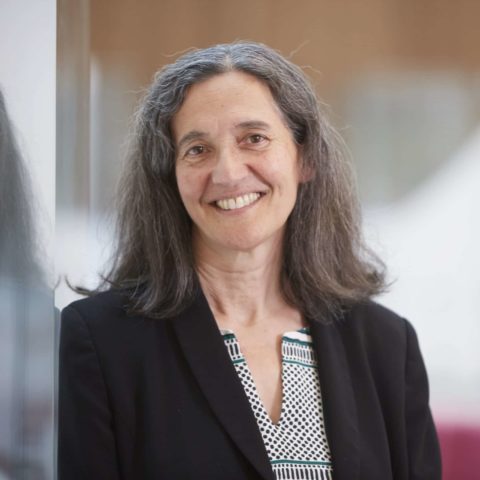
profile image

Professor Kelly-Anne Phillips

Breast Cancer Trials Researcher and Medical Oncologist at the Peter MacCallum Cancer Centre

Latest Articles

triple-positive breast cancer

Triple-Positive Breast Cancer

revolutionising radiotherapy: the ornate study and the future of breast cancer treatment
split-banner-image

WHAT IS A
BREAST CANCER CLINICAL TRIAL?

Breast cancer clinical trials have played a significant role in improvements to breast cancer survival rates and treatments over the last 30 years. Breast Cancer Trials researcher, Professor Kelly-Anne Phillips explains that a clinical trial is research in action.

Why Do We Need Breast Cancer Clinical Trials?

A breast cancer clinical trial is really the action end of the development of new treatments and interventions for breast cancer. This is where we’re trying to work out if the new treatment works, how well it works, whether it works better than the current standard treatments, what the side effects are and what the costs are.

In the development of new drugs for breast cancer a lot of work has gone on in the laboratory for many, many years before new treatments are trialled in women. Those laboratory experiments would be going on with cells, cancer cells in the lab, and subsequently very often with laboratory animals and there’s a lot already known about the drug before that drug enters clinical trials in people.

Listen to the podcast

Breast Cancer Trials researcher Professor Kelly-Anne Phillips discusses the importance of clinical trials on the Breast Cancer Trials Podcast.

Are Clinical Trials Safe?

Before a clinical trial is approved there has to be a very comprehensive protocol written for the clinical trial. The protocol is like a handbook, if you like, although it’s a very detailed handbook, of how the trial will be conducted and it contains information about things like the rationale or the reason why the trial needs to be conducted, what the main questions are that we’re trying to answer with the clinical trial, who are the participants and what sort of participants would be suitable for the clinical trial, and exactly step by step how the trial will be conducted, what drugs will be given, in what doses and on what schedule.

In addition to that, there’s also a lot of information about exactly what information is to be collected on participants who are in the clinical trial. That protocol then gets very detailed peer review, so there are many scientists and clinicians who would look at the protocol and fine tune it, as well as lay people.

At Breast Cancer Trials we’re very lucky because we have our own Consumer Advisory Panel, these are people who are dedicated to helping us to make sure that we do the best research that we can from a consumer perspective. They’re very helpful for clinicians and researchers in helping us to ground our research, making sure that the questions that we’re asking are the ones that are really important to people with the disease, and making sure that the trials we conduct are conducted in a way that would be thought to be reasonable by the ordinary person in the community.

That’s another step in the development of a clinical trial. Once the protocol for a clinical trial is finalised and finished, it then gets completely independent ethical peer review at the various institutions at which the trial will be conducted. It’s only after all of those steps have occurred that the clinical trial would be open and start to recruit patients.

A specific trial that I’m involved in is the OlympiA clinical trial. This is looking at a new treatment for breast cancer that’s occurring in the setting of inherited gene mutations. Some women inherit a gene mutation that predisposes them to developing breast cancer and this trial is looking at if you get breast cancer in the setting of one of those inherited gene mutations, does this new drug add to the current standard of treatment that we have. It’s really asking the question, ‘We have all these standard treatments for breast cancer, and they work quite well in quite a lot of people, but there’s more we can do. This drug is targeted to work particularly in people with these gene abnormalities. If we add that to the standard treatment, will people get better outcomes?’ So that trial is designed so that it is comparing standard treatment versus standard treatment with the additional drug.

Why Participate In A Breast Cancer Clinical Trial?

I think there are a couple of motivations for people to go on clinical trials. Sometimes the main motivation is because the clinical trial might offer access to a promising new drug that the patient might otherwise not have access to, so there’s a sense that, ‘If I go on the clinical trial I might have a better outcome from my cancer than I might have had had I not been on the clinical trial’. That’s certainly a strong motivator both for women and also for their clinicians because clinicians are very motivated to do the best thing for their patients.

Another motivator is altruism. The idea that, ‘Well, it might help me, but even if it doesn’t help me it’s going to help people in the future who might have this disease’. Sometimes, with the trial that I was talking about before which is for people who have inherited gene mutations that other people in their family might also have, and those other people might also be at risk of cancer, there’s this sense that ‘I might be helping other people in my family who might develop cancer’. Sometimes when people are hearing about clinical trials for the first time – because I guess when people are diagnosed with breast cancer they come from a variety of backgrounds. We have women who come from very scientific backgrounds who might be in healthcare themselves who already know quite a lot about clinical trials before they’re in the situation of considering one for themselves, but we also have a lot of people who come from non-scientific backgrounds, and this is really the first time they’re hearing about a clinical trial.

I think those words ‘clinical trial’ can be quite frightening for people; it sounds cold and somewhat scary. I think the experience of being on a clinical trial is really the opposite of that for most people. Most people find that when they’re on a clinical trial, they’re getting an incredibly high level of support from the whole trials team. Rather than just seeing their doctors regularly and getting support from their doctors, there’s a whole range of clinical trials staff that they have access to and that are seeing them on a regular basis. People often find that very comforting and reassuring.

Over the decades we’ve seen multiple improvements in treatments for breast cancer. Many of these improvements have been incremental, step-by-step improvements each time improving the outcomes a little bit. Each clinical trial really builds on what’s gone before. What we’ve seen since the 1980s is a major improvement in survival rates from breast cancer. In the 1980s, only about 72% of women who were diagnosed with breast cancer would survive for five years. Now that statistic is well over 90%, and much of that comes down to new treatments that have been developed in clinical trials. The work that’s done in clinical trials goes even beyond that because we’re not only interested in improving survival, although obviously, that’s a major priority, we’re also very interested in improving quality of life of women living with breast cancer. So that’s another focus of Breast Cancer Trials.

The number of women that will be diagnosed with breast cancer during their lifetime, depending on whether you cut that at age 70 or age 80, it’s somewhere around 1 in 10 – is pretty phenomenal when you think about it. It remains an important issue. Apart from that, breast cancer remains the greatest burden of disease from cancer, and that’s because it affects women’s lives so dramatically, it often affects young women, and the treatments can go on sometimes for many years when women are living with breast cancer. So the burden of disease is high even though the cure rates are relatively high.

Support Us

Help us to change lives through breast cancer clinical trials research
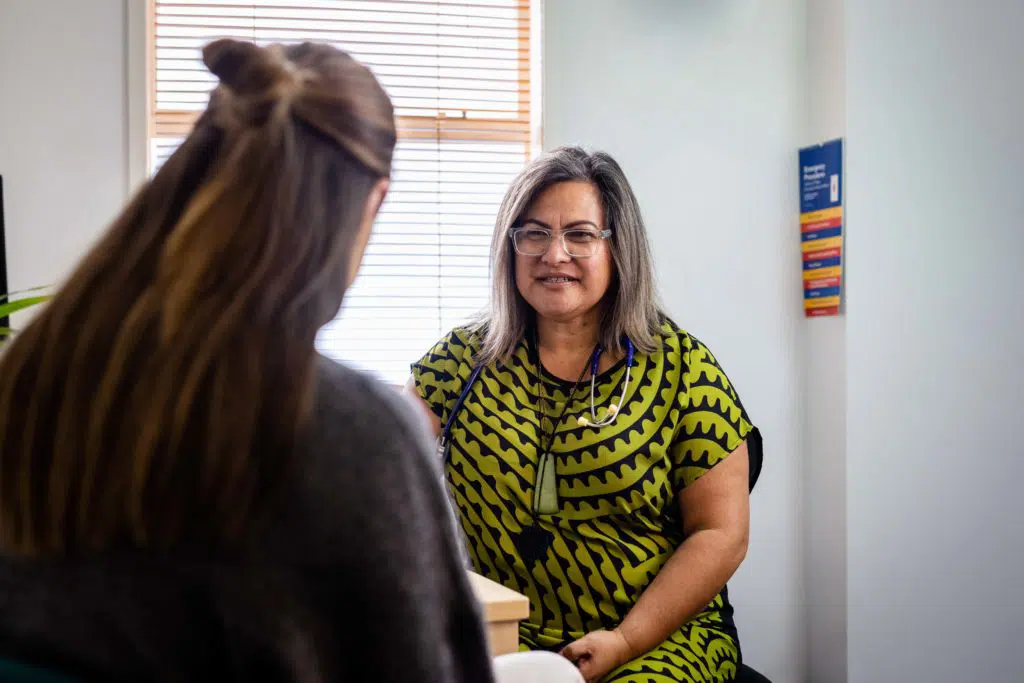
profile image

Professor Kelly-Anne Phillips

Professor Kelly-Anne Phillips is a Breast Cancer Trials researcher and Medical Oncologist at the Peter MacCallum Cancer Centre.

Latest Articles

triple-positive breast cancer

Triple-Positive Breast Cancer

revolutionising radiotherapy: the ornate study and the future of breast cancer treatment