

MENOPAUSE AND BREAST CANCER: SYMPTOMS, SIDE EFFECTS & MANAGING TREATMENT-INDUCED MENOPAUSE
Learn how breast cancer treatment can cause menopause, the common symptoms and side effects, and practical ways to manage treatment-induced menopause.
What is menopause?
Menopause is a natural stage of life when the ovaries gradually produce less oestrogen and menstrual periods permanently stop. While it usually occurs as part of ageing, some breast cancer treatments can cause menopause earlier than expected or trigger menopause-like symptoms.
Known as treatment-induced menopause, this can happen after chemotherapy, ovarian suppression, surgery to remove the ovaries, radiation therapy to the ovaries, or when hormone replacement therapy (HRT) is stopped following a breast cancer diagnosis. Some hormone therapies, such as tamoxifen and aromatase inhibitors, don’t usually cause menopause itself but can lead to symptoms commonly associated with menopause.
A woman is considered to have reached menopause after she has gone 12 consecutive months without a menstrual period, provided there is no other medical reason for her periods stopping. When menopause occurs naturally, these hormonal changes usually happen gradually over several years. In contrast, treatment-induced menopause following breast cancer treatment can occur within weeks or months, leading to a more sudden onset of symptoms.
As a result, symptoms such as hot flushes, night sweats, vaginal dryness, sleep disturbances, brain fog, joint pain and mood changes can feel more intense and have a greater impact on quality of life.
This guide explains the different types of menopause, how breast cancer treatments may affect your hormones, common menopause symptoms after breast cancer, and practical ways to manage them during and after treatment.
The three stages of menopause
Menopause is a process rather than a single event. It is generally divided into three stages.
Perimenopause
Perimenopause is the transition leading up to menopause. During this time, hormone levels begin to fluctuate, particularly oestrogen, causing menstrual periods to become irregular. Perimenopause can last anywhere from a few months to several years before menopause occurs.
Menopause
Menopause is confirmed after 12 months without a menstrual period.
The average age of natural menopause in Australia is around 51 years, although it may occur earlier or later.
Post-menopause
Post-menopause refers to the years after menopause. Although symptoms such as hot flushes often improve over time, lower oestrogen levels continue to affect the body and can increase the risk of osteoporosis, heart disease, and changes to vaginal and urinary health.
Regular exercise, good nutrition and ongoing healthcare are important for maintaining long-term health after menopause.
Menopause and breast cancer risk: Is there a link?
Menopause itself does not cause breast cancer. However, because most women go through menopause in their late 40s or early 50s, and the risk of breast cancer increases with age, most breast cancers are diagnosed after menopause.
Women who experience menopause later than average (after around age 55) have a slightly higher risk of developing breast cancer than women who experience menopause earlier. This is because breast tissue is exposed to naturally occurring oestrogen for a longer period of time, which may slightly increase the risk breast cancer, particularly hormone receptor-positive breast cancer.
Breast cancer risk is influenced by many factors, including age, family history, inherited genetic mutations, reproductive history, and lifestyle factors. If you’d like to better understand your personal risk, Breast Cancer Trials provides information about breast cancer prevention and the iPrevent breast cancer risk assessment tool, which can help women discuss their individual risk with their GP or healthcare team.
Can breast cancer treatment cause menopause?
Yes. Some breast cancer treatments can cause menopause either temporarily or permanently, while others can trigger menopause-like symptoms by reducing or blocking the effects of oestrogen in the body. This is known as treatment-induced menopause, medical menopause or induced menopause.
Unlike natural menopause, which develops gradually over several years, treatment-induced menopause often occurs suddenly because hormone levels change much more rapidly.
Whether menopause is temporary or permanent depends on several factors, including your age, the type of treatment you receive and how your ovaries respond to treatment. There is currently no reliable test that can predict whether ovarian function will return after treatment.
For women who haven’t yet started or completed their family, some breast cancer treatments may also affect fertility. If preserving your fertility is important to you, speak with your treatment team about fertility preservation options before treatment begins.
Research is continuing to improve the way menopause and fertility are managed during breast cancer treatment. For example, the POEMS clinical trial, led by Breast Cancer Trials in collaboration with international researchers, found that temporary ovarian suppression with a medicine called goserelin during chemotherapy reduced the risk of premature ovarian insufficiency and improved the chance of future pregnancy in some premenopausal women with hormone receptor-negative breast cancer.
Which breast cancer treatments can cause menopause?
Not all breast cancer treatments cause menopause, and not everyone will experience menopause during or after treatment. Whether menopause occurs depends on your age, the type of treatment you receive, and how your ovaries respond to treatment.
Some treatments affect the ovaries directly and may lead to temporary or permanent menopause. Others don’t cause menopause itself but lower oestrogen levels or block its effects, resulting in menopause-like symptoms.
Chemotherapy and menopause
Chemotherapy can affect the ovaries and reduce their ability to produce oestrogen. As a result, some women stop having periods during treatment and experience symptoms of menopause.
For some women, ovarian function returns after chemotherapy finishes. For others, chemotherapy may cause permanent menopause. The likelihood depends on several factors, including your age, the chemotherapy medicines used, whether ovarian suppression is used, and your ovarian function before treatment.
Common symptoms may include:
- Hot flushes after chemotherapy
- Night sweats
- Irregular or absent periods
- Vaginal dryness
- Mood changes
- Sleep disturbance
If preserving your fertility is important to you, discuss fertility preservation options with your treatment team before treatment begins.
Hormone therapy and menopause
Hormone therapy (also called endocrine therapy) is used to treat hormone receptor-positive breast cancer. These medicines work by lowering the amount of oestrogen available to breast cancer cells or blocking its effects in different parts of the body.
While hormone therapy doesn’t always cause menopause, it commonly causes menopause-like symptoms.
Tamoxifen and fulvestrant and menopause
Tamoxifen is commonly prescribed for women with hormone receptor-positive breast cancer and can be used before or after menopause. It works by blocking oestrogen receptors on breast cancer cells, helping to reduce the risk of the cancer returning.
Fulvestrant is an injection that works by degrading the oestrogen receptors on breast cancer and other cells. This means that oestrogen can not stimulate breast cancer cells to grow..
Although tamoxifen and fulvestrant do not cause menopause, they commonly causes menopausal symptoms, including:
- hot flushes
- night sweats
- vaginal dryness
- reduced libido
- mood changes
- changes to menstrual periods.
Some women continue to have periods while taking Tamoxifen, while others find their periods become irregular or stop altogether. In contrast, fulvestrant does not cause periods to stop but is commonly used in combination with ovarian suppression in premenopausal women which does stop women from having their period.
Aromatase inhibitors and menopause
Aromatase inhibitors, including anastrozole, letrozole and exemestane, lower the amount of oestrogen produced in the body. They are generally prescribed for women who have gone through menopause or whose ovarian function has been medically suppressed who still produce a small amount of oestrogen in their fat and other tissues.
Because these medicines further reduce oestrogen levels, they commonly cause menopause-related side effects such as:
- hot flushes
- vaginal dryness
- joint and muscle pain
- low mood
- reduced bone density.
Lower oestrogen levels can increase the risk of osteoporosis, so your treating team may recommend bone density scans before and during treatment. Weight-bearing exercise, adequate calcium and vitamin D, and medicines to strengthen bones may also be recommended where appropriate. Research from the IBIS-II trial found that bone density generally stabilised and may improve slightly after stopping aromatase inhibitors.
Ovarian suppression and menopause
For some premenopausal women with hormone receptor-positive breast cancer, ovarian suppression may be recommended as part of their hormone treatment. This temporarily stops the ovaries from producing oestrogen, helping to further reduce the amount of hormone available to breast cancer cells.
Ovarian suppression is commonly achieved using medicines such as goserelin (Zoladex), which is given as a regular injection. It is mostly used in conjunction with either tamoxifen or an aromatase inhibitor.
Because oestrogen levels fall quickly, menopause symptoms often begin soon after treatment starts.
Not all pre-menopausal women need ovarian suppression, but for those at risk of breast cancer recurrence it is an important way to escalate hormone therapy. This was shown in the SOFT and TEXT trials in which BCT participated which were pivotal in demonstrating this benefit for young women.
Some pre-menopausal women are also recommended ovarian suppression even if they don’t have hormone receptor positive breast cancer. This is to protect the ovaries from chemotherapy related treatment induced menopause as shown in the POEMS trial.
Ovary removal and menopause (surgical menopause)
Surgical removal of both ovaries (bilateral oophorectomy) causes immediate, permanent menopause because the ovaries stop producing oestrogen. This may be recommended as an alternative to temporary ovarian suppression as part of hormone therapy for pre-menopausal women at risk of recurrent breast cancer. This may also be recommended for some women with breast cancer and an inherited BRCA1 or BRCA2 gene mutation to reduce their risk of ovarian cancer.
Because hormone levels fall suddenly, symptoms can be more intense than during natural menopause. Women may also require ongoing monitoring of their bone health and cardiovascular health because lower oestrogen levels increase the long-term risk of osteoporosis and heart disease.
Less commonly, women can have radiotherapy to ablate the ovaries. In this situation, the ovaries remain but are no longer able to produce estrogen. This option is usually used when an operation is not recommended.
Stopping hormone replacement therapy (HRT)
Some women are already using hormone replacement therapy (HRT), also called menopausal hormone therapies (MHT), to manage menopause symptoms when they are diagnosed with breast cancer.
For many women with breast cancer, particularly women with hormone receptor-positive breast cancer, systemic menopausal hormone therapy is generally not recommended, so your treating team may advise you to stop taking HRT. This can result in sudden return or worsening of menopause symptoms.
If you’re taking HRT when you’re diagnosed with breast cancer, speak with your healthcare team before making any changes. They can discuss the safest approach for your individual situation and recommend non-hormonal options to help manage your symptoms.
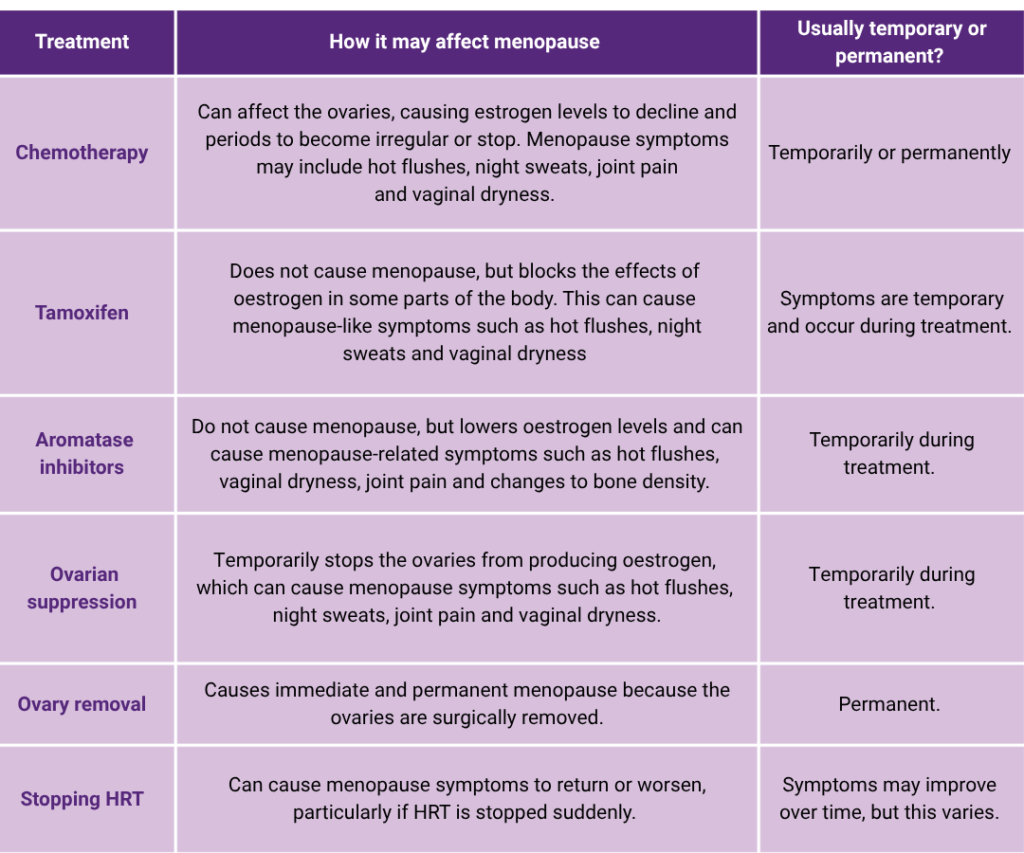
How different breast cancer treatments may affect menopause
Common menopause symptoms and side effects after breast cancer treatment
Menopause symptoms after breast cancer treatment can affect many aspects of your physical, emotional and sexual wellbeing. While some women experience only mild symptoms, others find that treatment-induced menopause has a significant impact on their daily life.
The symptoms experienced will depend on factors such as your age, the treatments you’ve received and how quickly your hormone levels change. Not everyone experiences the same symptoms, and they can vary in severity and duration.
-
Hot flushes and night sweats
Hot flushes are one of the most common breast cancer menopause symptoms. They are often described as a sudden feeling of warmth that spreads across the face, neck and chest, and may be accompanied by sweating, flushing or a racing heartbeat. For some women, hot flushes occur only occasionally, while others experience them multiple times a day. They are particularly common when breast cancer treatments cause oestrogen levels to fall quickly, such as with chemotherapy, ovarian suppression, ovarian surgery or radiotherapy. Hot flushes and night sweats are also common side effects of aromatase inhibitors.
Night sweats are hot flushes that occur during sleep. They can interrupt your sleep, leaving you feeling tired, irritable or unable to concentrate during the day. If night sweats are frequent, they can also contribute to poor sleep and fatigue and affect your overall quality of life.
-
Vaginal dryness & pain during sex
Lower oestrogen levels can reduce the natural moisture and elasticity of the vaginal tissues, leading to dryness, irritation and discomfort. These changes can make sexual intercourse uncomfortable or painful, and may also affect everyday comfort, intimacy and relationships. If vaginal dryness or pain during sex is affecting your quality of life, speak with your healthcare team about the treatment options that may be right for you.
-
Urinary changes
Some women notice changes to their bladder and urinary health after menopause. You may find you need to urinate more often, experience urgency, or develop recurrent urinary tract infections. These changes occur because lower oestrogen levels can also affect the tissues of the urinary tract.
-
Loss of libido
A reduced interest in sex is common during and after breast cancer treatment. Hormonal changes, vaginal dryness, fatigue, stress, anxiety and changes in body image can all contribute to a loss of libido after breast cancer.
Everyone’s experience is different, and there are healthcare professionals who specialise in supporting sexual wellbeing after cancer treatment.
-
Mood changes
Lower oestrogen levels can affect mood and emotional wellbeing. Some women may feel more anxious, overwhelmed, irritable or emotional than usual, or find it more difficult to cope with situations they would previously have managed.
These hormonal changes can occur alongside the emotional impact of a breast cancer diagnosis and treatment. It’s normal to experience a range of emotions during this time. Some women may feel anxious about the future, while others may grieve changes to their fertility, body image or the unexpected onset of menopause
If feelings of anxiety or low mood persist or begin to affect your daily life, speak with your GP or healthcare team. Support services, counselling and other treatments are available.
-
Sleep problems and fatigue
Hot flushes, night sweats, hormonal changes and anxiety can all affect sleep quality. Poor sleep may make other menopause symptoms, such as fatigue, mood changes and difficulty concentrating, feel worse.
-
Brain fog, memory and concentration changes
Many women describe experiencing brain fog during or after breast cancer treatment. You may find it harder to concentrate, remember names or appointments, or stay focused on everyday tasks. These changes can be influenced by menopause, cancer treatment, fatigue, poor sleep and emotional stress. Although frustrating, they often improve over time.
-
Joint pain
Joint aches and stiffness are particularly common in women taking aromatase inhibitors, although they can also occur during menopause itself. Some women notice discomfort when getting out of bed in the morning or after sitting for long periods.
-
Weight gain
Weight changes can occur during or after breast cancer treatment for a number of reasons, including menopause and changing hormone levels, reduced physical activity, changes in metabolism and some medications. Maintaining regular physical activity and a balanced diet can help support your overall health and wellbeing.
-
Skin changes
Lower oestrogen levels may contribute to dry or itchy skin and reduced skin elasticity. Some women may also experience acne as estrogen levels drop while other hormone levels remain the same. Using gentle skincare products and moisturising regularly may help relieve discomfort.
-
Hair thinning
Some women notice their hair becomes thinner or changes in texture during menopause or after breast cancer treatment. Hair changes vary depending on the treatments received and may improve over time.
-
Fatigue
Fatigue is one of the most common side effects of breast cancer treatment. Unlike everyday tiredness, cancer-related fatigue can feel overwhelming and may not improve with rest alone. Menopause symptoms such as poor sleep and night sweats can make fatigue even more challenging.
-
Irregular periods
For women who have not yet reached menopause, menstrual periods may become irregular or stop during treatment. Depending on the type of treatment and your age, periods may return after treatment finishes or menopause may become permanent.
Why are treatment-induced menopause symptoms often more severe?
Many women find that treatment-induced menopause feels more intense than natural menopause. That’s because natural menopause usually develops gradually over several years, giving the body time to adjust to slowly changing hormone levels.
In contrast, breast cancer treatments such as chemotherapy, ovarian suppression, surgery to remove the ovaries or radiation to the ovaries can cause hormone levels to fall rapidly. This sudden drop in oestrogen can trigger menopause symptoms that are more noticeable or severe.
Women who stop hormone replacement therapy (HRT) after a breast cancer diagnosis may also experience a sudden return of menopause symptoms because the body is no longer receiving replacement hormones.
The severity of symptoms varies from person to person. The good news is that many menopause symptoms improve over time, and a range of treatments and supportive care options are available to help manage them.
Managing menopause symptoms after breast cancer
Although menopause symptoms after breast cancer can be challenging, there are many ways to manage them. The best approach will depend on your symptoms, the treatment you’ve received and your individual circumstances. Talk to your treatment team before trying new treatments or supplements, as some may not be suitable during or after breast cancer treatment.
-
Lifestyle changes
Simple lifestyle changes may help reduce the impact of menopause symptoms. You may find it helpful to:
- wear lightweight clothing and dress in layers if you’re experiencing hot flushes
- keep your bedroom cool to help manage night sweats
- identify and avoid triggers of hot flushes, such as spicy foods, alcohol or caffeine
- maintain a healthy weight
- avoid smoking.
-
Exercise
Regular exercise can improve fatigue, sleep, mood, bone health and joint stiffness. Aim to include a combination of aerobic, strength and flexibility exercises, and speak with your healthcare team about the most appropriate activities for you.
-
Healthy eating
Eating a balanced diet with plenty of vegetables, fruit, wholegrains and lean protein supports your overall health. Foods rich in calcium and vitamin D are particularly important for maintaining bone health after menopause.
-
Vaginal moisturisers and lubricants
Non-hormonal vaginal moisturisers and lubricants may help relieve vaginal dryness and make sex more comfortable. If symptoms persist, speak with your healthcare team about other treatment options.
-
Non-hormonal medicines
Several non-hormonal medicines can help manage symptoms such as hot flushes. These include a class of medications called NK3 receptor antagonists such as fezolinetant, as well as epilepsy treatments and antidepressants. Your healthcare team can discuss which options may be suitable for you.
-
Psychological support
Menopause can affect emotional wellbeing as well as physical health. If you’re finding it difficult to cope, consider speaking with your GP, psychologist or another member of your healthcare team. Counselling and peer support can also help.
Looking after your health after menopause
Whether menopause occurs naturally or as a result of breast cancer treatment, looking after your long-term health is important.
Bone health
Lower oestrogen levels can increase the risk of osteoporosis, making bones weaker and more likely to fracture. This is particularly important for women who experience early menopause or are taking aromatase inhibitors.
Your healthcare team may recommend:
- bone density (DEXA) scans
- regular weight-bearing and resistance exercise
- adequate calcium and vitamin D
- medication to strengthen bones if required.
Heart health
Lower oestrogen levels after menopause contribute to an increased risk of cardiovascular disease over time. After menopause, the risk of cardiovascular disease gradually increases.
Simple lifestyle habits such as staying physically active, maintaining a healthy diet, not smoking and attending regular health checks can help reduce your risk.
Watch one of our Q&A topics where we discuss heart health or listen to our podcast episode here.
Follow-up care
Continue attending your scheduled follow-up appointments with your healthcare team, including your GP. These visits allow your doctors to monitor your recovery, manage any ongoing side effects and discuss any new symptoms or concerns.
If menopause symptoms are affecting your quality of life, don’t assume they’re something you simply have to live with. Many effective treatments and supportive care options are available.
Join our free Menopause and Breast Cancer Q&A
Have questions about menopause during or after breast cancer treatment?
Join our free online Menopause and Breast Cancer Q&A, where leading breast cancer specialists and women with lived experience will answer common questions about treatment-induced menopause, managing symptoms, HRT and the latest in research.
Register now to have your questions answered by the experts.
"*" indicates required fields
Frequently Asked Questions
-
What is treatment-induced menopause?
Treatment-induced menopause occurs when breast cancer treatment causes the ovaries to stop producing oestrogen, either temporarily or permanently. It can occur after chemotherapy, ovarian suppression or surgery (or less commonly radiotherapy) to remove the ovaries. Some hormone therapies may also cause menopause-like symptoms without causing menopause itself.
-
Can breast cancer treatment cause menopause?
Yes. Some breast cancer treatments can cause menopause, while others may trigger menopause-like symptoms by reducing or blocking the effects of oestrogen in the body. Whether menopause is temporary or permanent depends on factors such as your age, the type of treatment you receive and how your ovaries respond to treatment.
-
Is treatment-induced menopause permanent?
Not always. Some women experience temporary menopause during treatment, while others experience permanent menopause. This depends on factors including your age, the treatment you receive and how your ovaries respond. Your healthcare team can discuss what you might expect based on your individual circumstances.
-
Information Sources
- https://www.canceraustralia.gov.au/cancer-types/breast-cancer/living-breast-cancer/managing-physical-changes-due-breast-cancer
- https://hub.menopause.org.au/Play?pId=4a67e732-c8dc-4882-91f5-4b85e9c5a471
- https://www.canceraustralia.gov.au/cancer-types/breast-cancer/treatment-options/hormonal-therapies
- https://www.canceraustralia.gov.au/cancer-types/breast-cancer/living-breast-cancer/managing-physical-changes-due-breast-cancer
- https://www.canceraustralia.gov.au/clinical-practice-guidelines/management-menopausal-symptoms-women-history-breast-cancer
- https://www.bcna.org.au/resources/side-effects/a-to-z-of-side-effects/menopausal-side-effects/”https://www.bcna.org.au/resources/side-effects/a-to-z-of-side-effects/menopausal-side-effects/
- https://wwwnsw.gov.au/health-and-wellbeing/cancer-support/breast-cancer/patient-resources/menopause-after-breast-cancer